What should we do before we put our property on the market?
Question of the week: What should we do before we put our property on the market?
Answer: The answer to the question of the week has many variables, what type of property, what is is being used for now, where is the property located, what is the local market like, how long have you had/lived in the property, are you interested in maximizing return and not worried about time frame, or is time frame important…
Let’s take the last variable first, price versus time. No matter what a property’s condition is, or where it is located, asking price determines how long before you get an offer and can close on the sale.
Looking at sales data for California for the month of June, inventory contracted for the month as the number of sales increased. The median number of days on the market has held steady, at about three weeks.
What about prices? Sales prices went up, dramatically in Los Angeles Country, up 8.6% from May to $910,370, but were relatively flat in Orange County, and down almost 3% across the state.
In Southern California, (Los Angeles, Orange, San Diego, San Bernardino, Riverside, Imperial Counties) the sales price to list price ratio in June was essentially 100%–on average buyers paid what sellers asked. That said, over 38% of listed properties across the state had price reductions, the highest percentage of reductions this year; the average price reduction on those listing was 4.7%.
What do all these numbers have to do with the question?
It shows that if a property is priced to the local market, it will take about three weeks to sell and the sales price will be the final listed price.
What makes the listed price correct? Thirty-eight percent of sellers found they were asking too much for their properties as they over-valued their properties for the condition they were in.
Perhaps they spent a lot of money over the past few years upgrading, remodeling, landscaping, and making a beautiful home, and wanted to recoup all they spent, and perhaps more.
Or, perhaps they were selling a property that had not been improved, upgraded to the 21st century, and was being sold “as is”, but were asking for a buyer to pay the same amount as a more modern and up-to-date home in the area.
Either way, know the local market plays a factor in what steps you may, or may not, wish to take before putting your home on the market.
A few steps that do not require much expense, but make a difference to potential buyers, is to de-clutter the property. The more open your home appears the more appealing it is to a family that will be trying to see how they will live in the property, if and how their furniture may fit.
None of your kids want grandma Ethel’s amazing collection of Hummel figurines and the extremely large display cabinet grandpa Max made, and expanded a few times, to hold her collection. In reality, neither do you—this is a great time to market the pieces individually or as a collection, so you can clear space and show how large your dining room is.
Purge closets, cabinets and drawers. Clean out the garage—it may be great storage for you, however buyers may want to use the garage to park their car(s).
While you are decluttering, look around and see if you need all the family photos on the walls and every piece of furniture.
Counter tops in the kitchen and bathroom(s) should be clear, showing how much counter space you have. (Also, don’t think some buyers won’t look inside your fridge…)
If you have pets, be aware of the odor some pets create which can be very off-putting. I am particularly affected by cat odors—many times over the years I have walked into a home and immediately knew there was one or more cats in the home and I rushed the appointment before my eyes and nose completely gave out. We all get used to the natural odors of our homes and may not notice lingering cooking or pet odors, ask a very good friend, or your agent, to be honest with you and let you know if there are odors you need to eliminate—and don’t argue with them if they say there are!
After you have purged, either selling, donating, throwing away, or renting a storage space for stuff you will sell, donate or toss in the future, it is time to tackle the appearance and condition of the property.
The next steps begin the trade offs between expenses to improve the property and increase appeal for some buyers, and price you can realistically get for the property for the condition it is in.
Some buyers will be looking for the “worst” home in the “best” neighborhood they can afford. They see the value of buying the home for below what the average price is in the area and doing minor, or major, repairs, painting, carpeting, landscaping, themselves.
Others, want to be able to close the transaction, have their furniture moved into the property and not have to do anything to the property for several years when routine maintenance and repairs pop up. These buyers are willing to pay for the top of the market in the area to eliminate work and costs in the near- to medium- future.
In between the two extremes, is deep cleaning the home, painting walls where pictures have come down and left evidence of their being there, replacing burnt out bulbs, switches that do not work, touch up scuff marks, replace cracked window, and other small dings, dents, and flaws.
Not all real estate agents agree with me on this step. The chances are very high that when you accept an offer, the buyer will engage a physical inspector contractor to go through, over, and under (if possible) your home looking for major defects and concerns. Plumbing, electrical, structural, HVAC, all will be examined with any defects or suggested corrections noted.
Very often, buyers use this report to re-negotiate the price, or require repairs, or both, before they will close the transaction.
My suggestion is get your own physical inspection. A buyer’s inspector may come up with some items your inspector does not, or vice-versa, however having your report will enable you to meet with your agent and discuss the repair costs for the items listed and what impact they may have on the price/value of your home.
You may decide to forgo the $15,000 re-pipe or electrical upgrade and adjust your price accordingly. Or decide to pay the $2500 for a new garage door, including automatic opener, as it spruces up the curb appeal of your home.
When negotiating with your buyer, you can present the report you have in hand along with the repairs you have completed and are will to do.
Before spending tens, and tens, and possibly tens, of thousands of dollars to get your property prepared for the market, consider the return you will get in sale price for the dollars spent. Is the return significantly higher than the costs compared to making minimal improvements to the property and accepting a lower price?
One factor that is important whichever route you take in the cost-price decision, clean drives price exponentially more than most repairs. A vacant, very clean, home that needs some repairs and/or upgrading will likely sell better and faster than an untidy, perhaps odorous, home that is fully furnished, with some, or no, repairs needed.
All that said, be very aware of the local market, what has sold, what is on the market, and how your property objectively compares. If you are thinking of selling within the next year, start visiting open houses, following closing prices and keeping track of conditions, list prices and sales prices.
When you are ready to put your home on the market visit all of your “competition.” In general, is it better to sell at a slightly lower price to sell faster than to try to maximize price and take longer to sell. If lowering your price a bit results in selling your home faster than your neighbor, it often is worth it.
If you, or someone you know, is considering selling your home in the future and will be purchasing another home, contact me to determine your purchasing power based on different sales prices for your current home.
To schedule an initial meeting by phone or Zoom, click here for my calendar, please feel free to forward to a friend or family member!
Have a question? Ask me!
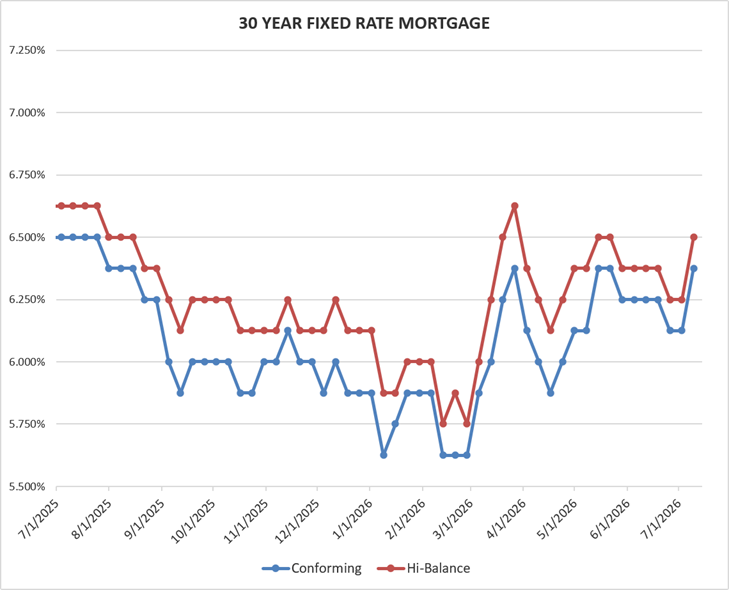
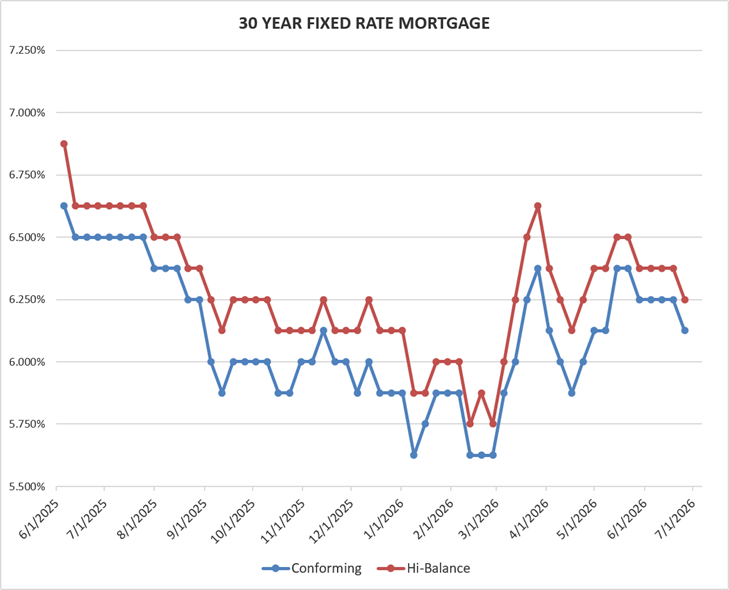
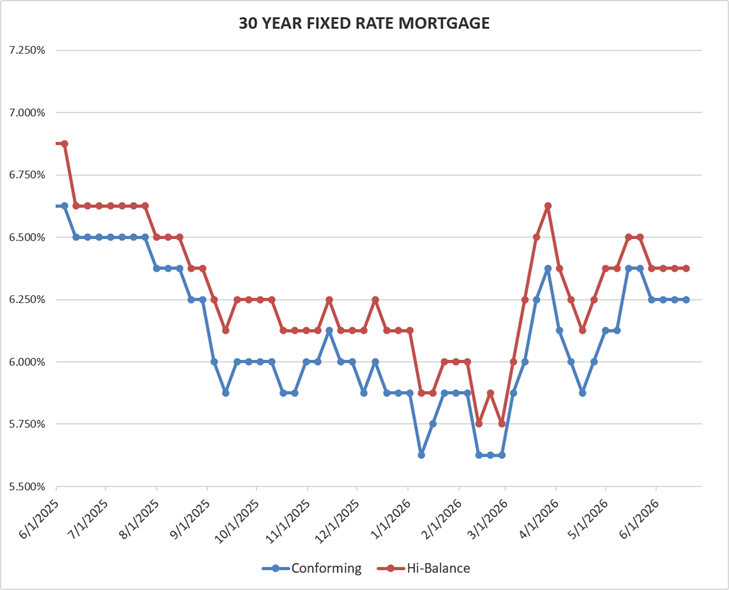
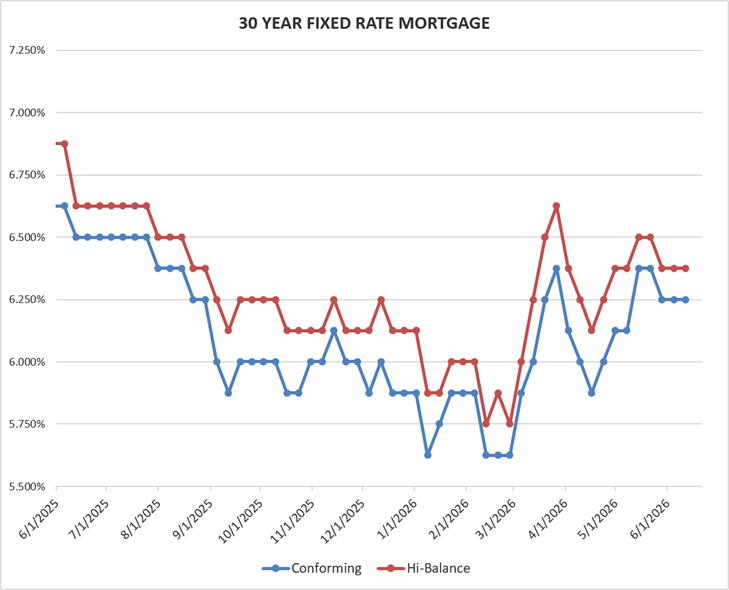
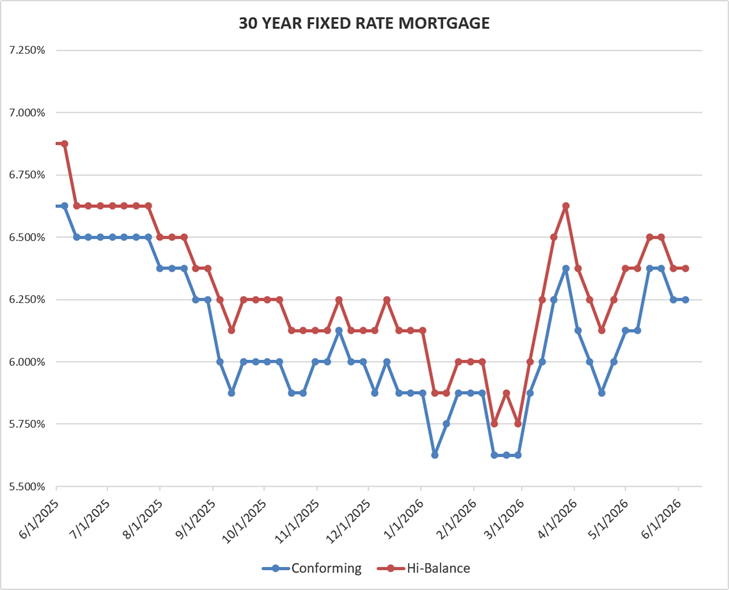
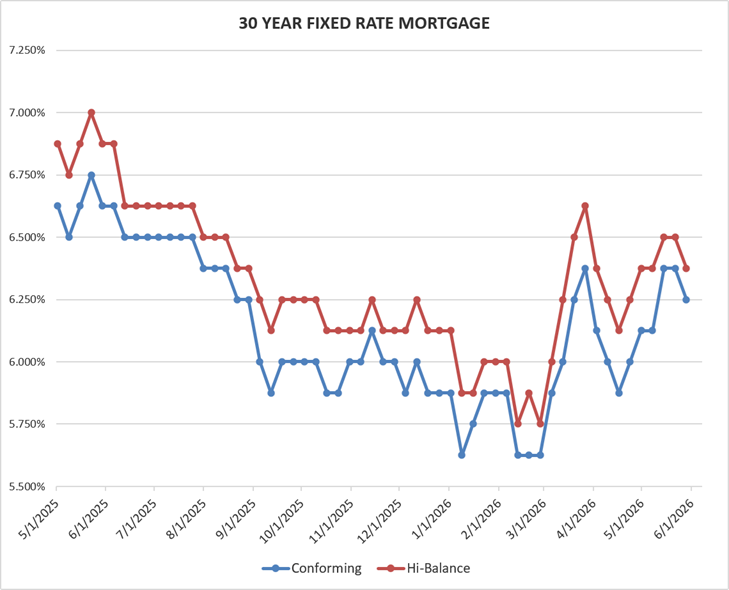
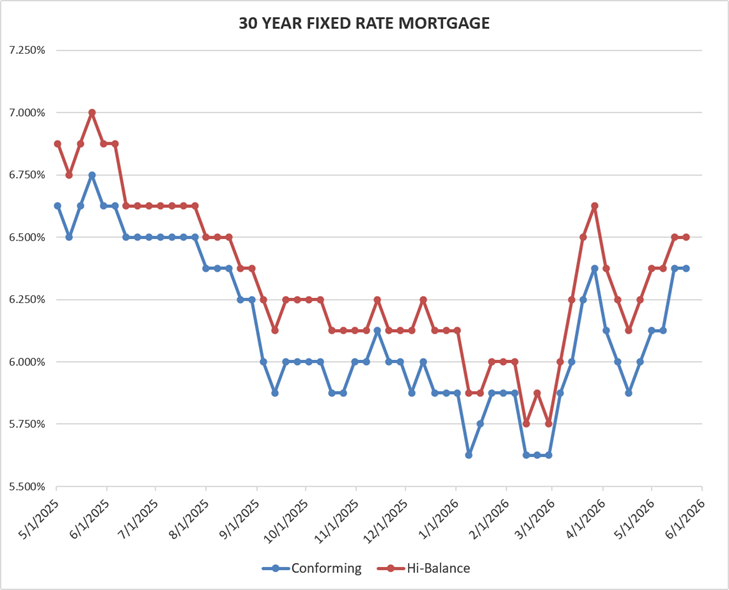
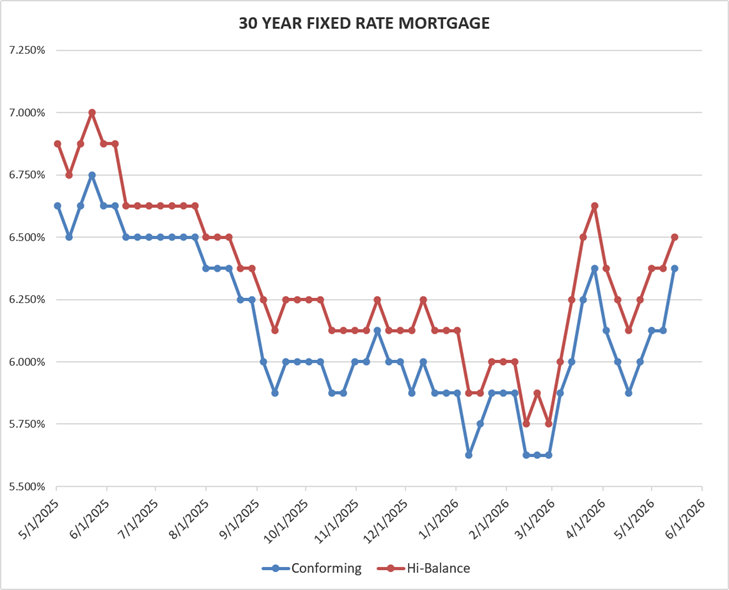
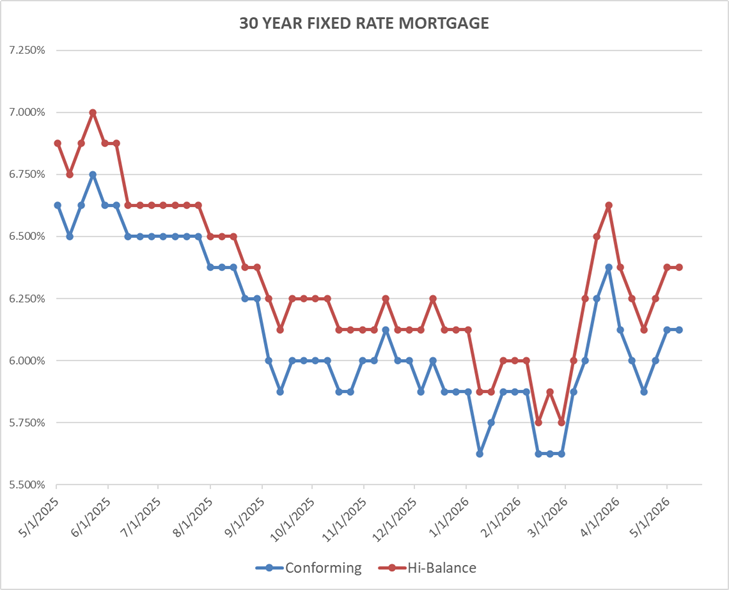
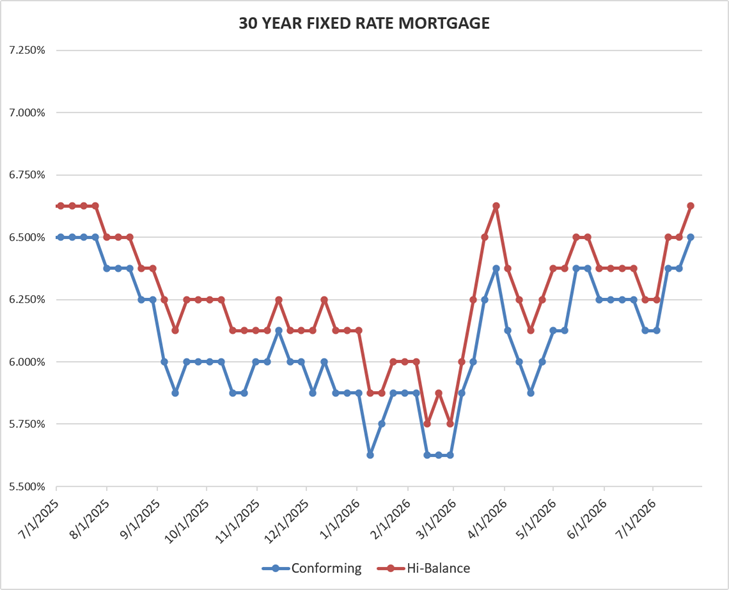
Rates for Friday July 24, 2026: Geo-politics, not economic data, are moving rates up this week. Renewed attacks between the United States, and some Arab nations, and Iraq has caused oil prices to surge, plus President Trump announcing continuing, and adding new, tariffs with trading partners, have caused rates to jump up this week.
FIXED RATE MORTGAGES AT COST OF 1.25 POINTS LOCKED FOR 45 DAYS FOR PURCHASE TRANSACTIONS:
30-year conforming 6.50 Up 0.125%
30-year high-balance conforming 6.620% Up 0.125%
Please note that these are base rates and adjustments may be added for condominiums, refinances, credit scores, loan to value, no impound account and period rate is locked. Rates are based on 20% down with 740 FICO score for purchase mortgages.
Are you more likely to watch soccer after the World Cup?
I have watched the English Premiere League (EPL) and other European leagues and championships for many years. The number of people I know, or meet, who have also started watching European football and the EPL increases every year.
I have not, and likely will not in the near future, watch any professional soccer league in the United States. I suspect it is because the best professional soccer players, with one (Lionel Messi), possible more, exceptions play in Europe. My comparison is the PGA Tour Champions, for professional golfers older than 50; they are really good, but not as good as the players on the PGA tour. The MLS, the best soccer league in the United States, is similar, the best players from other nations that play in the league are a bit past their prime.
Hopefully, the World Cup has ignited some passion in you for the game and you will become a fan of a team to follow—either domestically or overseas—and enjoy what a wonderful game it is.
{awaits comments about: low scores, players writhing on the ground…}