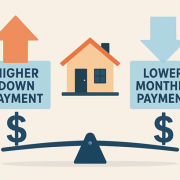
Do we have to sell our current home before buying our next home?

Question of the week: Do we have to sell our current home before buying our next home?

Answer: Maybe. Maybe not.

In the piranha-like feeding frenzy real estate market during the pandemic, and following, very few, if any, sellers would accept an offer from a buyer with a contingency.

A contingency being that certain conditions must be filled before the contract is fully in effect; i.e. contingencies give either party an “out.”

The sale-contingency is used by buyers who need the equity from the sale of their current home for down payment on a new home, and/or to eliminate the housing payment so they can qualify for the mortgage to purchase their new home.

Real estate markets that are level or tilted in the buyer’s favor see a decent percentage of offers accepted by sellers that are contingent on the buyer selling their home. In the past, it was not unusual to have multiple transactions lined up on contingencies—I believe the most I had was five homes in a row all depending on the first home closing before the next could then close in order, I remember this as two of the buyers for homes in the chain were my clients.

Over the past decade plus, sellers have rarely been accepting offers contingent on the buyers selling their home.  Simple reasoning, there has been multiple offers on most listings and many buyers are able to make non-contingent offers.

Our current markets have seen a slow down in sales as homes are on the market longer before entering escrow due to slower demand and increasing inventory. A market that is shifting is a market where contingencies come back to the negotiating table. Sellers may not, perhaps should not, discount contingent offers without knowledge of the situation and chances contingent offer will successfully close.

If you need equity from your home, or the elimination of your housing payment, to purchase a new home, the market appears to be heading your way in regards to contingencies.

If you are buying with a contingency of your home selling, there are a few considerations. First, you will not have forever to sell your home. Your contingency will most likely have a “sold-by” date or the seller can cancel the transaction; i.e. buyer must enter escrow on the sale of their home within 10 (or 14, or ??) days from date of acceptance of the offer and close withing 30 (or 40, or ??) days thereafter.

Since this is the case, it would not be wise to list your property for sale at the very top possible price. In a market that is slowing, trying to get “top-dollar” will likely take time, that you may not have.

To avoid a contingency, there are loan programs where the lender loans you funds based on property value and loan balance on your current home for down payment, and funds to purchase the new home. They will enable you to controls the sale of your home, but if it does not sell within a stated time frame, they can (and will) reduce the sales price to get the property sold and be repaid the funds they put forth for down payment and closing.

Depending on your income and qualifying ability, you may be able to purchase your new home without selling your current home, and leverage into the new home, paying down purchase debt after your home sells and you receive the proceeds.

Do you need to sell your home to buy a new one? I don’t know, but a conversation regarding your financial situation and what you are trying to do can answer the question.

To schedule an initial meeting by phone or Zoom, click here for my calendar, please feel free to forward to a friend or family member!

Have a question? Ask me!

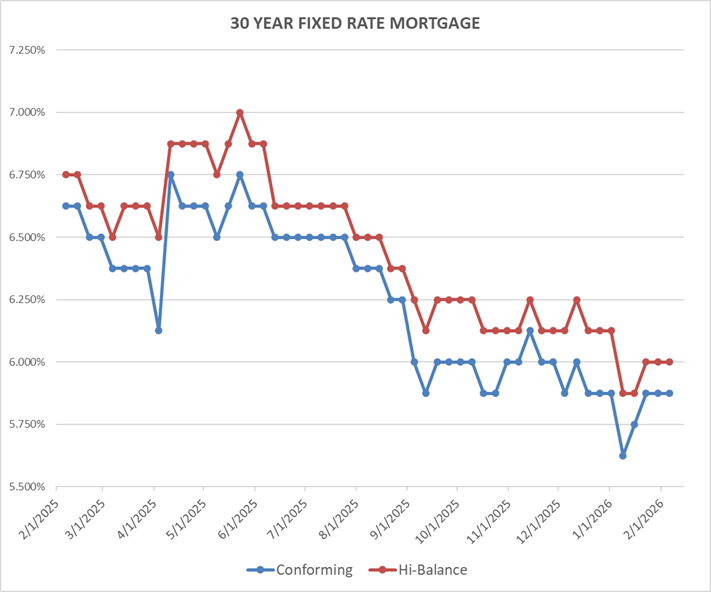
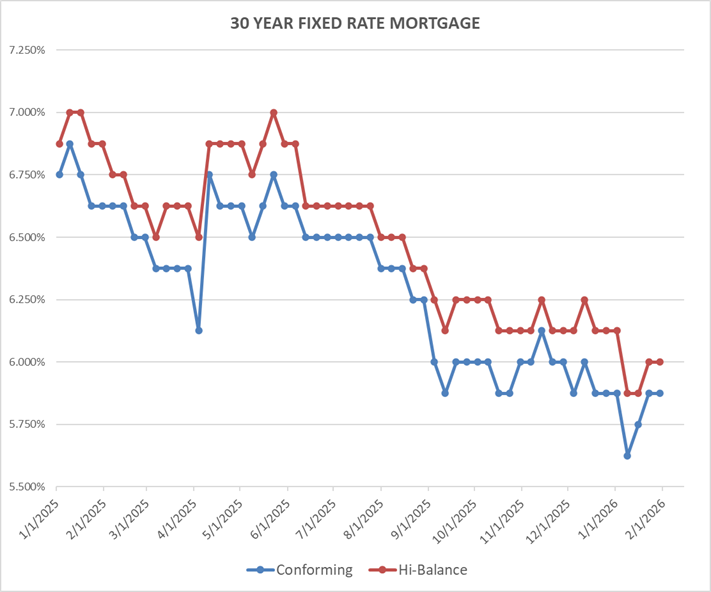
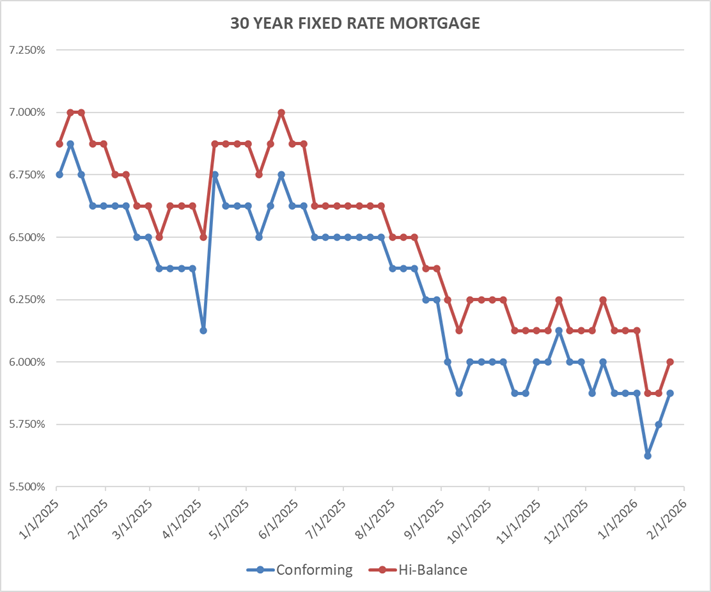
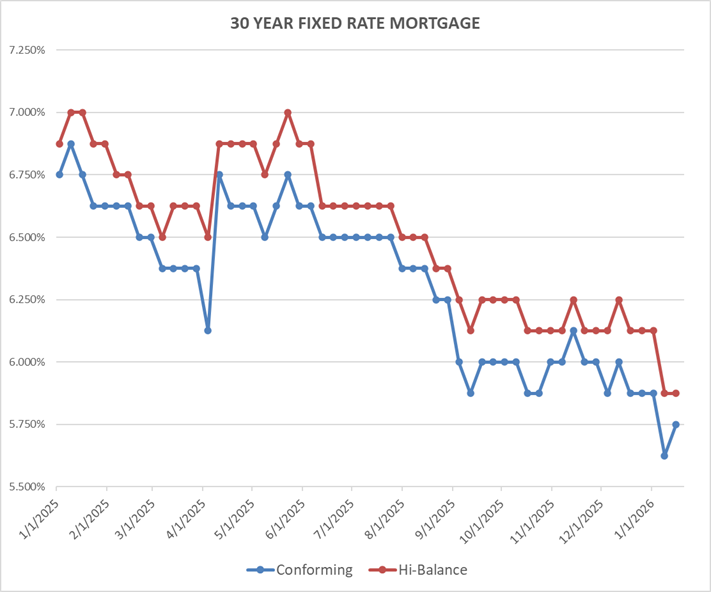
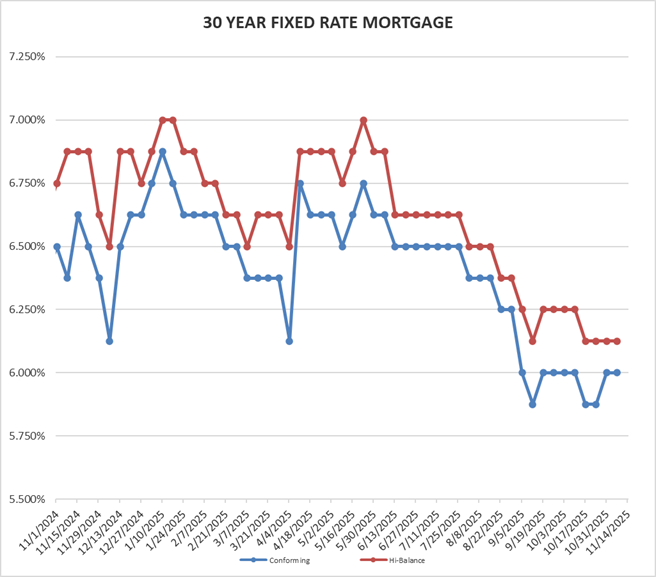
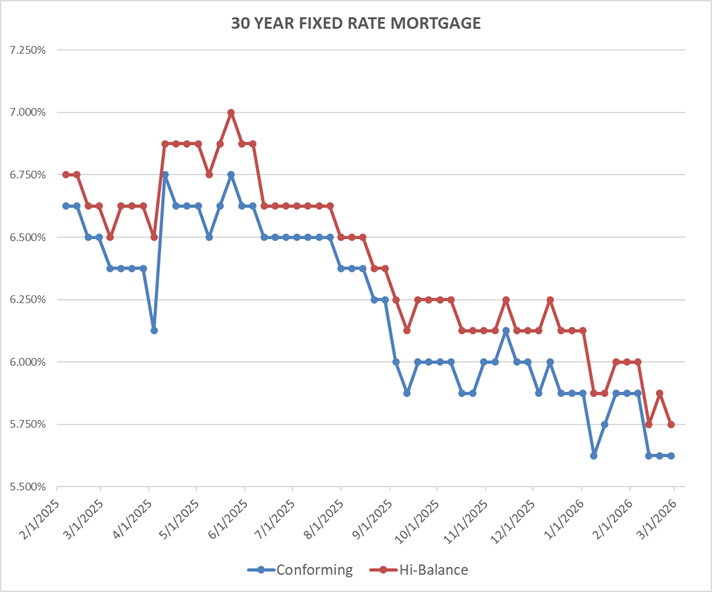
Rates for Friday February 27, 2026: The conforming rate is flat for another week, investors seem to be taking a moment to digest a lot of speeches, comments, and what-ifs…

FIXED RATE MORTGAGES AT COST OF 1.25 POINTS LOCKED FOR 45 DAYS FOR PURCHASE TRANSACTIONS:

30-year conforming                              5.625%        Flat

30-year high-balance conforming        5.875%        Down 0.125%

Please note that these are base rates and adjustments may be added for condominiums, refinances, credit scores, loan to value, no impound account and period rate is locked. Rates are based on 20% down with 740 FICO score for purchase mortgages.
What an exciting end to the Winter Olympics with the United States Men’s Hockey Team defeating Canada in overtime. The last time the men brought home the gold was in 1980 at Lake Placid—the highlight being their win over the Soviet Union in the “do you believe in miracles game.” The story almost was lost however if they did not come from behind to beat Finland in the gold medal.

In a coincidence for me, and about 20 of my high school classmates, I was in the site of this year’s Olympics for the 1980 Miracle team’s win over the Soviets. Every year for the Mardi Gras winter break students and parents at the International School of Brussels would organize ski trips to different areas in France, Switzerland or Italy. In my senior year of 1980 the trip I went on went to Cortina d’Ampezzo, Italy.

The USA v USSR hockey game was on at night for us and it was on a television in the bar where we frequented during our trip (remember—Europe, lower drinking age). We were not really paying close attention to it as, like everyone else, we expected a blowout by the Soviets. But…the noise go a little louder and louder as the Americans were making a game of it. Soon the whole bar was watching, cheering, shouting and when the game was over this table of American students was being congratulated by Italians, Germans, French, Swiss, who were thrilled to see the Soviets being defeated. There were not a few bottles of beer put before us as well.

Walking back to the hotel later, and the next day in town and on the slopes, we were congratulated again and again. Needless to say, we were all very proud to be representing our country in accepting congratulations for the win.

There is an excellent documentary, “Miracle: The Boys of ‘80” on Netflix I encourage everyone to watch as it captures more than just the game—the national and internation moods, economic and social issues—that heightened the meaning of the men’s victory.

One final note, lost in all the excitement for the men’s win is the United State’s women’s team also beating their Canadian opponents, also in overtime.

Can I get a mortgage if I change jobs?

Question of the week:  Can I purchase or refinance if I changed jobs?**

Answer: Yes, maybe, no…our most common question of the week answer applies this week. We will answer the question in this order.

Yes, you can purchase a new home, or refinance a current one, if you have changed jobs in many—most?—circumstances.

YES…

It is estimated that 80-85% of American workers are W2 employees; i.e. they are paid on an hourly or salaried basis.

If you are changing jobs in the same industry, or generally same line of work or employment, the job change should not be a hinderance to your ability to qualify for a loan. Note, “job change,” not “income change;” if your new job will pay less, it will impact they amount you may qualify for with your new mortgage.

Francine has been a registered nurse for six years and has worked at ABC medical clinic in Long Beach for the entirety of her career, where she makes $50 per hour. She wants to move to the Central Coast to be closer to her family, as well because home prices are lower.

She finds a job in San Luis Obispo that will pay $40 per hour, a twenty-percent cut in pay, however there are plenty of housing options for her in the $400-450,000 price range.

Her job starts in March, she enters a contract to purchase a $425,000 home in mid-February and we close escrow towards the end of March.

Even though she took a pay cut to move, she has a job in the same field, a contract from her new employer, and by the time we close she will have received a paycheck showing her pay. All of these factors enable her to qualify for a home loan.

What if I am not W2 but receive a form 1099 for my income, I work on commission or on contracts?

Roderick has worked in the tech industry for many years. He has contracts with several companies to maintain their computers, repairing, installing new software and updates, making fixes after Bill clicks on the “your password is expiring” link.  His gross income is $150,000 per year, he has some deductions on his IRS Schedule C that brings his taxable income to $110,000 per year; which is the amount we would use for his qualifying income.

He recently was hired by one of his clients that is expanding their business and wants Roderick to be their in-house CIO (Chief Information Officer), and are giving him a salary of $125,000 per year.

Roderick’s new qualifying income is $125,000 per year that is paid as salary. Like Francine, a contract and a paystub would be the necessary documentation for closing using that income.

Moving from W2-to-W2 income, or from 1099 to W2, is usually not an issue for mortgage qualifying.

Maybe…

Instead of moving from one nursing job to another, Francine takes a job in the Central Coast managing the tasting room and gift shop for a winery and has a contract of employment. 

Underwriting will scrutinize this transition a lot more than moving from nursing to nursing. The contract is a huge factor, as will be the paystub(s), however what experience does she have in the wine, or retail industries? Management?

Francine’s tenure at her prior job included staff management, making shift assignments, ensuring supplies were on hand to treat patients, in addition to her duties as a nurse. She writes a strong letter of her duties on her prior job and the similarities between her new job—which were sufficient to be hired. As well, her current and new employers provided letters supporting her experience and duties. Underwriting approves the mortgage.

Roderick, instead of going to work for one of his clients, wants to move out of the area. He works in the Sacramento and wants to move to San Diego.

Underwriting is concerned due to his clients being in Northern California and his move to San Diego, this could result in a drop in income. Roderick writes a letter stating that most of his work is done remotely, rarely visiting his clients. If a major issue comes up, he can easily travel to the client for a few days to solve the issue. He asks his clients to write letters stating that he works remotely for the vast majority of his service with them. The underwriter has concerns about increased expenses for travel to Northern California when the need arises. 

Roderick has already been traveling back and forth as he determines where he would like to live in San Diego and produces a contract with a new client in Oceanside that allays the underwriter’s travel expense concern.

No…or extremely difficult…

Francine has exponential growth in her followers on her “Home remedies” internet presence. She has slowly been increasing sponsors and advertisers on her various feeds and decides to quit her job and pursue being an social media influencer full-time.

Even though she is in the same industry, underwriting will use the income on her tax returns from the on-line income to determine qualifying. Since she is in the process of building the income, Francine will need to wait until she can show sufficient annual income to support a mortgage and other obligations.

Roderick works as an in-house CIO. Over the years he has made many contacts at other companies through his work, going to industry conventions and association events. He is recruited constantly but has remained declined offers.

Finally, with encouragement from his wife, he leaves his company and starts his own business as an external-CIO for hire on a retainer plus costs basis. His first client is his existing company, and after several months has signed up more clients.

After his first year his taxable income is almost the same as his salary from his prior employment. Underwriting is concerned because they do not have two-years tax returns showing his revenue and expenses. Roderick’s CPA writes a letter breaking down his expenses, shows they are very stable and tied to percentage of revenue. Roderick provides copies of his contracts showing they are in place for the coming year, and several are multi-year contracts.

Based on his experience in the industry, and Roderick’s ability to quickly build revenue to match his prior W2 income, after expenses, underwriting approves his income.

Or income calculation is…

The scenarios above are based on standard mortgage income qualifying. There are mortgage products out there that use other methods to calculate income, such as asset depletion (calculate income based on amount of liquid assets available in investment and retirement accounts), or using deposits in bank accounts over a period of time.

As an industry, we try to get to “how” when it appears the answer maybe “no;” so if the answer is “no you don’t qualify” it can be worth explaining other options to see if there is a “how” available.

Have a question? Ask me!

Want to schedule and appointment? Click Here

There were uncertainty and choppiness in the job market in 2025, not a lot of jobs were added by businesses, but not a lot of people were laid off. Following ambiguous year for businesses hiring and firing patterns, the report for January is a good way to start the year. The economy added 130,000 new jobs, much higher than 55,000 expected, and the most in 13-months, despite winter storms through much of nation. As well, unemployment drops for second month in a row, from 4.4% to 4.3%. The data reinforces the view that the Federal Reserve will not be changing its benchmark interest rate in the near future as it appears the labor market has stabilized.

More good economic data was released this morning showing that an important measure of inflation shows price increases slowed to a five-year low. In January the consumer price index increased 0.2% and annual inflation slowed from 2.7% at the end of the year to 2.4% to start the year. Stripping out gas and food, the core rate increased 0.3%, slightly up from December, and the annualized rate dropped from 2.6% in December to 2.5% in January.

Rates for Friday February 13, 2026: Investors liked the news this week, and not needing to guess what the Fed might due as improving inflation and jobs are what are desired. Rates drop from last Friday, and for the second time this year are only 0.125% the 3-year low, briefly reached in September 2024.

FIXED RATE MORTGAGES AT COST OF 1.25 POINTS LOCKED FOR 45 DAYS FOR PURCHASE TRANSACTIONS:

30-year conforming                              5.625%        Down 0.25%

30-year high-balance conforming        5.75%          Down 0.25%

Please note that these are base rates and adjustments may be added for condominiums, refinances, credit scores, loan to value, no impound account and period rate is locked. Rates are based on 20% down with 740 FICO score for purchase mortgages.

**Our question of the week arose from Leslie’s recent work in putting together a summit for those looking for “what’s next” that may involve a change in careers, and income.

Over the years I have been solicited by many companies to include their product or service in the WR&MU. I have declined them all. Until now…

If you’re interested in starting something new in retirement, or just something new in general, you might be wondering what options match your interests and let you transfer your skills and wisdom to build something new that brings you joy.

My wife Leslie is hosting the Second Act Business Summit on March 2-7, 2026. In a virtual format, you can watch up to six half-hour segments each day from experts who consult specifically on business options and creative endeavors that might interest you, tools and systems you need to build a thriving business, and the coaching and supports you need to maximize your potential. Each speaker offers a free gift.

The event is 100% virtual allowing you to watch it as your own pace, and the best part is it’s Free! Check it out by clicking here. Checkout the VIP package that she’s offering for a mere $27.

We want to build on our property…

Question of the week:  We want to build on our property…

Answer: There are a lot of questions that can finish this sentence.

What kind of building?

Where?

How?

What?

Last March we covered changes in California laws for property owners building accessory dwelling units (ADU) on their properties. That is one type of building that has become a lot more common around the state, and nation.

What has come up more often in conversations I have had with clients is building on vacant lots or pieces of land—not just those impacted by wildfires, but land obtained through inheritance, a purchase for future second home or retirement, and other circumstances. In these cases the objective is to construct a home on the property.

If building on a vacant lot or parcel, perhaps the first step is to ascertain if the property has electricity, water, and sewage; the latter may take the form of pipes to a utility network, or an on-site septic tank.

If the property does not have any electrical or water supply to the property, construction will be more challenging until these systems are operational. As well, obtaining the connections can be time consuming and expensive.

Moving forward, the next question is “what do we want to build?” Which raises the question, or should, “how are we going to use this dwelling?”

Will it be a permanent home, a vacation home, a hunting cabin, a rental, short or long term, will we retire there, entertain…?

How the dwelling will be used is paramount to conversations with architects, contractors, landscapers, designers. As well, it can determine how you build the home.

If for yourself and family, you will like want higher quality fixtures, finer details and design, than if the dwelling will be used more by non-family members/tenants.

Construction is, obviously, the highest cost of the project. What type of material you use for everything from roofs, to flooring, to plumbing fixtures, to landscaping, can quickly increase your costs from budgeted to “what the heck?”

For most families, the primary driver of building, whether an ADU, a get-away cabin, to a family compound with multiple dwellings, is “how much can we afford?”

Ideally, before meeting with any professional to start the process, you meet with a lender to determine your financing options and capabilities. From this conversation you will then be able to determine how “grand” you can make your new property.

Increasingly, many families are bringing their costs down considerably, whether for ADUs or traditional built houses, using manufactured housing.

We will pause here while some readers roll their eyes, become immediately resistant, put on the banjos from “Deliverance” and tell their favorite joke about Okies or West Virginians*.

For too many, their image of manufactured homes is mobile homes from the park by the river. Those dwellings are indeed manufactured homes. However, over the past several decades, the manufactured housing industry has re-labelled many of their dwellings “modular homes,” or “prefab(ricated) homes.” These homes can have style, elegance, and comfort, for considerably less cost than building a new home from the ground up on site with new materials. (Google “upscale manufactured homes” and take a gander.)

Prior prejudices about manufactured homes aside, consider the total costs project time can be up to 40-50% less.

There are several options to finance building projects, depending on the total funds needed.

If you own developed property, depending on your equity, you can refinance or get an equity line for funds.

Construction financing is available in a few different forms, the basics being the same for most programs.

Completed plans and costs from a contractor will be needed as an appraiser will do a before-and-after assessment of the property. The lender will then lend up to a certain loan-to-value of the finished project.

If there is a loan on the property it will need to be paid off as part of the loan.

Simplifying the numbers.

You have purchased a one-acre parcel of land in Plumas County for $80,000 using your equity line on your primary residence that has a small cabin with electricity and water to the dwelling and a septic tank. You want to build a vacation home that will be used by you and your family.

You have plans for a 4-bedroom, 3-bathroom, 3500 square foot home. The cost is approximately $500,000 to complete the project. The after-value appraisal is $750,000.

The underwriter has reviewed your financial information, calculating your debt-to-income ratios, including your total housing payment for current and new properties, funds in reserve and credit report for a $500,000 loan.

You qualify for the transaction, the underwriter then reviews the costs to build and the after-value appraisal, and approves the loan.

The loan is funded, with some funds being disbursed to cover costs incurred or needed to start the project. Moving forward, the lender will release more funds at different stages of completion and inspection to ensure those stages were complete.

When the project is finished and a certificate of occupancy is issued, the lender releases the final amount of funds required, and if any funds remain are applied to the principal balance of the loan. At this time the loan converts to a 30-year fixed, or whatever terms for which you applied.

There is more paperwork and steps for a construction/renovation loan, however, the lender also acts as an accountability factor in that the contractor cannot get paid until work is complete and signed off by the lender’s inspector.

If putting an ADU on an existing property, construction/renovation financing may also be available; an option to consider vis-à-vis a cashout refinance or equity line options.

*What’s the difference between a tornado in Enid, Oklahoma and a divorce in Wheeling, West Virginia? Someone is losing a mobile home.

Have a question? Ask me!

Want to schedule and appointment? Click Here

Rates for Friday February 6, 2026: First Fridays are always great here in Bixby Knolls neighborhood of Long Beach as the restaurants and stores have special deals that align with a monthly theme, and the sidewalks and businesses are full of happy people. They are also the scheduled release date for employment data for the prior month from the Department of Labor. This Friday the theme in Bixby Knolls is Black History Month. The Labor Department data was not released due to the partial government shutdown, data is expected on Wednesday. Rates flat, again, which is nice.

FIXED RATE MORTGAGES AT COST OF 1.25 POINTS LOCKED FOR 45 DAYS FOR PURCHASE TRANSACTIONS:

30-year conforming                              5.875%        Flat

30-year high-balance conforming        6.00%          Flat

Please note that these are base rates and adjustments may be added for condominiums, refinances, credit scores, loan to value, no impound account and period rate is locked. Rates are based on 20% down with 740 FICO score for purchase mortgages.

For the first time in a decade (Broncos, Panthers 2016) that I have very little interest in the Super Bowl. I would like to see Sam Darnold win, not because he went to the school up the freeway from us, but because of his NFL journey. I also would like to see the Patriots win with their first year coach and seemingly great guy quarterback—however would not like to feed the millennial and Gen-Z Patriots fans who grew up with winning teams and have an arrogance and smugness about them (apologies, no-apologies to Patriot-Red Sox-Bruin-Celtics fans reading this).

Since I am wanting the Seahawks more than the Patriots, the Patriots will win as I am 1-6 for teams I want to win in the playoffs winning this season.

Patriots 24 – Seahawks 21

Can we refinance if our home value drops?

Question of the week:  Can we refinance if our home value drops?

Answer: Yes, probably…but does the math make sense?

This question was asked by a client who is holding off refinancing their home because they think rates will drop further, but also concerned that their home value may drop and they won’t be able to do so.

Our case study will be the Jetson’s. They purchased their home in 2024 for $1.3 million with 20% down, funding a $1,040,000 mortgage with a 7,125% rate and a $7000 payment.

The home value has increased by about 4%, to $1,350,000. Having made all the payments in a timely fashion, the current loan balance is $1,020,000; or about 75% loan-to-value.

Refinancing today the rate would be 6.375% with about $6000 in costs for appraisal, escrow, title, underwriting, etc, and the payment would be $6365 per month. The Jetson’s would save $605 per month, recouping the costs of the transaction in just over ten months ($6000 cost divided by $605 per month savings), they are “positive” on the transaction in January 2026.

Consider the question, what if the Jetson’s wait to refinance as they think rates will go lower, but are concerned their home value will drop as well, will they still be able to refinance?

Probably, but…it will depend on the value of their home.

“Bewitch” twitch ourselves to the end of the year (for younger readers, here is the infamous Samantha Stevens magical twitch).

Rates have dropped for the Jetson’s on their rate and term refinance to 6.00%, their mortgage balance has dropped to $1,010,000, but their home value has dropped 5% to $1.28 million. The loan-to-value is 79%.

At this price, since the LTV is below 80% their rate would be 6.00% and refinancing their mortgage of $1.010 million results in a $6055 per month payment, a saving of $945 per month from their original purchase mortgage. Their break-even point on the transaction is their seventh payment, July 2027.

By waiting they cost themselves $605 per month in cash savings, but they did not have the $6000 costs.

Did they come out ahead, behind, or no difference by waiting?

Had they refinanced at 6.375% at the beginning of the year, then refinanced again at the end of the year, their total refinance costs would be $12,000 to go from 7.125% to 6.00% with the two transactions. The total time it would take for them to recoup their costs for the refinances would be 16-months (6000 divided by 605 + 6000 divided by 945), June 2027.

By refinancing at the current rate and home value, then refinancing again with a lower home value, and lower interest rate versus waiting and then refinancing with a lower home value and a lower rate, the Jetson’s essentially end up with the same transaction cost to payment savings time frame.

There are two risk factors the Jetsons take on by waiting.

They have value risk; their property value drops further and results in their LTV being higher than 80% when they look to refinance, resulting in cash into transaction to lower their loan amount to get to 80%, or they take on private mortgage insurance, which adds to their monthly payment.

They have interest rate risk, rates do not go down further, or possible increase, resulting in their missing out on the $605 per month savings.

The answer to our question of the week being a “yes” depends on those two risk factors, if property values decline, by how much do they decline, and what will interest rates be in the future to afford you how much in savings on your monthly payment.

Most current homeowners purchased their homes before the rising rates period that started in 2022 and have seen significant appreciation in the home values. As a result, a drop in value will not endanger them with looking at higher refinance rates based on their LTV. For those who purchase during the rising rate period, property values have not increased to the extent they did before and during the Covid Era.

For those who took out Home Equity Lines of Credit (HELOC) after their Covid-rate-refinance, it is worth looking at the math to consolidate the HELOC with your current mortgage into a new fixed rate mortgage. While it seems counter intuitive to refinance a 3% mortgage to a 6.5% mortgage rate, there is no harm in exploring paying off the adjustable-rate HELOC that may have a balloon payment, or fully amortize to a very high payment, to fix the HELOC repayment to a fixed, lower, monthly payment.

If you would like to go through the math on your current mortgage and debt situation to determine your potential monthly savings please contact me.

Have a question? Ask me!

Want to schedule and appointment? Click Here

Rates for Friday January 30, 2026: As expected, the Federal Reserve did not change its benchmark interest rate at its meeting this week—the first meeting without moving the rate since July. Fed appears to be on hold as it sees the economy moving at a “solid pace” and tentative signs of stabilizing labor market. Until jobs market weakens, and/or inflation has more consistent move to Fed’s 2% goal, expectations are for no movement by the Fed on rates. After climbing for two weeks, rates are flat from last Friday.

FIXED RATE MORTGAGES AT COST OF 1.25 POINTS LOCKED FOR 45 DAYS FOR PURCHASE TRANSACTIONS:

30-year conforming                              5.875%        Flat

30-year high-balance conforming        6.00%          Flat

Please note that these are base rates and adjustments may be added for condominiums, refinances, credit scores, loan to value, no impound account and period rate is locked. Rates are based on 20% down with 740 FICO score for purchase mortgages.

Any other Southern California residents being brats and sending playing golf in short sleeves, or engaged in other outdoor activities, with snowcapped Mount Baldy in the background, to their friends in other parts of the country?

What would you do to soften housing market?

Question of the week:  What would you do to soften housing market?

Answer: Last week we answered “What is impact of President Trump having $200B of mortgages being purchased?” The gist being that it puts downward pressure on rates.

This, of course, is good for homebuyers as lower rates mean lower payments mean higher loan amounts for which they qualify.

There are other measures Trump has proposed, or has indicated he may propose, to make home-buying more affordable are ban large intuitional investors (defined as owning more than 100 properties) from buying single-family residences, having Fannie Mae and Freddie Mac offer 50-year mortgages, capping credit card interest rates at 10%, allow portable mortgages (homeowner can take current mortgage at 3% to new home purchase), and first-time homebuyers (generally defined as not owning a primary residence in the past 3-years) being able to penalty- and tax-free withdrawal funds from the 401(k) or other retirement funds.

All of these proposals have positive and negative aspects, as almost everything does, which means depending on who you are reading, watching or listening to a particular idea is even better than sliced bread, or the worst, most horrible idea ever that will lead to starvation and more homelessness.

A challenge that Trump did bring up in his, let’s say interesting, speech in Davos this week at the World Economic Forum, is very true.

“I am very protective of people that already own a house,” Trump said. “Every time you make it more and more and more affordable for somebody to buy a house cheaply, you’re actually hurting the value of those houses, obviously, because the one thing works in tandem with the other.”

“…because the one thing works in tandem with the other.” In other words, supply and demand. The over-riding issue in home affordability has been supply; with the primary reason for lack of supply being the historically low interest rates during the Covid-19 pandemic. The low rates spurned a surge in homebuying pushing prices higher and higher and higher. Those who already owned were refinancing their homes, dramatically lowering their payments, or if keeping their payments the same, dramatically accelerating the pay-off of their mortgages.

Higher rates are supposed to cool demand and flatten, or shrink, home prices as demand dries up with fewer families able to qualify to purchase a new home. As we have seen, the opposite has happened—prices have gone up.

Because supply has shrunk more than demand.

For many years I have defined certain areas, mostly waterfront, such as on the water in Seal Beach, Balboa Island in Newport, the “walk streets” in Manhattan Beach, as D&D areas. By D&D I mean Death and Divorce, as those events were the most likely reason a home would be put on the market.

The broad real estate market, especially in Southern California, is mostly a D&D market.

Many readers of the WR&MU refinance their homes during the pandemic, down to rates at, near, or below 3%. Those who want to move as their family has outgrown their home, or their home is too big for empty-nesters, or to move closer to jobs, are not doing so because they will not, or cannot, trade their 3% mortgage for a mortgage over 6%. Unless they have to, most are not selling their homes.

The significant lack of move-up sellers is the huge hole in the supply market.

So, while many of Trump’s proposals and suggestions have some, or a lot, of negative aspects, the approaches are almost all on the buyer’s side to increase the ability to purchase a home, and not so much about making homes cheaper to purchase.

Supply can be expanded in many parts of the country because they have the land, and friendly government regulations, to build more housing. These conditions are not as prevalent in Southern California, so what actions can be taken to increase supply, without significant harm to homeowners? I.e. increase supply at a moderate rate to level prices, but not tank them?

My solution: use the tax code. My proposal has a lot of opposition, which you can guess and I will reveal below if you happen to be stumped.

Raise the capital gains exemptions for the sale of your primary residence, which have been the same amount, i.e. not indexed for inflation, since the 1997 Taxpayer Relief Act was passed.

Individuals selling their primary residence can claim $250,000 exemption from capital gains and married couples can claim $500,000.

Here is how it works.

Capital gains on the sale of primary residence is calculated by subtracting the acquisition cost of the property plus any home improvements from the sales price less costs of sale.

For many elderly individuals, and couples, who have been in their home for a long time, the exemption still creates a very large tax bill. In my conversations with many of my older clients, they are very hesitant to sell because they do not want to pay hundreds of thousands of dollars to the federal and state governments. Eliminate, or greatly reduce, the taxes they will have to pay to down-size and more homes come on the market.

It is not just older homeowners who face this pay-the-tax-or-sell dilemma. Many California working couples face the same quandary as the state taxes capital gains as ordinary income, which could put their taxes in the higher 9-103% brackets.

If a spouse dies, the surviving spouse has two years to retain the $500,000 exemption, after which it drops to $250,000. That is a significant increase in tax liability for staying in your home after your spouse has passed away.

If the primary residence capital gains exemption was indexed for inflation from its inception in 1997, the individual exemption would be $500,000 and the married couple exemption would be $1,000,000.

Index the primary residence exemption to inflation, with a retroactive one time increase to 1997. As well, extend the married couple deduction to five years from two.

The primary argument against this proposal is it benefits a small, mostly geographic, percent of the population, who have a significant amount of wealth—even though tied up in equity—who benefit from a higher exemption. They will pay less in taxes, reducing the amount of revenue received by states and the federal government.

As of July 2025, the median single family home sales price ten states and the District of Columbia is greater than $500,000; at that time the national median price was $370,523.

Asking putting through a tax exemption that is higher than the median sales price in 40 of 50 states is a big ask.

But…what are the benefits? More homes, especially in high price areas, will come on the market as a result of the higher exemptions. Increasing supply at the top end of the market trickles down stream, opening up lower priced markets as current homeowners move up.

As well, especially in California, states will collect transfer taxes on sales, as well as increasing the amount of property assessments. A couple that purchased their home pre-1978 in California when it was assessed at $40,000 and is now valued at $1 million. Because of Prop 13 they have been able to retain their original tax base and have to sell because their incomes have not kept up with property value increases. Their current tax rate is about $1100 per year.

If they sell the property the tax base will be about $12,500 per year, plus whatever assessments for various school bonds, parks, etc.

If a couple purchased a home in 1978 for $40,000 and sold it for $1,000,000 in 2026, assuming improvements, etc of $300,000, their capital gains tax after exemption could reasonably be $45,000. The state regains that about in less than three years of property taxes, then gains $11,400 per year—on that one property.

We have seen that tax breaks for certain industries increases business for those industries, otherwise why would they happen? The same is true if a home is treated like a business, lower the capital gains being taxed and more homes will be sold. Increasing inventory and softening the market, not drastically, but some. And that is a start.

Have a question? Ask me!

Data = No Rate Change. Government agencies released some catch-up-from-the-shutdown data this week for GDP and inflation. The numbers do not support the Federal Reserve cutting its benchmark rate at its next meeting. The first revision to the 3rd quarter of 2025 showed the economy having strong growth, up 4.4%, pushed by an increase of 3.5% in consumer spending (65-70% of our economy). Rates, as a rule, drop in slowing, or negative, growth economies.

Further supporting no change, is the numbers for inflation in November (delayed reporting due to October shutdown) from the Fed’s preferred metric, the Personal Consumption Expenditures. Prices rose 0.2% in November, consistent with prior month’s 0.2% rise. Year-over-year prices rose 2.8%, above the Fed’s 2% target they have been chasing since it was at 2% in March 2021. The core index (energy and food stripped from data) was also consistent with prior reading, growing 0.2% in November, and up a tick from a year ago at 2.8%. Rates, as a rule, increase with inflation.

Workers continue to see higher wages, with personal incomes increasing 0.3% in November, out pacing inflation. However, spending increased 0.5%, mostly due to holiday traffic on-line and in stores; consumers either borrowed more or dipped into savings to make up the difference between their spending growing more than their income. Spending cannot outpace earnings for long. Since it is easier to cut spending than increase earnings, if the data trend continues spending will slow, which will slow the economy.

Rates for Friday January 23, 2026: Rates are not just determined by economic data, politics, international relations, natural disasters, and other events that impact buying and selling of goods and services also determine rates. Pricing in no rate change by the Fed, plus geopolitical news this week, has resulted in rates inching up for the second week in a row.

FIXED RATE MORTGAGES AT COST OF 1.25 POINTS LOCKED FOR 45 DAYS FOR PURCHASE TRANSACTIONS:

30-year conforming                              5.875%        Up 0.125%

30-year high-balance conforming        6.00%          Up 0.125%

Please note that these are base rates and adjustments may be added for condominiums, refinances, credit scores, loan to value, no impound account and period rate is locked. Rates are based on 20% down with 740 FICO score for purchase mortgages.

Great news for Rams fans, of which there are many in the WR&MU readership, and those who get 3 & 4 in the squares pools from Oz the Mentalist.

What is impact of President Trump having $200B of mortgages being purchased?

Question of the week:  What is impact of President Trump having $200B of mortgages being purchased?

Answer: As I mentioned in rate recap part of last week’s WR&MU (sorry no link to the update as issue with website—if you deleted and would like to read let me know and I can send to you), President Trump ordered representatives to purchase $200 billion of mortgage-backed-securities (MBS). This action has a tremendous impact on the mortgage market.

Going through this subject can get a bit wonky, but if I made New Year’s resolutions, one would be to try to make my WR&MU less wonky. Let’s see if I can.

Quick update for long-time WR&MU readers, background for newer readers, on the American mortgage market…

The overwhelming majority of funded mortgages in the United States are “conforming,” or “conventional,” and are approved using guidelines from either the Fannie Mae or Freddie Mac. Fannie and Freddie, for our purposes with be labelled GSE.

GSE stands for Government Sponsored Entity(s). A GSE meets certain criteria, mainly they are created by federal law and have a federal charter, are privately owned*, operate in certain credit markets (mortgages, student loans, etc), can borrow money or guarantee debt without being backed by the full faith and credit of the U.S. government*.

*As a result of the mortgage and real estate market meltdowns in 2008 that precipitated the Great Recession. Congress created the Federal Housing Finance Agency as an independent regulator to oversee the GSE and the Federal Home Loan Banks with powers of regulation, supervisions and conservatorship authority.

*(con’t) While technically private, share-holder owned entities, the GSE have been under full control of the U.S. government since 2008, and the U.S. Treasury owns about 80% of common shares and control the company. So, while there are private shareholders in the GSE, they have no operational control.

 *(con’t) As part of the transfer of control and ownership, the United States Treasury does not back GSE mortgages with the full faith and credit of the U.S. government, the GSE do have the implicit support of the Treasury as a backstop through the conservatorship via FHFA.

What do the GSE do for the mortgage market? They stabilize it, they make it uniform, they reduce general risk.

A simplified version of the process of a mortgage to purchase or refinance a single-family residence using conventional finance.

Application for a $500,000 mortgage is submitted to a lender which underwrites the borrower and property using GSE guidelines for credit risk. If it meets guidelines the loan is approved and the lender is issued an approval that enables the loan to be sold to one of the GSE.

The lender funds the $500,000 mortgage. The mortgage is placed in pool with other mortgages using the same underwriting guidelines (either Fannie or Freddie—their guidelines vary slightly). The lender then sells the pool, saw $25 million, based on the aggregate rate of return on the pool, say 6.00%.

The lender uses the funds from the sale of the pool of mortgages to fund future mortgages.

The GSE package the various mortgages into pools and sell them on the open market as mortgage-backed-securities (MBS). The typical minimum price an investor must purchase is $1000—similar to most bond purchases.

The investor receives an interest payment based on his/her share (slice) of the mortgage pool in which s/he is invested, receiving monthly payments on the MBS coupon rate (not the borrower’s note rate which is higher).

Depending on the MBS coupon rate compared to other available fixed rate investments (i.e. bonds, particularly U.S. Treasury issues), and other markets, prices of MBS move up and down daily; like prices for company stocks on the stock exchanges.

For MBS and other fixed rate investments, there is an inverse relationship between prices and rates; higher price means lower rate, lower price means lower rate. I.e. if you have a $1000 bond with a 5% rate, your return will be $50 per year. If you purchase the bond for $980 and receive a $50 in interest for the year, your rate of return is 5.102%; lower price higher return.  If you purchase the bond for $1020, your $50 interest is 4.9%; higher price lower return. This may not seem like a lot of difference, one-tenth of one-percent (0.1%), on $1000, but if you invest $10 million in MBS that 0.1% is $10,000.

President Trump directed his “representatives” to purchase $200 billion in MBS. Since the GSE, Fannie Mae and Freddie Mac, are under conservatorship of the FHFA, they fall under the Executive branch of the federal government, and are therefore representatives of the Office of the President.

Rather than hold onto $200 billion in MBS and not put them on the market, thereby decreasing supply, Trump’s directive is to purchase the MBS on the open market, thereby increasing demand.

Rough estimates show that the $200 billion purchase of mortgage-backed-securities by Fannie and Freddie is equal to a little over half a week of trading volume. While seemingly insignificant over 52-weeks of trading and the total volume of the MBS market, having one buyer (split into two entities) purchasing that amount of the market has a significant impact on prices and returns.

With changes in prices and returns depending on what investors require in order to make the investment, MBS are like every other commodity with prices based on other factors (i.e. risk) but mostly on supply and demand.

As supply lowers against steady demand, prices go up and rates go down. As supply grows against steady demand, prices drop and rates go up.

Trump’s directive has the impact of lowering interest rates on conforming mortgages, which ripples into other interest-rate based investments, and further into rates charged by lenders and creditors.

Hope the above was not too wonky!

Have a question? Ask me!

Not great, but not bad…That is the consensus on the final data for the Consumer Price Index for 2025. Prices rose 0.3% in December from November, 0.2% if energy and food are stripped out (the “core” rate). Year over year, prices rose 2.7% from the start of the year, with the core rate of inflation at 2.6%. The monthly and annual price increases in December matched those for November. The data eases pressure on the Fed heading into its January meeting. The expectation from the Fed was to hold its benchmark rate steady, CPI data for December supports the non-action on rates.

Rates for Friday January 16, 2026: After last week’s sharp week-to-week drop in rates, we see a little rebound in the conforming rate this week.

FIXED RATE MORTGAGES AT COST OF 1.25 POINTS LOCKED FOR 45 DAYS FOR PURCHASE TRANSACTIONS:

30-year conforming                              5.75%          Up 0.25%

30-year high-balance conforming        5.875%        Flat

Please note that these are base rates and adjustments may be added for condominiums, refinances, credit scores, loan to value, no impound account and period rate is locked. Rates are based on 20% down with 740 FICO score for purchase mortgages.

In 1972 journalist Harold Pullman Coffin created an annual “un-holiday” every January 16th. The purpose of the day is an anti-holiday after the hustle, bustle, and tussle of the holiday season running from Thanksgiving through the New Year.

Today, Friday January 16, 2026 is National Nothing Day! Because it is Nothing Day, there is no celebrating, because we are supposed to do nothing.

By my writing and sending this I have not fully participated in Nothing Day. Nor have you by virtue of reading this!

Is your deed correct?

Question of the week:  Is your deed correct?

Answer: When you own a home you have deed, typically a Grant Deed from the prior owner, that is your proof of ownership.

If you have a mortgage, in California there is also a Trust Deed, which places a lien on your property with the lender as beneficiary for the amount of the mortgage.

Over the years our lives change, marriage, divorce, re-marriage, death, inheritance, sale, purchase, refinance, kids, some of these occur while you own a home and can result in a need to change the title of ownership for your home.

“Title” is the legal description of the owner(s) of the property.

Title is determined by the legal status of the individuals, or entities, that will own the property, and what may occur upon the death of any individual on the title.

Individuals taking title are either single, or unmarried. Single means you have never been married before, unmarried means you have.

John Doe as an individual, never married.

John Doe as an unmarried man, was married and either divorced or a widower.

If more than one person owns the property, there are several ways to hold title, some overlap where owners or married or not married.

Spouses and domestic partners can take title as

          Community Property which is equal ownership between the spouses or domestic partners. If one party dies probate will be required to determine who will own the property, either the spouse/partner, or if they had children from prior relationship, do they have a right to title?

Community Property with Right of Survivorship, similar to above, but with transfer of full ownership to surviving partner, avoiding probate.

Joint Tenancy with Right of Survivorship, equal ownership and survivor inherits full title—similar to community property and parties do not need to be legal partners. For instance, if John Doe and Jane Deere are in a long-term relationship, but not domestic partners, depending on either’s prior marital status, they can take title as John Doe, an unmarried man, and Jane Deere a single woman, as joint tenants with right of survivor ship.

For unmarried partners, besides joint tenancy, other options for unmarried partners, or multiple owners title can be

Tenancy in Common in which each party can have a different percentage of ownership, as long as the total is 100%. Each owner can freely transfer their title, depending on other agreements, and there is no survivorship. From example above, John and Jane can take title as tenants in common, each with 50% ownership and will their share to other beneficiaries. If John’s brother Jack and his wife Jill will be purchasing the property, which is a duplex, John and Jane, the title may read: John Doe, single man, with Jane Deere, an unmarried woman as joint tenants with right of survivorship as tenants in common with a 50% interest with Jack Doe and Jill Doe, as husband and wife with a 50% interest as community property with right of survivorship.

Many individuals, and married couples or domestic partners, wisely have trusts. Trusts will have the property listed as an asset of the trust and will detail the disposition of the property upon the death of one, or both, parties. If Jack and Jill have a trust, they can take title as Jack Doe and Jill Doe, as husband and wife and trustees of the Jack and Jill Doe Family Trust.

What happens if Jack and Jill do not have a trust and get divorced with Jill keeping the home? The divorce decree will state that Jack is to transfer title to Jill. He does this by signing a Quitclaim Deed. If he does this after the divorce is finalized it will read Jack Doe, an unmarried man, quitclaims to Jill Doe, an unmarried woman, all rights, title and interest. If they are still married, they would be titled as married man and married wife.

Quitclaim deeds also occur when a couple get married. Take our original example, John and Jill get married, Jill is taking Doe as her last name. They will sign a quitclaim in which John Doe, an unmarried man, and Jane Deere and unmarried woman, quitclaim to John and Jane Doe as husband and wife as…however they decide to take title, likely as community property with right of survivorship.

When a spouse passes away, depending how title is taken, there is either automatic transfer of ownership, or the property will need to go through probate. Either way, to transfer ownership for proper title, the surviving spouse should record an affidavit of death with death certificate with title change to unmarried man or woman.

In the case of a death with a trust in effect, the trust may be restructured to an individual trust for the surviving spouse, and a new deed recorded showing title in the name of the trust.

Relationships change, either willfully or not, and these changes may require a change in title for property, otherwise a death or other relationship down the road may put a “cloud” on title that can be costly to resolve.

Some examples I have seen. A client was purchasing a new home, not going on title but very active in the process was his younger girlfriend. She was very involved, being at every meeting we had, including when I was taking the loan application—in the way back days of handwritten applications. When I asked if he had been married before, he was quieter than normal for a moment, and said, yes, in fact he was still married.

Room, quite a small interview room at a real estate office, became a bit tense. Girlfriend, “what? I thought you were divorced!” Turns out they never completed the divorce. I explained to him that since he was married and California is a community property state, his wife would have to sign a quitclaim as to her interest otherwise she would automatically have a claim to title.

The wife agreed to sign a quitclaim deed, but wanted some money to do so. I was a notary at the time and we all met in the same small interview room so I could notarize the quitclaim deed as he passed her a cashier’s check for, as I recall $5000. The wife and girlfriend never took their eyes off each other and I could not wait to get out of the room.

Reverse mortgage client had been a widow for 30 years and the title was never changed, still showed husband and wife as joint tenants with right of survivorship with her deceased husband. She had lost the death certificate. We needed title to obtain a copy of the death certificate and facilitate transferring title to our client in order to close.

It is not just purchase transactions where title is established, refinances can also necessitate title changes, or a lot of work to be done to ensure title is correct before closing. In the middle of divorce, we refinance to obtain funds to payout the spouse’s portion of the equity. Spouse needs to sign a quitclaim deed to relinquish title, but won’t do so unless the funds are provided. The divorce is not final yet as there are some items still being negotiated, spouse quitclaims as married to husband who is married. Loan approval is delayed due to numerous co-owned properties and getting proof of who owns what, who owes what on the properties, etc. The divorce agreement and finalized, we are not made aware that has happened and just before fund find out that they are now both unmarried; new loan documents and deeds are drawn for signing and recording.

If you have had any changes in our marital status, created or dissolved a trust, had a spouse or partner pass away, make sure the title to your home reflects the proper language to ensure you have clean title to your property.

Have a question? Ask me!

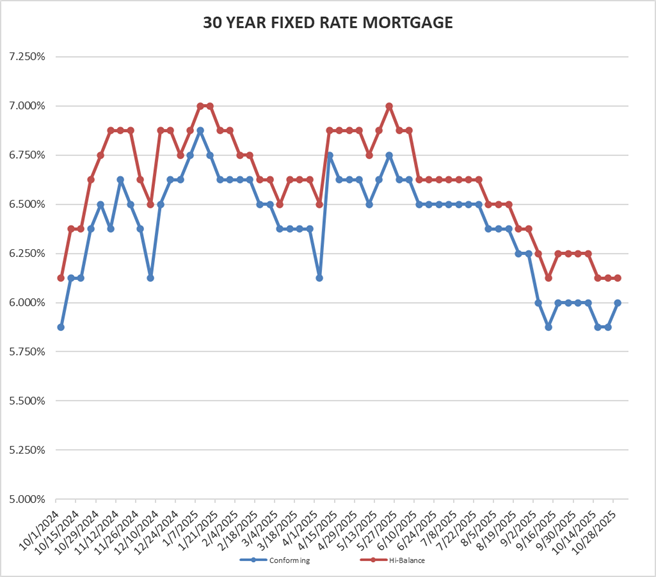
Rates for Friday November 7, 2025: With no major economic data forthcoming due to government shutdown, investors are trying to read weak tea leaves and adding more importance than they otherwise. This week it is weak consumer sentiment that caused rates to rally after rising in earlier in the week; flat from last Friday is the result.  

FIXED RATE MORTGAGES AT COST OF 1.25 POINTS LOCKED FOR 45 DAYS:

30 year conforming                                            6.00%  Flat

30 year high-balance conforming                      6.125%  Flat

Please note that these are base rates and adjustments may be added for condominiums, refinances, credit scores, loan to value, no impound account and period rate is locked. Rates are based on 20% down with 740 FICO score for purchase mortgages.

It was enough, plenty, never too much, but close. The final two games of the World Series filled this lover of baseball fully, enough to hold me over until pitchers and catchers report to spring training in about three months.

For decades I have nurtured memory of what was, to me, the greatest* World Series in my memory, the seven game classic in which the Cincinnati Reds beat the Boston Red Sox in 1975. While it will always be with me, the Dodgers seven game victory this season was great baseball for all fans and ranks number one* for me.

*On a pedestal by itself is the 1980 Philadelphia Phillies win over the Kansas City Royals in six games, their first World Series win in their history, sitting slightly below is 2008 when they beat the Tampa Bay Rays.

Congratulations to the Dodgers and all baseball fans on a great, great World Series.

Are you licensed?

Question of the week:  Are you licensed?

Answer: Yes.

On bottom of all my email communications you will see licensing information for myself and United American Mortgage Corporation, with whom I am affiliated and have my licenses registered.

Residential lenders and loan originators in California have to be licensed by either the California Department of Real Estate or California Department of Business Oversight.

As such, one of the licenses listed for UAMCO and myself is for the California Department of Real Estate. I have been licensed with the DRE since 1987 when I started in the mortgage industry, upgrading to a broker’s license with the DRE in 1988.

The DRE requires a “designated officer” for every real estate company in the state, and mortgage companies operating under DRE licensing. Any individual working as a real estate agent, or mortgage originator “hangs” his/her license under that of the designated officer. The purpose of this is to have an individual who is personally responsible for the actions, behaviors and communications of those whose licenses are registered with the broker/company. This eliminates a corporate veil of liability that can protect individuals from corporate or employee malfeasance, which with some exceptions, results in stricter oversight than not having someone with personal responsibility.

At UAMCO, our designated officer is its founder Al Hensling who began in the industry around the same time I did. You can tell how long someone has been licensed by the DRE by their number. Al and I’s licenses start with 009…which indicates in the 1980’s; licenses being issued this year start with 023…so about 1.4 million real estate licenses have been issued in California since we received ours.

That is one of the licenses listed on my record. The other is NMLS, or National Mortgage Licensing System.

In 2008 the Secure and Fair Enforcement for Mortgage Licensing Act (the S.A.F.E. Act) was passed. This Act required mortgage loan originators (MLOs) and the companies they worked for to be registered nationally. As well, it required states to pass legislation requiring MLOs to be licensed according to national standards. All state agencies that licensed MLOs had to participate in the Nationwide Mortgage Licensing System (NMLS).

As with DRE licensing, both companies and individuals must also be licensed by the Nationwide Mortgage Licensing System.

By 2011 all individuals participating in originating mortgages with consumers had to be registered with the NMLS. Most MLOs were required to pass an exam to be registered (exempt from the exam were those working for insured depository institutions regulated by one of the alphabet banking regulators (OCC, OTS, FDIC, NCUA for example).

When the S.A.F.E. Act passed requiring an exam for entry into the mortgage business I was mostly happy—only mostly because of the carve out from the exam for those working for major banks and other institutions.

I was happy because the NMLS exam was significantly harder than the exam required by the Department of Real Estate to obtain a salesperson or broker license. I was happy because a lot of individuals who should not have been in the mortgage industry opted out of the exam and registration. I was happy because no longer could a bad actor in the mortgage industry move from jurisdiction to jurisdiction when they had a license suspended or revoked.

It is my desire to see something similar be put in place for real estate agents and brokers so those responsible for the listing and selling of families’ primary assets also have a more rigorous process for obtaining licensing, are nationally registered and have stricter consequences for malfeasant behavior and actions.

Note that for both the DRE and NMLS, continuing education is required to maintain a license.

The DRE requires renewal every four years, which requires 45 hours of courses; there are five required 3-hour courses: ethics, agency, fair housing, trust fund handling and risk management.

The NMLS renewal is annually and requires eight hours of continuing education. Ethics is always one of the areas of coverage, as well as California specific rules and regulations, other topics vary from year to year so over time many areas of lending and real estate are covered.

If you are interested in seeing if someone is appropriately licensed, have any disciplinary actions on their records or other information, the NMLS has a consumer access website where licensees can be looked up by name or license.  The site to lookup licenses with the Department of Real Estate for agents and mortgage originators can be found here.

The bulk of the WR&MU was written yesterday, Thursday, since today I have my all-day continuing education class for my annual NMLS renewal. Oh, yes. It is every bit as exciting as you are imagining…

Have a question? Ask me!

The big news, while not news as everyone was expecting it, was the announcement that the Federal Reserve lowered its benchmark interest rate. What was unexpected, and roiled markets a bit, was in the rate announcement, Fed Chair Jerome Powell stated that the decision to lower the rate was not unanimous and there was quite a bit of discussion. Heading into the meeting, the consensus from Fed watchers and investors was that another rate cut in December was pretty much assumed. Powell’s “Far from it,” comment raised eyebrows, as he said, a “growing chorus” of voters on the open market committee (makes decision of rates and balance sheets) who wonder if more cuts are warranted.

With no economic date coming forward for the month the federal government has been shut down, the Fed is operating on supposition and pre-shut down trends. This uncertainty as to what is happening in the economy—higher inflation, slower inflation, strong job market, increasing layoffs—has many Fed officials wanting to pump the brakes on rate moves until they have a clearer, actually a clear, understanding of what direction our economy is headed.

One action announced by the Fed that may impact mortgage rates is the Fed will no longer be rolling over funds received from their holdings of Mortgage-Backed Securities* (MBS) that payoff back into buying more MBS.  

*Mortgage-Backed Securities are bundles of mortgages, think tens of millions per bundle, sold by Fannie Mae and Freddie Mac after they purchase mortgages from lenders around the country. MBS sales give Fannie and Freddie money to buy mortgages from lenders who use proceeds from their sale of mortgages to lend to borrowers with new mortgages, starting the cycle again.

In September, we went into detail explaining how the Fed uses the purchase of MBS, and U.S. Treasuries, to put downward pressure on rates. For the past several years, as those holdings of mortgages and Treasuries paid off, the Fed would use the proceeds to buy more mortgages with mortgage payoffs and more Treasuries for Treasury payoffs.

The Fed will begin taking the proceeds from MBS that pay off, either through loan terms ending, sale of homes with mortgages, or refinancing of existing mortgages, and purchase short term Treasury bills.

This shift in purchasing from more MBS to Treasuries will reduce the demand, or soaking up of supply, from MBS. Reduced demand typically results in lower prices. For bonds, and Mortgage-Backed Securities, lower prices mean higher rates.

Depending on whether investors step up to purchase MBS to the extent that absorbs the Fed’s absence from the market, and new mortgages being funded and sold, will determine if the Fed’s action pushes rates higher.

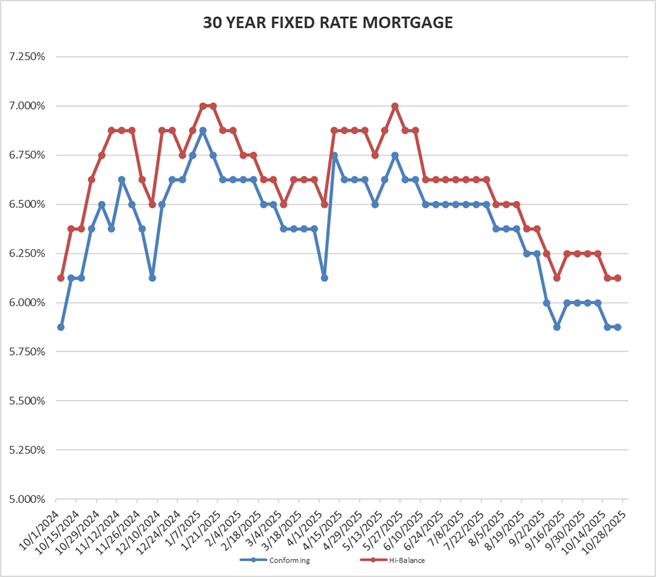
Rates for Friday October 31, 2025: The comments in the Fed rate release resulted in a bump in the 30-year fixed rate from last Friday.  

FIXED RATE MORTGAGES AT COST OF 1.25 POINTS LOCKED FOR 45 DAYS:

30 year conforming                                            6.00%  Up 0.125%

30 year high-balance conforming                      6.125%  Flat

Please note that these are base rates and adjustments may be added for condominiums, refinances, credit scores, loan to value, no impound account and period rate is locked. Rates are based on 20% down with 740 FICO score for purchase mortgages.

The Dodgers need to buck history to win the World Series. To do so they must win tonight and tomorrow in Toronto; many broadcasters have said the Rogers Centre, home of the Blue Jays, has been the loudest of any stadium than can remember during this year’s playoffs.

The history buck the Dodgers need? No team that has swept the playoff series before the World Series has beaten an opponent in the Series that won a seven game playoff to get into the Series.

One of my joys in life is esoteric sports statistics.

Leave that porch light on and fill the trick-or-treat sacks for the little ones tonight!

What is the benefit of putting less money down?

Question of the week:  What is the benefit of putting less money down?

Answer: Having more money.

Since the beginning of the WR&MU we have used 20% for a purchase transaction (and a 740 FICO score) for the rates posted below. The 20% down payment is used as it is the one most commonly used by the industry when calculating rates.

That said, I have always been a fan of buyers putting less money down, if possible, to purchase a home. Primarily because I believe in “leverage,” or OPM, Other People’s Money for major purchases as I can do more with the cash savings than can be done with it in an illiquid asset.

Equity, or the amount of value in your home, is the difference between what the home is worth and the amount of the mortgage.  For instance, if you have a $800,000 home and owe $640,000, your equity is $160,000.

Your equity, if you have a mortgage, grows in two ways.

First, very incrementally through monthly mortgage payments as a small percentage of the payment pays down the principal. Taking our example above, assuming a 5.875% mortgage, the monthly payment would be approximately $3785 per month. After 5-years of payments ($227,100) you will have paid down a little over $45,000 of the principal. That is about 5.5% of the purchase price of the home, or a little over 1% equity growth per year through mortgage payments.

Second, considerably more impactful on equity growth, is the value of the home (over time in most markets).  Using our $800,000 purchase price, if the average market price increase is 4%, after five years the home is worth about $975,000; an increase in equity of almost 22%.

We have established that equity growth is dependent more on the housing market than paying down a mortgage. This shows that owning a home is more important than the amount of your mortgage to increase equity.

I term equity in a home, “dead money.” It does not increase the value of your home, nor does it generate any return on value—i.e. no interest or dividends. You cannot spend equity, you cannot eat equity, you cannot grow equity other than paying down your mortgage or having other similar homes in your area increase in value.

To obtain the equity in your home it will cost you money and time. Either you sell your home and pay fees for agents, escrow, title, taxes, etc. Or you obtain a mortgage, 2nd mortgage, or HELOC, all of which cost money and a process that will take time before the funds are available to you.

If you have money in a savings account it will grow due to compound interest. Or, if you have money in an investment or retirement account, over time it will likely increase through dividends, interest, and markets going up. Unlike accessing equity, accessing these funds, which are either fully or very liquid, can happen quickly, and, depending on where they are parked, very cheaply or at no cost.

If you can purchase a home with less money down, and yes with a higher monthly payment, after closing you will have less equity and more money left in your accounts.

Here is the math on a $800,000 purchase with 20, 10 and 5 percent down scenarios for borrowers with a 740-credit score. Note the rate on all options is the same, 5.875%*, and mortgage insurance is added to our calculation.

*It is surprising for most that a loan with a higher down payment has the same rate as a lower down payment. This is because the 10% and 5% loans have mortgage insurance which cover a significant amount of the losses in a foreclosure, while a 20% down loan has no mortgage insurance and the lender will lose more money in a foreclosure. At times the lower down payment loans have lower rates than 20% down.

The final column is important; MOs RECOUP is the number of months it will take the buyer putting 20% down to save back the extra money they put into the purchase divided by their monthly savings due to a lower loan amount and no mortgage insurance.

The math 20% down buyer puts down $80,000 more than the 10% down buyer. His monthly payment for the loan is $643 less per month than the 10% down buyer, which is his savings for the extra $80,000 down.

The 10% buyer, at the end of the transaction will have $80,000 more in the bank, and will pay $643 more per month.

Divide $80,000 by $643 and the result is 124. If the 20% buyer puts $643 per month into the bank, it will take him 124 months, over 10-years, before he has saved the $80,000 he put into the home ten years before.

In the meantime, the 10% buyer has the $80,000 he can use as he wishes, use to do any repairs or remodels without having to take out another loan, use to supplement his monthly payment difference of $643 per month, put into a savings or investment account, start a college fund for children, donate to the 3-legged dog society, whatever he desires.

Provided both homeowners keep their homes for an extended period of time, the 124 months will likely get extended even further.

Because the 10% loan has mortgage insurance, the chances are very like that the MI will be able to be removed from the loan in the future once conditions are met (24 consecutive payments made in a timely manner and equity of 25% or higher). When this occurs the difference between the two payments are $168 less per month.

Secondly, assume in 5-years, but perhaps sooner, rates drop to 5% and both homeowners decide to refinance. Remember, more equity does not mean higher value, so both homes, assuming 4% growth per year in value, are worth $975,000.

The 20% borrower has a balance of $594,000 on the mortgage, at 5% the monthly payment is $3190 per month, a savings of $595 per month.

The 10% borrower has a balance of $669,000, which puts their loan-to-value at 69% percent so they do not have mortgage insurance. Refinancing lowers their payment to $3590 per month, a savings of $892 per month.

The 20% borrower is paying $400 less per month than the 10% borrower, with $40,000 left on the months-to-recoup calculation, instead of 64 months left on the original savings, it is now 100 months—extending the total time to recoup the original extra $80,000 down from over ten years to almost fifteen years.

I always tell my clients, it is not my money being spent, I am not making the payment, I am not living in the home, and I will not be the one benefiting from more or less cash in the bank, nor a higher or lower mortgage payment. That said, my advice if you can afford it and qualify for the home you want, put less money down for larger benefits in the long run.

If you, or someone you know, wants to do the math on your home purchase, please contact me and I’ll pull out my calculator.

Have a question? Ask me!

We had some economic news this week. For the first time since the government shutdown, meaningful economic data released today. September’s Consumer Price index increased at a slower the expected rate, up 0.3% for the month as opposed to 0.4%, which would have matched August’s CPI growth. Year over year CPI is 3.0%, slightly higher than August’s 2.9%. The September CPI number is important as it is the final month used in the average to calculate the Cost of Living Adjustment (COLA) for next year’s social security payments. The average for July, August and September CPI data shows SSI payments next year should increase by 2.8%. The CPI data, being lower than expected makes if very likely the Federal Reserve will lower its benchmark interest rate for the second month in a row next week.

Rates for Friday October 24, 2025: Even though CPI was bit lower than expected, investors have pretty much priced in a drop in the Fed rate next week, as a result, rates are flat from last Friday.

FIXED RATE MORTGAGES AT COST OF 1.25 POINTS LOCKED FOR 45 DAYS:

30 year conforming                                            5.875%  Flat

30 year high-balance conforming                      6.125%  Flat

Please note that these are base rates and adjustments may be added for condominiums, refinances, credit scores, loan to value, no impound account and period rate is locked. Rates are based on 20% down with 740 FICO score for purchase mortgages.

As we wrap up the baseball season with the World Series between the Dodger and Blue Jays, I start looking at the calendar for when pitchers and catchers report to spring training next year.

In the meantime, despite knocking my Phillies out, I am very much a Dodger fan—not just because I really do like them, just not as much as my Phils, but because I will never be able to root for the Blue Jays because of 1993.

No, I did not watch the clip.

Note that Phillies phans insert the same middle name for Joe Carter than Red Sox fans use for Bucky Dent.  

What should we look at for year-end tax planning?

Question of the week:  What should we look at for year-end tax planning?

Answer: Tax preparers for clients in Los Angeles County are sleeping in for a few days after the October 15th filing deadline, that traditionally has been used for clients with complicated tax filings after filing extensions for their April 15th tax return submissions. This year the state and federal governments granted automatic extensions to filers in Los Angeles County due to the fires in the Palisades and Alta Dena at the start of the year. Human nature for most of us enables us to put off until October what could be done in April if there is no penalty for doing so.

Hence, a flood of filings for the tax preppers the past few weeks.

Looking forward, how can your 2025 tax filing be made easier?

Looking at a real estate and mortgage perspective, there are a few easy steps you can take.

If you have purchased, or refinanced, any property, make sure you have a copy of the final closing statement from escrow, or title. This will show pre-paid items that may be deductible, such as pro-rated interest and property taxes; as well as any origination costs you may have paid for th e mortgage.

If you sold any property, make sure you have the final closing statement as it will also show prorated taxes and interest. As well, it will show the total closing costs you paid for the sale, which may be a factor in whether you have to pay capital gains on the sale of the property.

Regarding property taxes, have verification of the amount of taxes you actually pay in 2025, not just the tax bill from the county. Because our taxes are due in November (later in December) and February (late in June) most property owners pay for one tax year in February, and the next tax year in November. Because of this the taxes paid are not the same as the second payment in the year is for the next fiscal year. Depending on how you bank and your organization, you may need to dig out the payment you made in the beginning of 2025 for the second half taxes for the tax bill you received in 2024.

If you sold and bought, or refinanced, you paid mortgage interest to more than one lender. Make sure you have the last statement from the prior lender as it will have the total amount of interest you paid for the year, until the loan was paid off. Some lenders are less than excellent at getting IRS form 1098 (mortgage interest paid) to past borrowers, this ensures you have some record of the interest paid.

If you moved make sure your prior lender has your new address to send your IRS form 1098.

If you have a HELOC that was used for home improvements, or business purposes, collect evidence of the funds being used for such purposes.

Speaking of improvements, collect the receipts for labor, material, permits, etc and record the totals somewhere. If the improvements were made on investment property the costs may be deductible for the year made. If made on your primary residence, having evidence of the costs may come in handy in future years to off-set capital gains.

If you have inherited property, or obtained property in a divorce, make sure you have a reasonable estimate of value at the time of the transfer to be used as a cost-basis for the acquisition of the property. This need not be a formal appraisal, an estimate without detailed analysis may be made by an appraiser, or a local real estate agent with knowledge of the area may prepare a Comparative Market Analysis (CMA) estimating the value.

As always, consult with your tax preparer for any additional information s/he may need to ensure a smooth process in tax prep and filing.

Have a question? Ask me!

Rates for Friday October 17, 2025: With no economic data being released due to the government shutdown, investors are reacting to other news—such as the spat between China and the United States (and many other nations) on rare earth minerals. The reaction is downward pressure on rates, which have dropped from last Friday.

FIXED RATE MORTGAGES AT COST OF 1.25 POINTS LOCKED FOR 45 DAYS:

30 year conforming                                            5.875% Down 0.125%

30 year high-balance conforming                      6.125% Down 0.125%

Please note that these are base rates and adjustments may be added for condominiums, refinances, credit scores, loan to value, no impound account and period rate is locked. Rates are based on 20% down with 740 FICO score for purchase mortgages.

This is being composed and sent from Frederick, Maryland as I enter the final days of my East Coast Road trip.

It has been a great trip, seeing my daughter who lives in Brooklyn, uncle, aunt and cousins in New York City, cousin and high school friend in Connecticut, elementary and junior high school friend outside Philadelphia (his dad had Eagles season tickets!).

Trips to visit Valley Forge, Gettysburg, Harper’s Ferry, Monocacy Battlefield (Maryland). Today I head to Baltimore for the weekend for a long visit with our oldest daughter who moved there from Boston in August.

The fall colors are out creating beautiful drives through the hills and farmlands of the region.

The only downside has been the absence of my co-pilot who stayed home with the dog and encouraged me to take the trip to scratch my itch for a drive around.