Posts

What do you think will happen to housing prices?

Question of the week:  What do you think will happen to housing prices?

Answer: This is a question I, and anyone even tangentially involved in real estate, get asked all the time no matter the economic environment. When we are in abnormal economic times the question is comes up more frequently.

It is an obvious question, and one being asked by everyone, homeowners, potential homeowners, real estate agents, mortgage professionals, economists, media pundits. The answers vary from collapse to boom, depending on the how the answer is approached, and in the case of the media how many clicks they are trying to get for their advertisers.

Prices in any market are determined by the most basic economic equation of supply and demand. If there is more supply than demand prices will fall, if there is more demand than supply prices will increase—go to Amazon and check out the price of Lysol disinfectant spray. Oops, there is no price because the nation’s biggest retailer has none in stock. It is available Ebay, the leading secondary market in the country, at about $30 per can, plus shipping which pushes the cost to around $40.

The overwhelming majority of homes that are sold are in the secondary market—homes that are “pre-used” in developed neighborhoods as opposed to homes newly built. As such, the majority of real estate markets are very sensitive to supply and demand pricing.

Supply and demand are often influenced by outside factors, consider the plot device in the movie Trading Places. The main plot is the social experiment to ruin one successful man and make another man who is on the fringe of society economically and otherwise a big success. The device used bring the story to conclusion is the cost of frozen concentrate orange juice, more specifically future prices. The government is issuing a crop report for Florida oranges. If the crop is very good then there will be an abundance oranges and the price of orange juice will drop; if the crop is bad there will be a scarcity of oranges and the price of orange juice will climb.

Outside factors determine the quality and quantity of the Florida orange crop, primarily weather. Other factors can include labor, cost of fuel for harvesting oranges, distribution chain to get oranges to market, government regulations that determine if it is profitable to harvest oranges, are just a few.

Trading Places shows what happens when people act on poor information that would determine supply.

A factor that enters real estate markets that impacts the price formula is interest rates for mortgages as they help determine demand. Lower interest rates mean lower housing costs mean more families can afford to purchase homes, or families can afford higher priced homes. Higher rates mean the opposite, less affordability or able to purchase lower price homes.

A quick example for a family making $90,000 per year. We will assume that the mortgage payment will be 33% of their gross income. For mortgage qualifying we break all the numbers down to monthly instead of annual amounts.

This family’s income is $7500 per month, if they are to pay 33% of their income just for the monthly mortgage to purchase a home that is $2475 per month.

If the 30-year fixed rate 5% the total mortgage amount for a payment of $2475 per month is $461,000.

If the 30-year fixed rate is 4% the mortgage climbs to $518,400. At 3% the mortgage is $587,000.

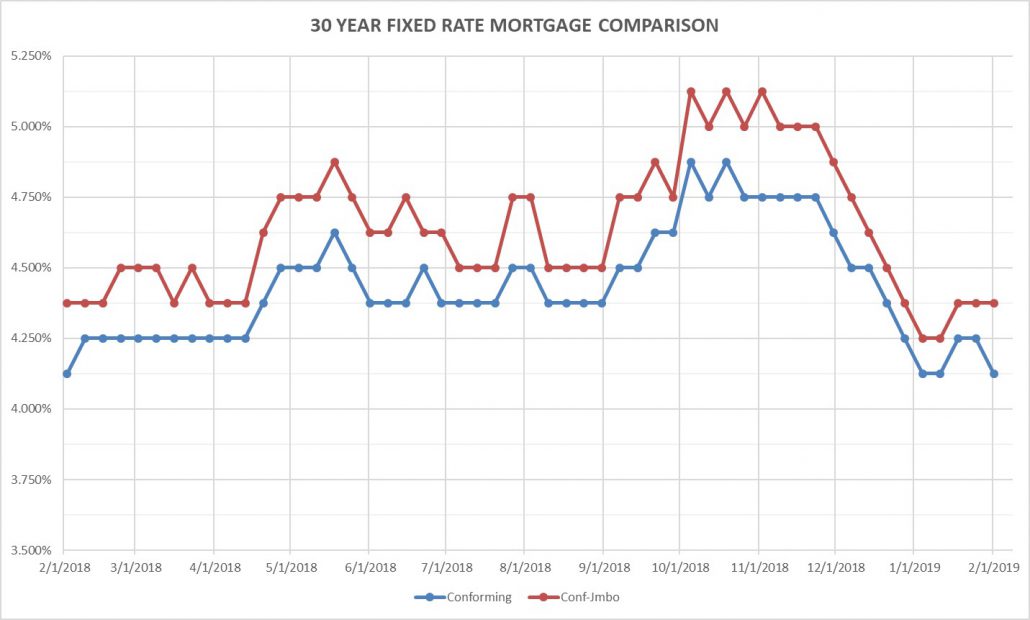
Less than 20 months ago the 30-year fixed rate for high-balance conforming mortgages was at 5%, today it is at 3%. A family that purchased a home in late 2018 with a $461,000 mortgage can buy a home today that is worth at least $126,000 more (I say at least because we are leaving down payment out of the equation) with the same monthly mortgage payment.

That drives demand, drives it very fast.

Housing supply is also impacted by interest rates. As mentioned above, if rates are low current homeowners discover they can purchase a bigger home or a home in a better area. Another option is to refinance their existing home to save money every month on their housing costs, and/or reduce the term of their mortgage debt without significantly changing their monthly payment.

Currently, the coronavirus is an outside factor that is impacting the supply of homes coming to market. Many families who would had planned to sell their homes this Spring and Summer have decided to delay their plans to relocate because they do not want people coming through their homes who may be infected, as well, they do not wish to walk through other people’s homes as they search for their new home.

Leading into the pandemic housing supply was already low, many articles in February had data showing declining housing supply, which combined with dropping rates in early 2020 started a rise in home prices.

Now, five months into the pandemic, supply has constricted to two months or less in several markets and six months or less in most.

Low interest rates and limited supply have created more than supply in the housing markets. Rates are the primary factor, but rates are not the only factor driving families into the real estate market.

Surveys have shown that many families, after spending several months working, studying, living, at home since stay-at-home regulations went into effect in March are finding they want, and need, more room for their families. The pandemic has changed how we picture the use of our homes in the future. Instead of being a place the family is all together from after work to before work and on weekends, it is now a place where we are together 24/7 and it is hard to close a sale on  Zoom while your spouse is conducting a webinar on  Zoom, both of which are interfering with a child’s math test.

Conclusion to the short story made long, prices are climbing as new listings are bid on sight unseen (grammarians help me, sight or site?), multiple offers are being made and very often homes are selling over list price. Anecdotally, my clients looking to buy have experienced losing out on their offers due to multiple overbids in Lakewood, La Mirada, Corona, Mission Hills, and the Los Altos, Los Cerritos, Belmont Shore and Plaza areas of Long Beach in the past few months.

The question was not what is happening to prices, but what will happen to home prices?

In March and April, the media was full of articles stating that the pandemic would severely impact housing markets, in a negative way. At the time the CARES Act had passed enabling homeowners to obtain forbearances on their mortgage payments just by making the request. The common wisdom by the media was that this would lead to a spate of foreclosures in the future creating over-supply. Also contributing to harming the market would be the tremendous rise in unemployed workers creating an under-supply of buyers.

Now that the pandemic has aged several months there are several factors that I see that will result in most real estate markets not crashing nor seeing significant decline in prices (I equate 10% or more decline in prices as significant).

First, regarding the forbearance issue. Traditionally if a lender agrees to a forbearance the agreement with the borrower is that at the end of the forbearance period the borrower will make up the amount of payments that were deferred in a lump sum.  This policy would certainly create tremendous challenges for most families and result in the mortgage going into default. What I have seen is that most mortgage services have been extending the term of the mortgage for the number of months payments that are deferred. If you have a six-month deferment on a mortgage that was due to be paid off in April 2040 the forbearance agreement extends the loan so it will be paid off in October 2040. This lessens the economic hardship on the borrower to bring their deferred payments current in one payment.

Second, regarding foreclosures increasing nationwide. Many of those who predicted, or are predicting, a large increase in foreclosures are using the 2008 housing crash as the basis of knowledge and prediction.

The increase in home prices leading into the crash was fueled by cheap money, which we have now, but more importantly cheap underwriting. Fannie Mae and Freddie Mac underwriting guidelines enabled borrowers to purchase homes and/or refinance pulling out equity their homes with no money down, no income qualification, no asset verification and in many instances no appraisals. As a result, millions of families owned homes with loans that they could not afford and in which they had no equity. When they fell behind on their payments they had no ability to sell their home and pay off their mortgages (it costs between 7-8% to sell your home in most markets).

As the economy spiraled down it wiped out jobs that are the foundation of the housing markets, causing a hole in the demand side of the market. The result was over-supply as homeowners had homes for sale that required short-sales, or foreclosures being priced low by lenders to get rid of inventory. At the same time there was an under-supply of demand are supervisors, managers, high wage hourly workers and others were out of work and unable to qualify for mortgages.

Finally, with little to no money invested in their homes, many families found it easy to hand their keys to the bank and find a place to rent.

The profile for the overwhelming supply of homes sold since 2010 is buyers who not only qualified for their purchase mortgage with verifiable income, but likely qualified for a higher mortgage. The average down payment on a home purchase has been around 12%, closer to 6% for first-time buyers. Homeowners are staying in their homes longer, which combined with steady increases in prices, has resulted in equity growth.

Because of the interest rate environment, the past several years most homeowners have very low interest rates, and presuming their incomes have been increasing, even modestly, during their tenure of homeownership their monthly payment is more affordable today than it was a few years ago.

What does this all this mean? The initial equity at time of purchase, plus steady increase in prices while paying down mortgages means that if a family is in trouble and needs to sell their home they can do so and likely receive some equity from the sale. At worst, most would break even and avoid a foreclosure.

The lower rates make it somewhat easier for a family that has a job loss of one spouse, or a reduction in income, to retain their home and continue making payments.

Third, the majority of those who have lost their jobs due to the pandemic do not have the income to purchase homes. Looking at the jobs reports, as the employment numbers have dropped average weekly wages have increased. Why? Because the job losses are coming at the entry level wage jobs not the middle and upper level wage jobs. Conversely, when we have seen employment spikes after the economy opened up we saw the average weekly wages decline because those being hired are the entry level wage positions. We are seeing job losses creeping into higher wage jobs, the airlines for instance are laying off workers, most of whom earn more than minimum wages. Should job losses spread to industries not dependent on travel, entertainment, dining, we will see an impact on the supply of qualified buyers. At this time, however it appears that the areas of the economy most impacted remains industries largely dependent on consumers discretionary spending.

Fourth, the is such an imbalance now between demand and supply that it would take a major shift, a very major shift, in either supply increasing tremendously and/or demand declining tremendously for home prices to decline significantly.

Because of these factors I do not see a significant decline in home prices occurring in most markets. Across the Southern California region there may be pockets of decline, most likely the upper ends of the markets as jumbo mortgages are still in short supply, lack of foreign buyers and smaller pool of eligible buyers that always exist for this range of the market. For the rest of the price ranges, when we have widely available vaccinations for Covid-19, when the economy re-sets to its new normal, we will likely have the same or increased demand and a growth in supply as those families who have delayed selling their homes come to market. The increase in supply however, should be met by demand.

The outside factor that could alter my opinion, and the actual actions in the markets, is the length of the pandemic and how soon we are able to achieve the new normal with few, if any, segments of the economy being restricted due to the coronavirus.

Have a question? Ask me!

The big economic news this week was the data on 2nd quarter Gross Domestic falling at an annualized 32.9%, the largest single quarter drop since the government started tracking GDP following World War II. On a quarterly basis the decline was 9%, and was less than anticipated by Wall Street. Combined with a drop in the 1st quarter GDP, the decline puts the economy in a recession (defined by two consecutive quarters of declining GDP). The news had little to no impact on mortgage rates due to the expectation of a historic decline, and that there is little economic news at this point that can push rates much lower.

A bit of a bright spot in economic news was that consumer spending in June provided the second consecutive monthly increase, growing 5.6% from May’s spending. July may show another increase in spending, even with many states re-shutting businesses due to increases in infections. All eyes will be on August as the additional unemployment compensation of $600 per week that was part of the CARES Act expires today.

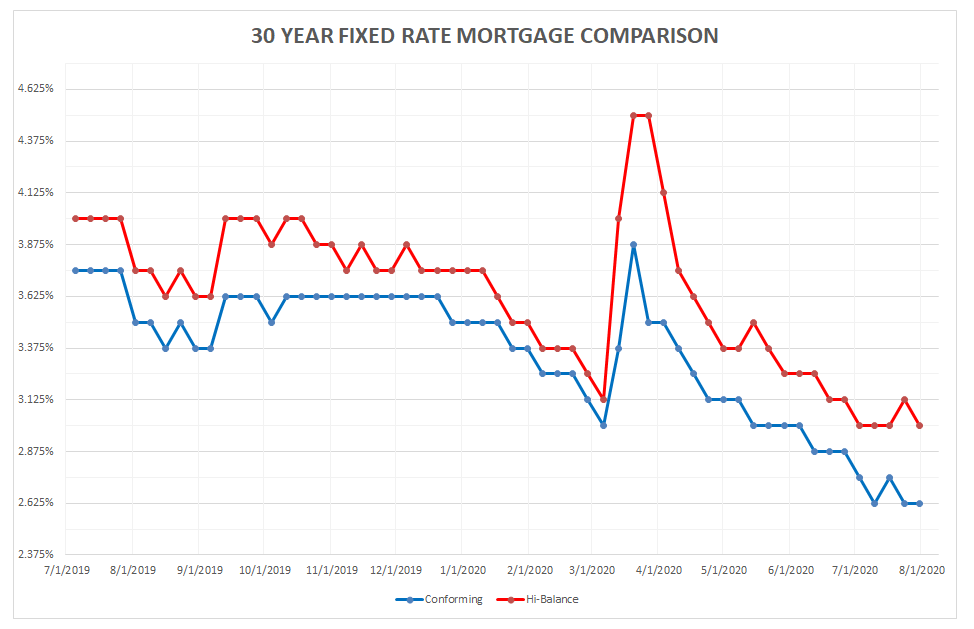
Rates for Friday July 24, 2020: Rates remain flat from last Friday, it appears we have reached our range for the current market as since the beginning of the month the conforming rate has drifted between 2.625-2.75%, while the high-balance has been between 3-3.125% for purchases with variables listed below.

The rate spread for cash-out, no point, higher loan-to-value and other factors for refinances still are historically higher than normal. Call for details and quotes as rates can vary significantly depending on the situation.

FIXED RATE MORTGAGES AT COST OF 1.25 POINTS LOCKED FOR 45 DAYS:

30 year conforming                                            2.625%   Flat

30 year high-balance conforming                   3.00%      Flat

Please note that these are base rates and adjustments may be added for condominiums, refinances, credit scores, loan to value, no impound account and period rate is locked. Rates are based on 20% down with 740 FICO score for purchase mortgages.
It appears Mollie’s suggestion to include the question of the week is very popular based on the feedback I received—such a good suggestion I wish she had made it several years ago!

The beginning of August is usually when families start getting ready to send their kids off to college—especially if their son or daughter is heading off to their freshman year. With many colleges and universities cancelling many, most or all in-class classes and moving to on-line, a lot of students who were part of the high class of 2020 are opting to take a “gap” year. With the high costs of attending college they are deciding that it is not worth the cost to sit in a dorm room watching classes on a screen, not being able to have social interactions to meet other students and benefit from the overall college experience. We have first hand knowledge of the colleges trying to sell that the education, even if on-line and not live in classrooms, is still worth the cost to attend, but it is apparent that the sell is hollow and almost desperate.

Next year will be interesting as there will be a good portion of the class of 2020 re-applying to schools while the class of 2021 will also be submitting applications—depending on the learning environment that will be available. This will make an already challenging process even more so. What will be the long-term impact on these young adults who have seen their high school and college years disrupted? How will it impact our labor markets, future leadership, and society and the economy as a whole? We will know in a decade or more as the sociologists and economists study this era and those involved.

Have a great week,

Dennis

Past Weekly Rate & Market Updates can be found on my blog page at my website www.DennisCSmith.com/my-blog

What are your tips for making our home search easier?

Question of the week:  What are your tips for making our search for a new home easier?

Answer: This was a question asked last week by a young couple purchasing their first home. They were referred to me by her older brother and were just beginning their home buying process. Here is the plan I laid out for them.

The first thing I tell new clients is to remember a few things. First, when meeting with mortgage professional(s), real estate agent(s) or other service providers, you are conducting job interviews. You will be working with these people for quite a while, if you’re very lucky in finding the right home right away, are fully qualified, you are looking at a month minimum. The home buying process is somewhat emotional and you want to work with people you have confidence in their ability, are experienced and that you trust.

Either the first or second step was being taken care of, they were meeting with a mortgage professional. Being that they are first time buyers, our initial meeting was about an hour. We covered how mortgages work, the process once they have an accepted offer and the relationship between price, down payment, mortgage amount, rates and costs for closing. Then we got into their financial details to determine a purchase price range and subsequent funds needed for closing and their monthly housing payment.

With this information exchange, they were comfortable with the financial aspects of their purchase and we are able to generate a pre-approval package to accompany their offer when they find the right home. My objective is that when you are looking at homes in the price range we discussed you are focused on the properties and their plusses and minuses and not wondering if you can afford the homes you are considering.

If meeting with a mortgage professional is not the first step, the first step should be to meet with a licensed real estate professional. If you have not been pre-approved, or spoken to a mortgage professional to determine a price for which you can qualify, I advise that the initial meeting is to get to know one another. As mentioned, this is a job interview. Ask how they like to work with buyers, what is their process, when are they available to show you properties. If you have already met with a mortgage professional, let them know and provide contact information. If you have not met with me yet, please tell them that you have a mortgage guy with over thirty years in the industry and you will be meeting before you start looking at homes—unless you are out of state in which case I, unfortunately, cannot assist you.

Until you know how much of a home you can afford, an amount verified by a mortgage professional, do not start looking at homes. Most experienced agents will not start showing new potential clients homes until they hear from a lender letting the agent know they are qualified, any potential issues being addressed and how much the buyers can afford.

The obvious concern is you do not want to look at homes for $750,000 and find out you can qualify for a $650,000 home. However, we also have worked with many clients who were looking at homes with prices significantly lower than what they can afford. They made assumptions of what they can afford, or used simple on-line calculators, and after our discussions with them and educating them on the process and how we determine affordability adjust their sights a bit higher.

The next step I strongly suggest for home buyers before starting to look for property is a Must Have/Can’t Have list. If you are buying with your spouse or significant other I advise that you each be very selfish. Go into separate rooms and make a list of the three things, or less, that your home must have. Then make a list of three things, or less, that if a home has this feature you absolutely will not buy it. Then compare lists.

If there is something on your “can’t have” that is on your spouse’s “must have” list then you need to have a conversation because one of you might not be happy living in a home that either has that feature or does not.

Ideally, your lists are compatible and reasonable. When my wife and I were looking to purchase our current home 20 years ago her only “must have” was a formal dining room. I didn’t have a “must have” and my only “can’t have” was a rock roof.

Regarding the Can’t Have, I have had agents express to me, “I’ve shown them fifteen houses that are exactly what they say they want and they won’t write and offer.” I ask, “have you asked them what the home can’t have?” No infrequently that solves the problem, as the Can’t Have for some can be more important than the Must Have. Make sure you let your agent know any features that will stop you from buying a home, it will make your search easier. As well, if an agent continues to show you homes with features that you have expressed are deal killers you may want to look for another agent.

Once you have your list give it to your real estate agent. With your list, knowing the price range for which you qualify and the area where you would like to live, your agent should be able to show you homes that are on the market the meet your criteria, or most of it.

This is important—listen to your agent. If your needs list, amount for which you qualify and area where you wish to purchase do not match, then you need to make some changes in your expectations. Every agent has the story of clients who wanted what was impossible, essentially a $800,000 home with a $500,000 budget. The clients go from agent to agent to agent being told, “that is not possible,” but refuse to listen. These types of clients are still looking, only the house they could have bought for $500,000 a few years ago now costs $575,000.

Finally, on the home search, there is no perfect home. I have had clients have custom homes built and after they moved in there were features they wish they had added, not put in or built differently. Your objective is to get as close to your list as you can, but you may need to make a few concessions.

Once you are all on the same page be ready to buy. Your agent knows what you want, s/he knows what you can afford and has been monitoring the market, and making calls to past clients, for the home you want to buy. If s/he calls you on Tuesday and says, “I found it and it went on the market today..” go see it that day or evening and do not be afraid to write your offer!

One final point, this process is about you. You will be getting advice from a lot of people, some involved in the transaction, such are your agent and me (ideally); some not involved, such are you co-worker or cousin Linda. I tell clients to always remember they are in control, they make the decisions and everyone else reacts to those decisions, and that three things are true, at least when it comes to me and likely everyone else: 1) I am not spending any of my savings to buy your home 2) I am not going to dedicate any of my income to make your monthly payment 3) I am not going to live in your home. All advice you get goes through that filter—you are buying the home, paying for the home and living in the home, your opinion is the one that matters most.

Working with homebuyers to set up their purchase transaction and work with them through our closing of escrow to become homeowners is something myself, and our company, excel at, as thousands of homeowners in California can attest. We do not just punch numbers and say, “this is how much you can buy.” We work closely with our clients to ensure they understand the transaction, are comfortable with the financial aspect of the purchase and have all their questions and concerns addressed.

If you know someone considering a home purchase in the near, or even distant, future please have them call me.

Happy home hunting!

Have a question? Ask me!

California home sales a bit mixed. The California Association of Realtors released sales data for September home sales. Total units sold statewide were down 0.5% from August, but up 5.8% from last September, while the median price dropped 1.9% for the month to $605,680, which 4.7% higher than the median price in September 2018. More locally, while total units sold in LA County was down 9.4% from August, sales volume was up 9.2% from last year and the median priced home in the county was up over $35,000 (5.6%) from August to $663,110, a 4.5% year over year gain. Orange County has been up and down all year, due to smaller number of sales and a wide spread in home values. In September the median home price was $830,000, up 0.6% from August and a whopping 16.4% from 2018; the number of units sold was down 9.1% from last year but up 2.5% from August. Low rates are supporting the housing markets, which are tempered by high prices and reducing inventory—active listings statewide are down almost twelve percent from last September and the number of active listings has been falling for three straight months.

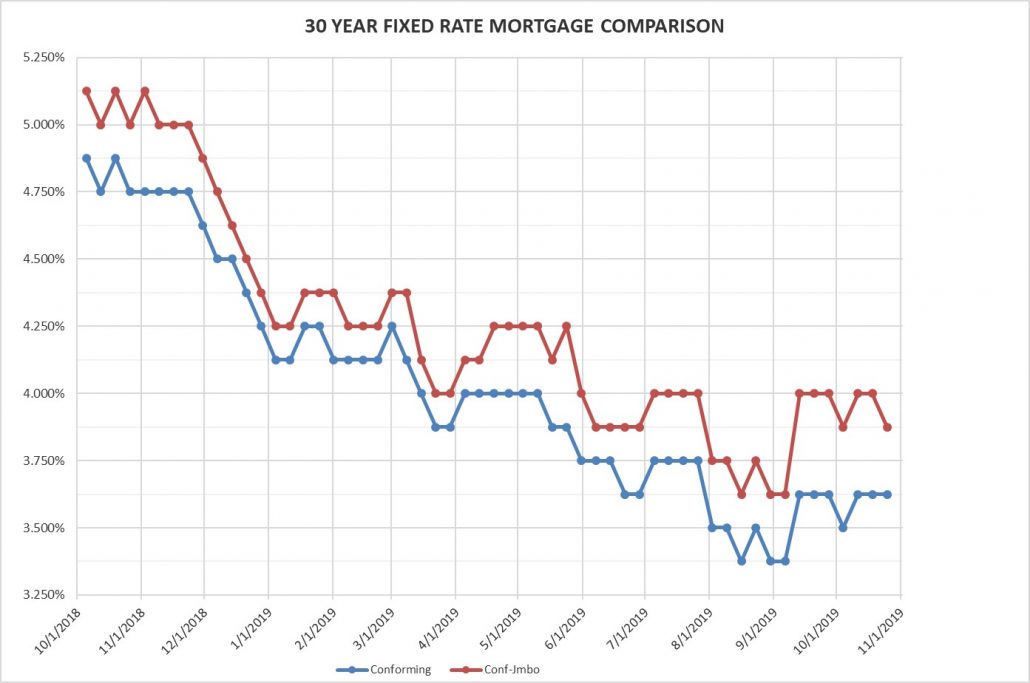
Rates for Friday October 25, 2019: We saw fractional improvement in the mortgage market from last Friday, not enough to move the rate on the 30 year conforming rate, but enough to drop the high-balance rate back to the more traditional 0.125% (one-eighth of one percent) spread above the conforming rate. The market has priced in a rate drop by the Fed next week. If the Fed does not change the rate we can expect rates to pop up, if they drop the rate and release a statement that somehow forebodes another rate decrease in the near future rates may/should soften and perhaps dip a bit more.

FIXED RATE MORTGAGES AT COST OF 1.25 POINTS LOCKED FOR 45 DAYS:

30 year conforming                                            3.625%     Flat

30 year high-balance conforming                     4.00%      Flat

Please note that these are base rates and adjustments may be added for condominiums, refinances, credit scores, loan to value, no impound account and period rate is locked. Rates are based on 20% down with 740 FICO score for purchase mortgages.

This Indian Summer in California, temperatures in the mid-90’s to 100’s depending on where you live. In many parts of the country Indian Summer is when the thermometer reaches mid-60’s to 70’s. We can complain about hot weather in October, but….when our “cold days” are in the low 50’s during the winter how empty are those complaints about our October temperature spikes?

The World Series thus far has not gone as many expected, myself included. Being a Phillies Phan I do not hold much love for the Nationals, but very much appreciate the season they had after a horrible start and the way they play the game. Speaking of which, no matter who your team is, if you are a baseball fan you have to love to watch Jose Altuve of the Houston Astros play the game. I’m still hoping for an Astros comeback, but I think I will be disappointed and Washington will be hoisting a trophy and hosting a parade before the next Weekly Rate & Market Update.

Have a great week,

Dennis

Past Weekly Rate & Market Updates can be found on my blog page at my website www.DennisCSmith.com/my-blog

Why did you advise us to retain our home in California when we are moving out of state?

Question of the week:  Why did you advise us to retain our home in California when we are moving out of state?

Answer:  Last week we looked at options if you are purchasing a new home and wish to retain your current residence as a rental (link here). This week we take the question a bit further, what if the new residence is out-of-state?

It is no longer news that hundreds of thousands of Californians annually have been moving out of the state. Whether they are retirees or wage earners who have re-located when their employer moved out of state or have sought new employment outside of California, the primary factors for most of those relocating are cost of living and taxes.

When I am speaking with clients who own their homes in California who are relocating out of state a common refrain is, “you should see how much house we get for so much less…” Or, “we can sell our home here and buy one in fill in a state with no mortgage.” That is an attractive lure, especially since the greatest expense most families has is housing. What if your housing costs were eliminated, and your taxes were lower, and the costs of other goods and services were lower than what you are used to paying in California? How much more financial freedom and less stress would you have?

But should you sell your home in California to finance your new life in your new state?

Maybe, maybe not.

California is surrounded by states that have lower tax rates and lower property values. One popular destination is Nevada. There is no personal income tax in Nevada, its property tax is among the lowest in the nation, and while the sales tax is near or over 8% in most cities, that is offset by the other low tax rates.

There are many other states around the country with lower taxes, lower cost of living and much lower costs for homes. For those who are retired the ability to stretch retirement income and savings to live more comfortably financially, and use their equity from the sale of their home in California to purchase a comparable home in another state with a very small, or no, mortgage significantly helps stretch their retirement dollars.

For those still in their working years, with or without children, the lower cost of living and often lower congestion and density is enticing. Yes, their wages may be lower, but comparable when all other costs of living are factored into their home economics. If they are not homeowners, they see the opportunity to purchase a home that is out of reach in California. If they are homeowners they see that they too can sell their home in California and have a significant down payment for their home in their new state.

But what happens if you sell your home in California, move to Nevada, Washington, Texas or some other state, and you feel you made a mistake, you miss California and want to return?

We have had many clients of the years where this has happened. They sell their home in California, net a nice amount of cash from their home and purchase their new home with 30-40-50% down, or more. Be it the culture, the climate, their employment not being satisfying, or missing friends and family, after a few years they decide they want to return to California.

Then they do the math. Their home in Nevazonaexas has not appreciated much. It will cost them 7-8% to sell their home and are looking at netting about what they put into the home for down payment and closing costs—maybe.

Meanwhile, back in California, they find out they are having a hard time qualifying to purchase a home comparable to what they sold, or if they do they are paying a higher price and have a higher mortgage than they had when they sold their prior home.

It is a difficult conversation we have going through the math and telling past clients looking to move back to the state that what they qualify to purchase is smaller than the home they sold not too many years ago, or the same size home in a different neighborhood.

We have had clients who have moved out of state and retained their homes in California and converted them to rentals. Perhaps refinancing before they left the state to obtain some funds to purchase a home in their new state, or waiting to purchase until they know they are in Nevazonaexas to stay. If they do make the decision to stay they can either continue to rent their former home and retain as an investment, or they can sell the home and take the proceeds to either purchase a new home in their new state, or payoff their mortgage, or invest the money and perhaps shorten their time until they retire.

If they decide they do not wish to live in Nevazonaexas any longer, they simply need to give their tenants notice they are returning to California and need them to vacate their home. They gave relocation a shot, it did not work out for them and they are able to return to their former home without having to worry about if they can afford to purchase a home in California.

If you own your home in California and are moving out of state my advice is that you seriously consider the option of retaining your current home for a period of time after you move just in case it does not work out and you want to return to California in the future.

If you want me to help you with the math of relocation please do not hesitate to contact me.

Have a question? Ask me!

Is it needed? It appears to be a foregone conclusion that the Fed will lower its benchmark interest rate in July. The reasoning is to get ahead of a potential slow-down in the economy, as primarily shown in inflation numbers—data for May shows the annual rate of inflation dipped to 1.5% on a year over year basis, which is well below the Fed’s inflation target of 2.0%. But is the economy in need of any boost? Personal incomes in May grew 0.5% from the prior month, continuing a steady upward trend, consumer spending grew at a good rate for the third month in a row, up 0.4%. Since consumer spending is 65-70% of our economy, consumers are maintaining a foundation for continued, steady growth. Helping future economic growth, is personal savings growth, no surprise since income growth outpaces spending growth, which is at 6.1%. In a normal environment the data would support upward pressure on rates, but the Fed’s desire to lower rates based on their assumption the American consumer will slow consumption in the future takes that pressure off.

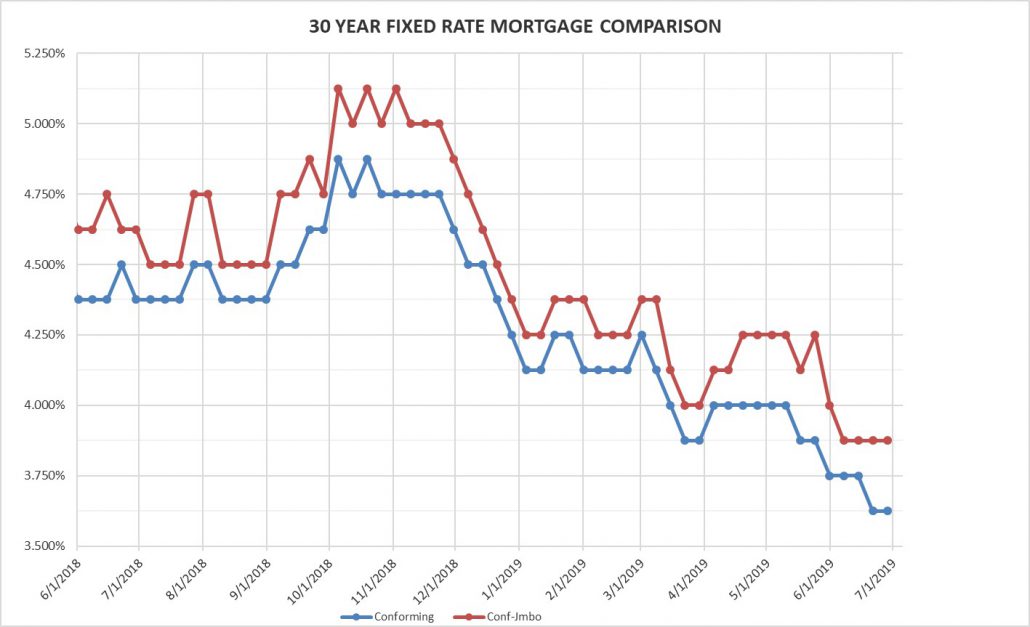
Rates for Friday June 28, 2019: As mentioned above, data supports rates not being at multi-year lows but the sentiment and actions of quasi-government organizations are keeping rates low. Looking forward, there is little room to the down side and markets have priced in a rate cut in July from the Fed. Now is a great time to get a mortgage!   

FIXED RATE MORTGAGES AT COST OF 1.25 POINTS LOCKED FOR 45 DAYS:

30 year conforming                                            3.625%     Flat

30 year high-balance conforming                      3.875%      Flat    

Please note that these are base rates and adjustments may be added for condominiums, refinances, credit scores, loan to value, no impound account and period rate is locked. Rates are based on 20% down with 740 FICO score for purchase mortgages.

When is Independence Day? July 4th is when we celebrate. John Adams, in a letter to his wife Abigail** dated July 3, 1776 described the events of the prior day in the Continental Congress during which the delegates from twelve of the thirteen colonies approved a motion for independence from England presented by Richard Henry Lee. In the letter he writes,

“The Second Day of July 1776, will be the most memorable Epocha, in the History of America…I am apt to believe that it will be celebrated, by succeeding Generations, as the great anniversary Festival. It ought to be commemorated, as the Day of Deliverance by solemn Acts of Devotion to God Almighty. It ought to be solemnized with Pomp and Parade, with Shews, Games, Sports, Guns, Bells, Bonfires and Illuminations from one End of this Continent to the other from this Time forward forever more.”

We celebrate July 4th as Independence Day, as that is the day the Declaration as we know it was adopted by the Continental Congress after two days of debate and revisions to Thomas Jefferson’s historic document. The next day, July 5th a printer made hundreds of copies that were then given to messengers to deliver throughout the colonies.

We all know the image of the Declaration of Independence, with the large header “In Congress, July 4, 1776” and adorned with signatures on the bottom, the most prominent being that of John Hancock, the President of the Congress. There is some dispute as to when the signatures were affixed to the document. July 4th is the commonly learned and believed date members of Congress signed, but later statements from those present brought up that not all the signatories were in Congress on that date, either as officials or physically. There is a strong argument that the document was signed by most members of Congress on August 2, 1776. One part of this argument being that it took some time for the adopted declaration to be clearly written in a steady hand on parchment.

Regardless of the dates, in 1870 Congress declared July 4th to be a national holiday as part of a bill that included other national holidays, including Christmas. And so it is, a wonderful national day to celebrate the humble beginnings of our great nation.

Two final thoughts, first I encourage everyone to read the actual text of the Declaration of Independence, it is a wonderful read, especially if you are able to consider that many of the sentiments have never been expressed before as a basis for creating a purpose of not only independence but governance. Here is a link to the Declaration of Independence.

**Second, the John Adams biography by David McCullough is a wonderful book on a fascinating man. One of my favorite parts of the book are the letters between John and Abigail Adams. Separated for much of their marriage, the letters show us not only the history of the era, but the love they had for each other and their family. I strongly recommend the book.

Have a great week and Happy Independence Day!

Dennis

Past Weekly Rate & Market Updates can be found on my blog page at my website www.DennisCSmith.com/my-blog
Good Friday Short Update

Question of the week:  No Question of the Week due to Good Friday

Answer:  With many readers of the WR&MU having short day for Good Friday today and weekend Easter activities we have an abbreviated communication this week.

Tune in next week as we delve into appraisers and inspectors and the roles they play.

Have a question? Ask me!

Markets are closed today, but we have some important economic data this week that impacts rates. Retail sales for March had a very strong jump from February. With a 1.6% increase in retail sales, the highest monthly jump in 18 months, prospects for a potential recession later this year dim. The large increase in sales was pushed by new auto sales, which climbed 3.1% for the month and gas prices which were up 10% nationwide in March. Stripping autos and gas from the data and sales still recorded a very strong 0.9% increase for the month. Overall the news is interest rate unfriendly as consumer spending is 65-70% of our economy, stronger retail sales indicates a strong or strengthening economy which puts upward pressure on rates.

The California Association of Realtors released home sale data for March, and the data shows an apparent early start to the buying season locally. Statewide the median price for a single-family home was $565,880, which was up 5.9% from February and up 0.2% from March 2018. Total sales in the state were down 0.2% for the month and off 6.3% from 2018. In Los Angeles County the median price was down 2.9% for the month and 0.7% for the year at $525,520. The dip in prices and drop in rates created a large jump in sales as the number of units sold was up 36.3% from February, though down 6.3% of the number of sales in March 2018. Next door in Orange County the $809,500 median price was up 2.1% from February and down 1.8% from a year ago. Sales volume in the county was up 52% (not a typo fifty-two percent) from February and down 12.5% year over year. Overall, we see buyers coming to the Southern California market in a big way in March, and based on our activity in our office April and May numbers should be positive as well—though given the very strong increases in sales in March it will be challenging to match those numbers.

Rates for Friday April 19, 2019: The 30 year conforming rate is flat from last Friday and the high-balance rate (loans over $484,350) are up 0.125% from last week. The high-balance products have been interesting this year as they have changed independent of the conforming products due to market and regulatory forces. Fannie Mae and Freddie Mac have restrictions on what percentage of high-balance loans they sell in their pools, without going into the weeds it is generally around 10% of any given pool. If lenders are funding a large amount of high-balance loans they will push the high balance rates higher to slow the number of applications they get. In the past few weeks we have seen some odd pricing on high-balance mortgages, lenders have been getting more high-balance mortgages than they would like so they are trying to slow the flow. This week was one of those weeks, and since most pools are national in structure, a spike in sales in Southern California can skew the pool balance and an effort by lenders to slow their California high-balance volume.

FIXED RATE MORTGAGES AT COST OF 1.25 POINTS LOCKED FOR 45 DAYS:

30 year conforming                                            4.00%        Flat

30 year high-balance conforming                   4.25 %       Up 0.125%     

Please note that these are base rates and adjustments may be added for condominiums, refinances, credit scores, loan to value, no impound account and period rate is locked. Rates are based on 20% down with 740 FICO score for purchase mortgages.

Last week in this section I wrote about how much I love the Masters, Sunday morning watching Tiger Woods’ comeback reinforced that feeling. Watching extremely high-level athletes compete under pressure has always fascinated me. Their ability to execute under extreme pressure within the contest, compounded by the large audience in the arena of play and television cameras all around them is wonderful to watch. Some say, “well they are just playing a game and get paid very well to play it.” True, both those games support hundreds of thousands of families around the country. Their own managers, coaches and agents, those who work at the venues, if a team sport the hundreds who work for the organization, local establishments that depend on fans buying food, drink, souvenirs and lodging, television and radio personnel from the voices we hear to those who spool out the cables and hook them up.

Sports in America are about a $100 billion industry. The value of franchises depends on the performance in thousands of split second moments by individuals. Who are just playing a game. Tiger was just playing a game last week that generated tens of millions of dollars circulating in the economy. So were the other players in the tournament, but he was the one who executed the shots that did not go in a pond, or rolled into the cup.

I for one am glad I do not have to perform my job with several cameras recording me every move and slow-motion replay allowing commentators to inform millions how I missed a decimal point or forgot a guideline I needed to go back and double check. But then again, when I make the phone and get to say, “Congratulations! We funded your loan and you are now homeowners!” it would be great to have it broadcast with in-depth analysis!

We start Spring Break in the Smith household this week with the thousands of other Long Beach Unified families. That means the end of the school year is about six weeks away!

Have a great week,

Dennis

Past Weekly Rate & Market Updates can be found on my blog page at my website www.DennisCSmith.com/my-blog

What do you need to pre-qualify us for our new home purchase?

Question of the week:  What do you need to pre-qualify us for our new home purchase?

Answer:  There are three legs to the pre-qualification stool: Money, Credit, Income. To get pre-qualified, or pre-approved which takes the same amount of time and information, I need information on each of the three legs. 

Money How much money do you have for down payment and closing costs? Is all the money your money and in your bank account right now? Are you getting a gift from a family member to cover some, or all, of the funds needed? Copies of your most recent bank, investment accounts and retirement account statements will let us know how much money you will have for your purchase and any reserves your particular loan program may require. I have had clients in the past who have not shown me all their asset statements because, as one client put it, “If I show it to you then you will spend it.” Not true and not possible. I cannot spend any of your money, but I can show you different options for sales prices, loan amounts and monthly payments if I know about all your asset accounts and in what manner they are held.

Credit This category covers not only your current outstanding credit obligations, such as auto loans, student loans and credit cards; but also, if you have any spousal or child support payments or other court ordered payments. We need to know how much you owe, how much you have to pay on a monthly basis and your history of making payments. The quickest and easiest way for us to get this information is from a credit report (which will not show spousal or child support payments). “Is it necessary?” is a very common question when we request the authorization to run a credit report. The answer is, yes if you want to make sure you are getting an accurate pre-qualification for how much of a house you can buy. We can put in the information you provide us and provide some price and loan options, however unless we are viewing a recent credit report the information is not fully reliable for the basis of being pre-qualified. “If you run a credit report you will hurt my credit score,” is a common objection we hear. Running a credit report for the purposes of obtaining a mortgage, or getting pre-qualified, will very likely not have any impact on your credit score—if you have had several (by which I mean more than four or five) such reports run in the last few months one more inquiry may take a few points off your score. If you have had no inquiries run in the last few months for mortgages then our obtaining a report will not have an impact.

Income How are you paid? Are you self-employed? Do you have investment property? Do you have multiple streams of income? How long have you been receiving your income from its current source? Do you have overtime or bonuses? For most clients, this is a fairly easy question to answer. Most people are salaried employees who receive a W2 at the end of the year and we can easily and quickly calculate income. If this is the case then we need recent paystubs and most recent W2. If this is not the case then we will want to see at minimum the most recent federal income tax return that has been filed, and very likely returns for the past two years.

With all of this information we can usually pre-qualify, or pre-approve, you very quickly for a sales price and mortgage amount—by very quickly I mean less than fifteen minutes. If your income is a bit more complicated then we may need a bit more time and information.

What is most typical however, is a conversation that will take more than a few minutes, ideally in person but over the phone is also effective, so I can learn what you are looking for, your tolerances for payments and funds to spend, and making sure you have a full understanding of the transaction you are about to enter into, how the process works and most importantly that you are comfortable with the figures I am providing for price, loan amount, cash to close and monthly payment.

If you, or someone you know, if considering purchasing a home in the future please contact me to go through your options. If the potential purchase is not schedule for several months I strongly recommend having the initial conversations about how to purchase your new home sooner rather than later so that if there are any areas that need to be worked on to ensure approval you can start right away and not delay your purchase in the future.

Have a question? Ask me!

It has been ten years since real estate sales in California were as low as they were in January. The California Association of Realtors released home sale data for January and total sales were the lowest statewide since April 2008, with volume dropping 3.9% from December and down 12.6% from January 2018. The median price is up from last January by 2.1% statewide, but off 3.4% from the prior month with a value of $538,690. In Southern California both the LA and Orange County markets so drops in sale volume month-to-month and year-to year; LA down 25.5% for the month and 14.2% for the year while the OC saw sales drop 17% monthly and 13.2%. The median price in LA County in January was $588,140, down 3.8% from December’s $566,010 and up 0.3% from last January’s $564,100. Across the border in Orange County the median price was $796,500, up 1.5% from the prior month’s median price of $785,000 and up 2.1% from last year’s $780,000. January is historically a slow closing month for real estate as not a lot of escrows are opened between Thanksgiving and Christmas, that said this January was particularly slow. Anecdotally, our office has seen an upswing in purchase business so far this month from prior months—we will see if that is a regional and/or a statewide trend as well.

Rates for Friday February 22, 2019: With not a lot of economic news this week rates are flat from last Friday. There is a bit of possible long-term softening as the Federal Reserve Open Market Committee (the FOMC, who sets the direction for the Fed on rates and monetary policy) minutes from their last meeting indicated they will be slowing down their sale of assets consisting of Mortgage Backed Securities and U.S. Treasuries, this will put less supply on the  market and less upward pressure on interest rates in the markets.

FIXED RATE MORTGAGES AT COST OF 1.25 POINTS LOCKED FOR 45 DAYS:

30 year conforming                                            4.125    Flat

30 year high-balance conforming                    4.25%   Flat        

Please note that these are base rates and adjustments may be added for condominiums, refinances, credit scores, loan to value, no impound account and period rate is locked. Rates are based on 20% down with 740 FICO score for purchase mortgages.

This is a joyous and remembrance week in our family as on the 19th our youngest celebrates a birthday and on the 21st we remember my father who passed away on that date in 2014. Many people over the years have told me they may not read all of the WR&MU, but always ready this third section, the personal bit. This always causes me to smile as my dad did not like that I included this segment, “who wants to read that stuff? You have some good information and then put in that your daughter dances ballet.” I told him many times over the years, “Dad, this is the only section some people read and the only section almost everyone reads.”

Thank you for reading this and validating my stance with Dad.

Have a great week,

Dennis

Past Weekly Rate & Market Updates can be found on my blog page at my website www.DennisCSmith.com/my-blog
Are we headed to another collapse in real estate?

Question of the week:  Are we headed to another collapse in real estate?

Answer:  In last week’s Weekly rate & Market Update I wrote that this week I would compare the real estate market prior to the collapse in the industry that led to the Great Recession with the current market. The impetus for the comparison is the slowdown in real estate sales in number of units sold and in some areas decline in prices, this has many wondering if we are heading to another major market “correction,” i.e. large drop in values for homeowners.

It is a valid question for many who experienced the market collapse that started in 2007 and continued for more than a year. The anxiety and fear of the future and other negative emotions many experienced are easily brought forth when it appears that a similar lead up may be occurring in our current economy and real estate markets.

For those who do not wish to read through my reasoning (which in typical fashion is a bit extensive) I will give you my answer to the question of the week: No.

No, we are not headed to another collapse in real estate.

There are several reasons why I do not see a significant decline in real estate on the horizon, defining “significant” as a decline in prices of more than 10% year over year.

The California Association of Realtors report on December 2018 sales notes that units sold declined for the eighth straight month, while active listings increased statewide for the ninth straight month. Statewide there was drop from December in the median price, but the median price was higher from the prior year. The data statewide and regionally throughout the state certainly shows a slowing real estate market. The question is how long and severe will such a slowing be?

Prior to the market collapse a decade ago the market went from hot and steamy to slowing, similar to what we have experienced over the past several years statewide and in Southern California, with prices increases up to 10% or more year over year in most regional markets and increasing total sales. The difference as to why the next steps will not mirror the collapse a decade ago is the basis of the run up in prices—the expanding of the balloon that eventually popped. No, not popped. Exploded.

Most real estate market slowdowns occur when price increases outpace the ability for consumers to afford to purchase homes in the markets they desire, which led to decreased demand. Eventually demand decreases to the point that sellers must lower their prices if they want to sell their homes. The amount of decline in the overall market depends on how many sellers need to sell and how far they are willing to drop the price of their homes to attract buyers.

Factored into the demand feature is not only the cost of the product, a home, but also the costs to obtain the home in terms of financing. If there were not thirty-year fixed rate mortgages with low down payment requirements available to finance homes our prices would be up to 90% less than they are today. Because of the increase in rates over the past year to cost to finance a new home purchase has exacerbated the increase in home prices putting a bigger damper on ability to purchase, which decreases demand. So not only are rising prices dampening demand, but increasing rates also kept buyers out of the market.

Having to pay more to finance an asset that also costs more reduces the amount of qualified buyers. Fewer buyers leads to less demand leads to softening prices. Simple economics.

If this is similar to what occurred starting in 2007, why should the result not be the same?

Three major reasons: Ability to finance, purpose of purchase and refinances.

The first reason, ability to finance, is by far the primary factor in the market collapse and the biggest reason our current market slowdown is in no way similar to the collapse. Last week in the WR&MU I discussed QM and non-QM mortgages, a distinction created by the Consumer Financial Protection Bureau in reaction to the part the mortgage industry played in the creation of the housing bubble and ultimate explosion.

Starting around 2000 Fannie Mae and Freddie Mac developed and continually refined Automated Underwriting Systems for loan approvals. As more and more data was available to Fannie and Freddie their AUS became looser and looser—meaning it became easier and easier to obtain loan approval for residential mortgages. By around 2003 lenders were guaranteed to have their conventional mortgages purchased by Fannie or Freddie is there was an AUS approval in the mortgage application file as long as the required documentation as listed by the AUS approval was in the file. After around 2003 the required documentation became less and less. Eventually, Fannie Mae and Freddie Mac were enabling mortgage fundings on the vast majority of loans funded in the country that today would be labelled as “Alternative,” or non-QM mortgages.

Example of less and less. In 2001 Susan and James purchase a $350,000 home with 10% down and a 90% conventional fixed rate mortgage. We run their information, credit report, monthly income, employment history, liquid assets and the sales price through the AUS for Fannie Mae. We receive a result of “approve-eligible,” meaning the loan is approved and eligible for purchase from Fannie Mae provided the conditions listed in the approval are met. The conditions in 2001 would call for proof of income as exhibited by most recent two years’ W2s and recent paystubs covering 30 days showing year to date income. Proof of down payment showing at least two months bank statements with any deposits that are significant and not from employers sourced and explained. Debt obligations and history as shown on a tri-merge credit report (Equifax, TransUnion and Experian). Value of property supported by a licensed appraiser providing a complete report including inspection of the property.

In 2006 Susan and James what to purchase a $550,000 home with no money down, obtaining a loan covering 80% of the price with a Fannie Mae loan and 20% with a Home Equity Line of Credit from the same lender. The lender guidelines for the HELOC are that they will accept whatever documentation is required by Fannie Mae’s AUS system. We interview the clients and obtain their income and assets, pull a credit report and have the purchase price. We upload the information to the AUS and receive and “approve-eligible.” The approval conditions require we perform a verbal verification of employment to ensure the borrowers are employed. Require that the funds required for closing are brought to escrow. Since the purchase price of the property is consistent with the values in Fannie Mae’s property valuation software for the zip code no appraisal is required.

In 2001 Susan and James with 10% down had to prove their income, funds for closing and their source and the value of the property is market value with an appraisal.

In 2006 Susan and James with no money down did not have to verify their income, funds for closing or that the purchase price was market value.

By 2006, Susan and James were a declining part of the market, they wanted a 30-year fixed rate mortgage. By 2006 a large portion of the market consisted of borrowers looking for adjustable rate mortgages so they could buy very expensive homes with very low mortgage payments—in the first year(s) of ownership. In the years of the bubble expansion more and more borrowers were purchasing and refinancing using adjustable rate mortgages.

In the run-up to the housing bubble explosion most borrowers did not go through any type of even quasi-rigorous approval process. Fannie and Freddie, and therefore lenders, were funding stated income, stated asset, stated value loans. Anyone with decent credit could buy a home. Many purchased homes with adjustable rate mortgages ignoring that in the future their payments would be higher.

The CFPB’s Quality Residential Mortgage (or QM) guidelines created the primary reason a future major real estate collapse is less likely because in the past ten years borrowers have had to prove income, verify assets and have the value confirmed by a licensed appraiser.* As well, many adjustable rate products are no longer available, and those that are available are very rarely used by home buyers. When you have a real estate market where the buyers are fully qualified to show they have the ability to make their mortgage payments your incidence of foreclosure will decline astronomically compared to a market where a significant portion of buyers were not adequately qualified to show they could make monthly mortgage payments.

*In recent years “property valuation waivers” have once again been issued by Fannie and Freddie through their AUS approvals. As well, as discussed last week, alternative mortgages are a growing sector of the market which depend more on assets than verifiable income for approvals. While growing, this segment of the market is a very small percentage of the total market.

Reason number one the current market is not mirroring the exploded market: Almost everyone who has purchased a home in the last ten years has the ability to make the mortgage payments as long as they are employed.

A not insignificant portion of the market were not buying “homes,” they were buying investments and doing so with very little or no down payments.

Because financing was easy the market became crowded with home buyers. More demand leads to higher prices. As prices climbed and qualifying became easier, and cost to enter the market dropped, more buyers entered the market and many began chasing home purchases so they could cash in, buying a home then reselling in a short period of time and purchasing a more expensive home, and repeating the process.

Then the perfect storm hit. With prices rising demand began to slow. On Wall Street, investors discovered that the mortgages they were buying were not as high a quality as they were told; the mortgages were not underwritten to high standards to show borrowers’ ability to repay, but rather were very risky. Investors stopped buying mortgages. Lenders started going out of business. Inventory climbed. As inventory climbed prices started to decline and homeowners found themselves with property in which they owed more than the property was worth. They could barely make their mortgage payments. Why struggle to pay a loan for a property that is worth less than you owe? Homeowners walked away from their properties, creating a flood of foreclosures and banks putting homes on the market at lower and lower prices.

Boom.

Reason number two our current market will not continue to mirror the collapsed market, there is a strong emotional connection to the property, it is a home not an investment. If there is a decline in value, while concerning, it will not create a reason to sell because the homeowner has a long term plan and still have equity in their property.

The third reason, refinances, were no small contributor to the market collapse. As prices rose many homeowners took advantage of their increased equity by refinancing, under the same easy qualifying guidelines, to pull out their equity either with cash-out refinances with fixed or adjustable rate mortgages, and/or with Home Equity Lines of Credit. Some homeowners engaged in multiple cash-out transactions from the early 2000’s into 2007, pulling hundreds of thousands of dollars in cash from their properties. What happened when prices dropped and they owed a lot more than the value of their property? Yet more inventory on the market pushing prices down more and more.

The real estate market that has grown over the past decade has done so due to very solid fundamentals. Buyers have had down payments, a stake in the property. They have financed their purchases with mainly 30-year fixed rate mortgages that they have shown are within their ability to pay based on their income, debt obligations and history of making credit payments. They have purchased homes for their families for the long term, not short term investments intended to create profit.

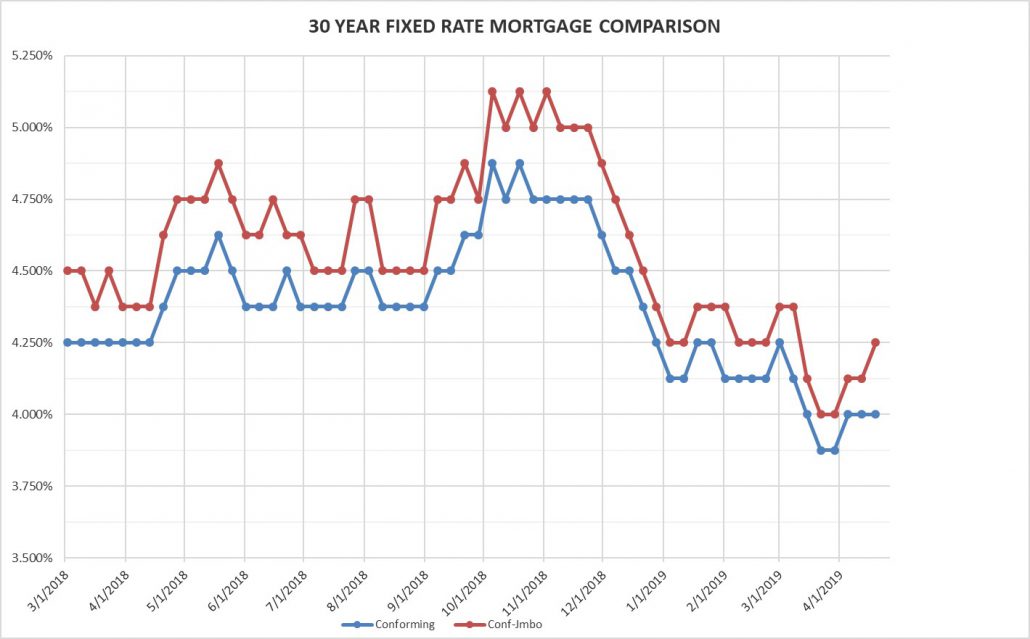
As well, the underlying interest rates for most homeowners are very low. From 2005 to 2006 conventional fixed rates climbed as high as 6.5%. Since 2010 the highest the conforming fixed rate has been is 5.125% in the first week of January 2010, dropping to 3.125% in the last quarter of 2012 and reaching a high of 4.875% for two weeks in October 2018.

Our housing stock is owned by homeowners who can qualify for their mortgage payments, have mortgages with very low fixed rates, have equity in their property—in most cases significant equity, and are staying in their homes for the most part until a life changing event like having children, kids graduating from high school, change in jobs or retirement.

After price run-ups all markets will have periods of no to negative growth, i.e. prices flatten or drop. We are experiencing this in the current market. Will it lead to another collapse? Because of the very strong fundamentals of homeowners the answer is “No.”

The greatest risk to the real estate market is the overall economy and job and income loss. Should we experience very high amount of unemployment in the region, state and country that can, and will, impact the real estate markets. But even then I cannot foresee any type of collapse in prices near what we experienced a decade ago.

Have a question? Ask me!

No bump now or maybe later. This week the Federal Reserve Open Market Committee had a meeting, this is the group that raises and lowers the Fed’s rate charged to member banks to borrow money. It was not a big surprise that the FOMC did not raise rates. What did catch everyone off guard were statements by Fed Chair Jerome Powell at a press conference. Powell’s comments indicated that the Fed may not increase rates two or three times in 2019 as previously intimated. This alone would be enough have investors believe low/er rates are in store for 2019, add in his comments about the Fed’s balance sheets and belief becomes reality.

Looking to help stimulate economic growth after the Great Recession, the Fed purchased over three trillion dollars of fixed rate assets comprised of U.S. Treasury bonds and conventional mortgages from Fannie Mae and Freddie Mac. In 2018 the Fed announced that it would be selling these assets from its balance sheet in systematic, “automatic” as described by the Fed, way. This news, and subsequent going to market with billions of dollars of fixed rate assets to sell put upward pressure on rates. The news from the Fed that it would be looking to curtail sales in the future was welcomed by investors and resulted in stocks climbing and rates decreasing.

The direction was reversed on labor news released today. As reported by the Department of Labor payrolls increased by 304,000 workers in January and job growth continues to be very strong. The headline unemployment rate edged up to 4.0%, mainly due to filings by some federal workers during the shutdown, aided by more individuals entering the market looking for work. Wages and salaries continue to increase as well, not surprising as employers seek more employees—supply and demand works for wages as it does for home prices. Overall the news is mortgage rate unfriendly as higher labor costs should lead to higher inflation, which should lead to higher rates. For the time being inflation is within the range of 2%, the Fed’s target.

Rates for Friday February 1, 2019: Even with a bit of an uptick today following the jobs data the conforming rate is down slightly from last Friday with high balance rates remaining flat for the week.

FIXED RATE MORTGAGES AT COST OF 1.25 POINTS LOCKED FOR 45 DAYS:

30 year conforming                                            4.125%     Down 0.125%

30 year high-balance conforming                     4.375%      Flat    

Please note that these are base rates and adjustments may be added for condominiums, refinances, credit scores, loan to value, no impound account and period rate is locked. Rates are based on 20% down with 740 FICO score for purchase mortgages.

Anyone send any selfies playing golf, strolling on the beach or enjoying a beautiful sunset earlier this week to friends and family in the Midwest or East Coast? It is weeks like this that make the “weather tax” to live in Southern California worth the cost.

Once again, the New England Patriots are in the Super Bowl, entrenching themselves in the most reviled professional team in the country for those not living north of Connecticut. Love them or hate them an objective view must be that they are perhaps the greatest spots dynasty in American history during the Belichick-Brady era. Unlike the Yankees or Celtics of yore who controlled their players throughout their careers and contracts, the Patriots like other teams in the NFL must create a new team every year due to players leaving through free agency and looking for replacements through free agency and the draft. Despite all the roster change over, like many teams face, owner Robert Kraft has provided outstanding leadership to enable the team to be by far the most successful over the past seventeen plus years.

Perhaps the Rams can duplicate what my favorite team, the Eagles, did last year and beat the Patriots. I am of the opinion that they will not but that is why they play the game. Brady is 5-3 in Super Bowls, his only three losses coming to NFC East teams, the Giants twice and the Eagles last year. One thing about Patriot Super Bowl games, they are always close. Of their nine games with Brady at QB the largest point spread is eight points, last year and three games have been decided by only three.

Enjoy the game and have a great week,

Dennis

Past Weekly Rate & Market Updates can be found on my blog page at my website www.DennisCSmith.com/my-blog

1-25-19: What are the different types of mortgages available?

Question of the week:  What are the different types of mortgages available?

Answer:  In the years immediately following the real estate and mortgage market meltdowns many mortgage products left the market. In the last few years many of the products that were available for home buyers and owners prior to 2008 have returned presenting more options for financing residential real estate, and enabling those who are unable to qualify for traditional mortgages.

In response to the collapse of the real estate markets the Dodd-Frank Act was put into law. Dodd-Frank has a regulation for mortgage lenders that created “qualified mortgages,” or QM loans. There are several factors that go into a mortgage being eligible for the QM designation, the primary being that borrowers must show income and the ability to make the monthly mortgage payments. Having funds available to pay off the mortgage is not evidence of ability to repay the mortgage, unless using a certain formula income from the asset account(s) generate income that would enable qualification.

If a lender funds non-QM mortgages they must have “skin in the game,” this is had by the mandate that lenders must retain at least 5% of such mortgages. All conventional mortgages are sold in secondary markets, which is what Fannie Mae and Freddie Mac, where they become security for Mortgage Backed Securities (MBS). Most jumbo loans are sold by lenders to investors who create their own investment vehicles backed by the mortgages. Government loans, VA and FHA, are sold by lenders to Ginnie Mae, who like Fannie and Freddie, bundle the mortgages and sell them to investors.

Conventional mortgages and most “jumbo” mortgages meet the QM criteria as they are underwritten to the guidelines established by Fannie Mae and Freddie Mac. Also meeting the QM standards are VA and FHA mortgages using underwriting guidelines established by the VA and HUD respectively. One of the reasoning behind the QM policy is that investors in mortgage backed securities of conventional or government mortgages investors know the quality of the investment. The primary reason for the mortgage market collapse was the tremendous percentage of mortgages in the Fannie and Freddie MBS pools were funded without income verification, nor asset verification and for many no appraisal of the property used as collateral. With the QM rule investors have reasonable certainty that all the borrowers of the mortgages in their MBS investments have shown ability to repay their mortgages.

Here is a quick comparison of the mortgage options available in today’s markets:

Conventional mortgages can have relatively high loan to values, depending on loan amount and ability to qualify as high as 97% of the property value with several options for mortgage insurance.

FHA mortgages have a minimum down payment of 3.5% and have mandatory mortgage insurance regardless of the loan-to-value. The underwriting guidelines for FHA mortgages are a bit more lenient for qualifying than conventional mortgages.

VA mortgages are for eligible veterans, either active duty or discharged from the service (unless discharge was dishonorable). Veterans who qualify can purchase their home with no money down and the loan limit for purchases can far exceed the limits for conventional or FHA mortgages. The mortgages have a “funding fee” added to the loan amount, which is VA’s version of mortgage insurance.

Non-conforming, or jumbo, mortgages mirror conventional mortgages in many respects, however most will not fund mortgages above 90% of the value of the property and have tighter underwriting guidelines for qualifying.

Non-QM, or Alternative, mortgages have many variations to provide mortgages for borrowers with poor credit scores, borrowers with high debt-to-income ratios, self-employed borrowers with low income on their tax returns are some of the most common applicants for Alternative mortgages. Lenders in this section of the market have products that use deposits into business or personal accounts to calculate income, statements from accountants to accompany tax returns to explain losses or other criteria. Because of the more relaxed underwriting standards, and the retention rules for non-QM products, rates on these mortgages are higher than those on QM mortgages.

It is estimated that $5-6 billion of non-QM mortgages were funded in 2018 for residential borrowers and predicted that the total volume will increase considerably in 2019.

Too often we meet with clients who are able to purchase, or refinance, their home using alternative mortgage products but the bank or mortgage professional they were working with did not have such products available, encouraging them to obtain a co-signer, obtain more funds or otherwise try to fit into the products they have available. Because we work with many lenders, in the QM and non-QM spaces, we often have the ability to help them with their purchase or refinance.

If you, or someone you know, is in need of a mortgage to purchase or refinance their home please contact me to go through all their mortgage options to help them find the best financing for their ability to qualify.

Have a question? Ask me!

Home sales are cooling off. The California Association of Realtors have released sales data for December and every major market in the state except San Francisco had a drop in sales from December 2017. Locally, Los Angeles County saw a drop in sales from November of 3% and from last December of 16.3%; the median sales price in December was $588,140 in the county up 6.2% from the prior month and 1.8% for the year. In Orange County sales tumbled 15.5% for the month and 18.3% for the year with the median price in December of $785,000, off 1.3% from November and 0.1% from the prior year. Nationwide real estate sales are at a three year low. Historically December is a slower month for home sales so a dip from November is not surprising. Are these numbers a “dip” or are they foreshadowing a decline in the market that will last for….how long? Next week I will compare the current real estate market to that leading up to the 2007-8 start to the collapse that led to the Great Recession.

Rates for Friday January 25, 2019: Rates are steady from last Friday, though some movement up and down during the short week. So far, the federal government shutdown has not impacted the economy. Unlike if 800,000 workers in the private sector were laid off, the furloughed federal employees will go back to work and cash flow shortages for federal workers and vendors will be back filled; because of this any negative impact on the overall economy is short termed. It appears that there is some movement in Washington to settle differences and re-open the government and I am optimistic the normal dysfunction in our nation’s capital will return.

FIXED RATE MORTGAGES AT COST OF 1.25 POINTS LOCKED FOR 45 DAYS:

30 year high-balance conforming                    4.375%     Flat     

30 year conforming                                            4.25%       Flat

Please note that these are base rates and adjustments may be added for condominiums, refinances, credit scores, loan to value, no impound account and period rate is locked. Rates are based on 20% down with 740 FICO score for purchase mortgages.

Those who know me will not be surprised by this statement: I love pie. And cookies, but pie holds a bit of a higher place because it is usually not as readily available as a cache of thin mints in the freezer. Thankfully my oldest also loves pie and over the years she and I have made many runs to the best pie purveyor in Long Beach, Jongewaard’s Bake-N-Broil. For the past several years we have gone to Bake-N-Broil on January 23rd to celebrate National Pie Day.

With her attending university in Boston I knew I would be spending National Pie Day alone. Thankfully for this first year I was likely to be without my pie-buddy on 1/23 Winter Storm Harper hit the Northeast. Why thankful? Late Friday night JetBlue sent her an email that her flight to Boston on Sunday morning was cancelled. By the time we go through to get her a seat back to school the only available flight was a red-eye leaving Tuesday, January 22nd. So though it was a day early we were able to celebrate National Pie Day together—she had lemon lush and I had French apple. Thank you Harper for letting me continue a tradition. (She plays in the pep band for BU and let me know that at the basketball game on Pie Day they had free pie available—she got a slice of Boston Cream Pie. I’m so proud.)

Have a great week,

Dennis

Past Weekly Rate & Market Updates can be found on my blog page at my website www.DennisCSmith.com/my-blog
11-30-18: What will be the cost of waiting, or is there one, to purchase your new home in mid to late 2019, or 2020, instead of now or the near future?

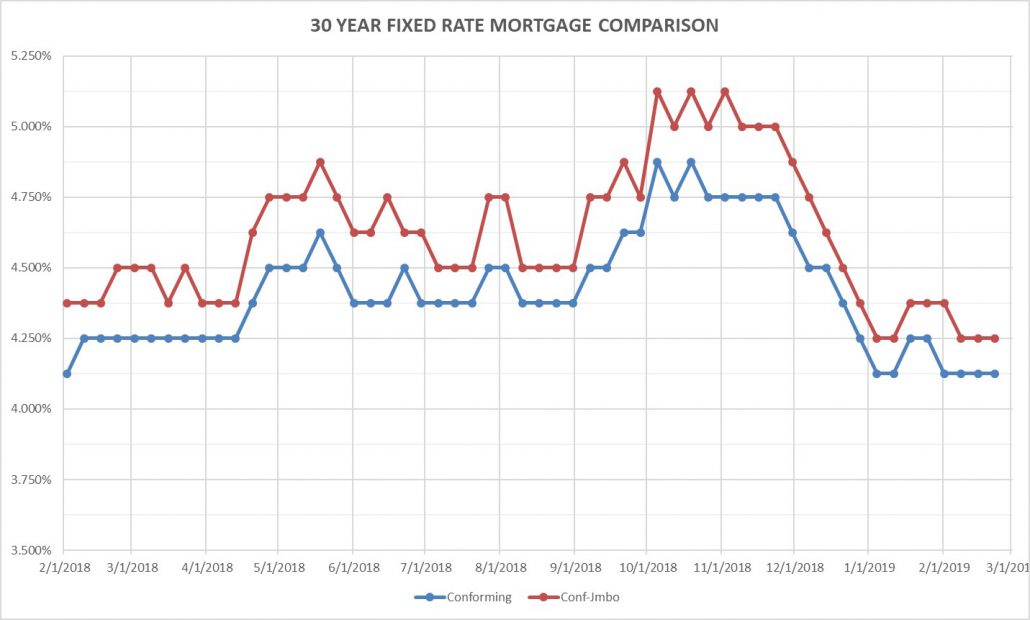
Question of the week:  What will be the cost of waiting, or is there one, to purchase your new home in mid to late 2019, or 2020, instead of now or the near future?


 Answer:  This installment of the Weekly Rate & Market update is a follow up to the WR&MU of November 16th when the question of the week was “What was the cost of waiting?”


I got very carried away writing the update this week and to follow is a lot of detailed economic information. My conclusion shown at the end is that there is little cost to waiting, but likely not a lot of benefit, if you can afford to purchase where you want to purchase today. If you are waiting for prices to drop significantly so you can afford to purchase in area you could afford a few years ago but cannot today, then your cost of waiting is the cost of homes in areas you can afford likely going up as will the home you currently cannot afford—essentially to see a decline in values of 15-20% is not very likely so you should change your expectations and neighborhoods to where you can buy. For those interested in my more detailed observations, bless you and read on!


The answer to this week’s question is speculation on my part based on several economic factors, trends and some educated guessing. Regarding the educated guessing part, I have degree in economics and political studies and have been a student of both for over 35 years. (Two famous jokes about economics at the end of the update for those interested. They were funny when I was in college, not sure they still are…)


To answer the question of the week, I am going to flip the standard format of the WR&MU by presenting economic news this week and how it relates to interest rates, then extrapolate out to what I see for 2019.


As you read the following keep in mind that there is upward pressure on rates when economies are doing well and there is inflation, there is downward pressure when economies are sluggish, slow growth or recession, and if there are extremely negative events such as threats of war, war, or economic collapse in other nations.


While economic data is usually the primary driver for interest rates, politics also has an influence. This weekend a political event will occur that could/should impact not only rates but our economy for the near and possibly long-term future. President Trump will be in Buenos Aires for the G20 summit and has a meeting scheduled with Chinese President Xi Jinping for the purpose of discussing the tariff war between the two largest economies in the world—by three to four-fold over the next nearest.


If the meeting goes poorly and there no movement to lower tariffs, or either or both sides are so upset they raise more tariffs, we will see higher rates due to higher inflation. With tariffs increasing prices of Chinese goods imported into the United States those goods will need to either be manufactured in the United States or imported from other nations. Either scenario will increase the prices of the goods, for those manufactured in the U.S. companies will need to hire workers in an economy that is at or near full employment, which will require higher wages, as well as purchase materials required to manufacture the increased supply of goods they will need to sell. Higher prices lead to higher rates.


The meeting will be considered “good” if there are mutual statements of starting talks to find common ground on the issues that led to the tariffs, mainly market dumping, counterfeiting of American brands and piracy of intellectual property. Any indication that both sides are looking to de-escalate will likely lead to lower rates as the expectation will be a relief on inflationary pressures and avoidance of further conflict.


This critical meeting between Trump and Xi can have a significant impact on our housing markets due to their potential impact on mortgage rates.


Another non-data event this week has had an impact on mortgage rates. Federal Reserve Chair Jerome Powell gave a speech to the Economic Club of New York. In the speech, he said that he believes rates are “near neutral,” and that prior business cycles have ended not due to inflation but rather because of asset prices. Regarding “near neutral,” this comment had investors buying bonds, and mortgages, putting downward pressure on rates as they read the comment to mean that the Fed may not increase rates four times between now and the end of 2019. Instead of the Fed rate increasing one percent over the next thirteen months, perhaps only three-quarters of a percent, or one-half of a percent. The comment about asset prices ending cycles instead of inflation brings forth another interpretation is that the Fed may shift from using inflation as their primary basis for rate increases and somehow may be looking at over all prices in different markets such as stocks and housing. If these interpretations are correct, and the Fed does strongly signal fewer rate increases in the near future the impact can be a sparking sales in the housing markets as rates remain near current levels or perhaps dip in the coming months/year.


Real and potential statements are not the only news impacting rates, and therefore housing markets, this week. We also had some real data, starting with consumer confidence for November. Consumer confidence impacts rates as consumer spending is 65-70% of our economy, happy and confident consumers are expected to spend more, leading to economic growth, leading to inflationary pressures, which lead to higher rates. The consumer confidence index dropped in November for the first time in five months, however the decline is not overly surprising since the October index was the highest in 18 years. The primary factor in the November decline was primarily due to feelings by respondents that they would see little to no income growth in 2019.


Speaking of consumers, this week we receive data on their spending and income in October. Consumer spending in October saw a big increase, 0.6%, from September, a good sign for retailers heading into the Christmas shopping season and a good sign for the Gross Domestic Product growth number for the 4th quarter, and for the year. Strong GDP growth is a strong indicator of inflation, which, as we have said repeatedly, leads to higher rates. Consumers increased spending in October, and earned more as incomes rose 0.5% from September, the highest monthly increase since January. Stronger earnings are also inflationary as they a) provide more money in households for spending and b) increase costs for employers who must raise their prices to accommodate the higher costs.


Released the same day as the reports on income and spending was the rate of inflation as calculated using the “PCE gauge,” which is the Federal Reserve’s preferred inflation index (it excludes food and energy and thus is labelled the “core inflation rate”). Despite higher spending and incomes, the annualized rate of inflation for October was 2%, right around the Fed’s target rate of inflation. The news is interest rate friendly and supports the Fed Chair’s statement about rates being “near neutral.”


Before we answer the question about if there will be a continued cost to waiting to purchase a new home we must look at the most recent housing data for our Southern California markets. The quick synopsis is that local markets are in a period of transition according to data from the California Association of Realtors.  State wide the median price in October for single family homes was down 1.2% from September, but up 4.7% from last October at $572,000. More locally, in LA and Orange Counties the median movement month to month and year to year somewhat mirror the activity statewide. The median price in LA County in October was $614,500, 3.2% lower than September and 5.9% higher than 2017; Orange County saw the median price from September drop 1.8% to $810,000 but was still 3.1% higher than in 2017.


Total sales volume, i.e. units sold, were up statewide month over month, 3.8%, and down 7.9% year over year. Like with prices, units sold locally were also up monthly and down annually. In LA County, there was surge in sales in October, climbing 29% from September, however the total sales volume for the month was down 5.9% from last year. In Orange County, sales also increased from September but a much more modest 3.9%, and also decreased from 2017 with a drop of 11.3%.


Month to month the trend is more sales at lower prices, plus increasing inventory on the market and longer periods of homes on the market before being sold. One other pattern is a growth in the number of cancelled or expired listings that are not renewed.


Back to our question, what does all this mean about housing markets and if there will be a cost to waiting to purchase a new home.


The data is somewhat murky for both the economy and the housing markets—murky usually means transition. Is the transition in the benefit of those looking to purchase homes? If there is a buyer’s market, how much of benefit will there be and for long?


The economic transition seems to point to a recession late in 2019, which means the slow down starts in early to mid-2019. This is not an uncommon thesis, as others reading the economic data are also indicating a stronger probability for a recession in the next twelve months. If this occurs the biggest question will be the depth and length. In my opinion, the depth will be fairly shallow and the length fairly short. Keep in mind a recession is defined as two consecutive quarters of negative economic growth, that would cover six months or more.


If there is a recession the impact on housing markets would depend on the cause of the recession, is it a decline in asset values as Fed Chair Powell stated? Is it inflation? The cause will be a primary factor in impact on housing markets.


If the cause is primarily driven by asset prices being too high, then as prices decline, or remain somewhat stable with incomes and other prices increasing, then rates will be dropping into and during any price corrections or stabilization making homes more affordable than they are today.


If the cause is primarily driven by inflation then even if housing prices drop the affordability will not necessarily increase as rates will be increasing to slow inflation. We can see an economy with rising energy, food, clothing, houseware costs but dropping, or stable, costs for large ticket items such as housing and automobiles. If this is the case rates will be climbing resulting in the month costs of housing, i.e. mortgage rates, climbing. If this is the case then the length and depth of a housing correction will likely be longer and perhaps a bit deeper than if there is an asset based cause for a correction.


When looking at housing markets we must acknowledge the uniqueness of California as a whole and Southern California in particular. Besides the weather, which will always be a draw, the lack of available land to build more homes in the any county that touches the ocean is a huge factor. Yes, there are some areas still in the region for new homes to be built, however overall the vast majority is fully developed. In many areas, new housing is going vertical with high rises and not horizontal with single family residences with yards. This inability to add significant supply will sustain a certain level for housing markets locally.


What about the housing crash ten years ago, space availability was not much different, so why did home prices drop so much? Great question to look at. The foundation for the market was built largely on panic buying and people more concerned with making money on a property purchase instead of a buying a family home. Homes were purchased with no verification of income, funds to purchase and in many cases no hard appraisals. Mortgage products were available that enable buyers to purchase way beyond their capabilities, and as prices rose many were looking to sell their homes quickly for a profit and buy their next home. When prices started to drop many found themselves in homes with loan balances higher than property values due to no down payment purchases, rather than pay it many walked away and foreclosures rose putting more downward pressure on the market. Eventually prices did stabilize as buyers who had been priced out of the market were able to purchase due to lower prices and rates.


Finally, the market collapse a decade ago was not a result of a recession caused by inflation, or high interest rates, but rather because of poor lending standards and mortgage products that created an unnatural inflation in housing prices. When investors started looking into the mortgages being sold on the market that were based on little to no verification of ability to repay on homes that had climbed in value at unheard of rates, they stopped buying those mortgages. The result was a domino effect that pulled the nation, and the globe, into recession.


One very large impact that compounded the decline in values was the lack of qualified buyers to purchase homes as they hit the market—lower demand with higher supply continued the price declines. Many families that might have qualified to purchase a new home were prevented from doing so for several years because of the foreclosure or short-sale on their credit records. This group was a significant number that otherwise would have absorbed inventory on the market.


Since 2010 buyers of homes have overwhelmingly been purchasing homes in which to raise families and not to make money. They have been qualified for their mortgages by proving income and funds for purchasing. Most buyers have been putting more than the minimum required down payment, so they have “skin in the game” and will be less likely to walk away or panic sell if/when market prices dip.


The run up in real estate values over the past several years was created by qualified buyers competing with other qualified buyers to purchase homes. The mixed market we now see, with housing values starting to decline, sales down one month and up the next, is based on affordability due to the price increases exacerbated by the increase in rates since the start of the year. The pool of buyers has not shrunk, and will not shrink because of any market transition, what has changed is the price for which they can qualify and/or their desire to purchase in a market they see as transitioning so they are waiting for prices and rates to drop.


All of this said, and I apologize for my long-winded path to this point but I wanted to be somewhat thorough, I do not feel there is a large cost to waiting, but I also do not feel there is a large benefit to be gained by waiting to purchase a new home.


Many sellers, or would be sellers, are holding properties off the market as they desire a higher price for their home than the market will support. For the past few years new listings have come on the market at the highest price in the neighborhood, or just beyond, and buyers have been over-bidding the list price to obtain the home. More recently homes are selling at or just below list prices, causing potential seller to hold off until prices increase again.


Note, “again.” Because of the lack of ability to build more housing near the coasts (let’s define “near” 25 to 30 miles from the ocean from San Diego to Santa Monica) there is limited ability to expand supply, any increase in demand will push up housing prices. Natural attrition is due to death, divorce, and relocation will dictate supply, population growth and aging as more people enter the age of homeownership will dictate demand. Demand will not be able to be sated with new housing, hence existing housing will be what is available for buyers to bid on. Over time Southern California coastal residential housing goes up. How soon and how much changes depending on what time frame, over longer periods of time  however prices climb.


Looking into 2019 housing prices will dip in some areas, drop in others and stay somewhat constant in other areas. Rates should remain near current levels, possibly declining towards the middle to end of year if/when economy slows down, but since they are already so low (historically discounting the false rates created by the government and Fed starting in 2008) there will not be a significant drop as we saw following the last recession. What I do see happening is families slowly moving their geographical areas of desirability to neighborhoods they can afford. The home they can purchase to purchase for $500,000 is no longer available in the neighborhood they were hoping to purchase in one, two or three years ago; that $500,000 home is now selling for $550,000 to $600,000. Where homes were selling for perhaps $425,000 – $450,000 two or three years ago are likely the $500,000 homes today. The decision will be, do we buy a home in an area we did not want to purchase in before or do we wait and hope real estate prices drop 15-20% to $500,000 to buy where we initially wanted to, or do we continue to rent with rents still increasing?


I believe the cost of waiting will be that if you stick to your desired area to purchase and hope for prices to decline significantly you will continue to rent until some major change in your financial situation to purchase a home in that area. The cost of waiting into the future will be lost opportunity in neighborhoods of lesser value that you can afford as families start to purchase in those areas, slowly increase their values and changing the neighborhoods with higher ownership density.


If you are able to purchase a home in your desired area, I do not see any significant cost in waiting, but not a lot of benefit to waiting either. Yes, prices may dip some more into the new year, yes rates may dip some more into the new year; however when will you know that the dips have stopped? When will you know that the time is perfect to purchase with rates and prices, and what will be on the market at that time?


My advice has always been, when buying a home, if you like and can afford it buy it. You will be there for a long time, any changes in price over the early years of ownership will be more than made up for in the long run due to where you are buying—California. Your ultimate cost of waiting may be hoping the house you really like still being on the market when you feel the price is right.


Sellers on the market now want to sell, make an offer!


Disclaimer on this very long-winded update:


The WR&MU on October 21, 2016 had a total miss on my part for predicting economic recession, in fact the exact opposite happened as I did not put a lot of thought into Trump winning the election and the resulting economic growth. That will provide a filter for any predictions I make, as well as others—it is all an educated guess and different guesses result on how each guesser is trained to read the tea leaves.


Have a question? Ask me!


Rates for Friday November 30, 2018: The comments by Fed Chairman Powell resulted in a nice rally for bonds and as a result the 30 year conforming rate is lower than the previous Friday for the first time in five weeks. Will it hold? Per comments above a lot depends on the meeting between Presidents Trump and Xi this weekend.


FIXED RATE MORTGAGES AT COST OF 1.25 POINTS LOCKED FOR 45 DAYS:

30 year conforming                                               4.625%       Down 0.125%

30 year high-balance conforming                       4.875%      Down 0.125%


Please note that these are base rates and adjustments may be added for condominiums, refinances, credit scores, loan to value, no impound account and period rate is locked. Rates are based on 20% down with 740 FICO score for purchase mortgages.


We have three seasons in Southern California that cycle annually: Dry, Fire, Mud. When it is dry we have more fires, when it rains we get mud in many areas but especially the fire zones and the rain creates more undergrowth that gets very dry leading into the next fire season causing more and bigger fires that are then turned to mud slides….yet our state and local governments continue to allow more and more housing to be rebuilt where there are histories of fires, floods and mudslides. See Einstein’s definition of insanity.


Since it has been quite a while since we have had a drenching like yesterday, I hope your roofs, windows and other parts of your homes held tight. While we have had no water penetration the same cannot be said of the other scourge for most of the region: ants finding ways into our homes as their colonies get flooded out. The battle is on! We seem to have won the first one but know there are more to come. All that said, I don’t mind the ants a few times a year as opposed to snakes or very large arachnoids!


Enjoy the official start of the holiday season as parades and other activities begin!


Have a great week,


Dennis


Economic Jokes:


Every question asked of any economist has the same answer, resulting in no definitive answer: “On the one hand blah blah blah; one the other hand blaw, blaw, blaw.”


A company is looking to hire an analyst. There are three finalists, a physicist, a mathematician and an economist.


The physicist walks into the interview and on the white board is a question; What is the answer and why: (12-4)3 + (4(13/4)+7) – 21 = ?


After explaining his process as he is writing down several equations using vectors, calculus, etc he writes down 23, circles it and puts down the marker and stares at the interviewer. The interviewer says, “Thank you, please erase your work and send in the mathematician.”


The mathematician enters, sees the equations and mumbles to herself as she solves the problem using basic math, circles the answer of 23. She caps the marker, looks at the interviewer and says, “It is basic math and the answer is 23.”


The interviewer says, “Thank you, please erase your work and send in the economist.”


The economist walks into the room and sees the question and reads aloud, “What is the answer and why.  This is a job for an analyst position correct?”


“Yes.”


“Are you the one I will be reporting to?”


“Yes.”


“Are you the one giving me the information to analyze and I presume it will then be passed along to your superiors?”


“Yes.”


The economist looks around the room. Walks to the door and locks it. Pulls a chair up very close to the interviewer, leans in and whispers, “What is the answer and why….what do you want the answer to be?”


The economist got the job.


Past Weekly Rate & Market Updates can be found on my blog page at my website www.DennisCSmith.com

11-16-18 What was the cost of waiting?

Question of the week:  What was the cost of waiting?


 Answer:  Over the past few years we had a lot of clients who were waiting to buy a new home because they felt the market would correct at some point and they could purchase the home they wanted for less money. About once a year for the past few years our question of the week has been, “what is the cost of waiting.”


On March 2, 2018, this was the question of the week and in my answer the worst case scenario I presented, with highest cost increase and highest interest rate, has come to pass.


Instead of creating my own sales prices for the answer to this week’s question, I will use the median home price for Los Angeles County as published by the California Association of Realtors.


What was the cost of waiting to purchase a home from September 2017 to September 2018?


In September 2017, the median priced home in the county was $606,110, in September 2018 the median price rose to $634,680, and increase of 4.7%. During this same time the interest rate for a 30 year fixed rate loan for borrower with a 740 FICO score rose from 3.75% to 4.75% for the loan amounts needed to purchase the median priced home with 20% down.


With the prices and rates climbing it follows that the mortgage payment also increases. With the 20% down payment on the median price the loan amount in September 2017 was $484,890, in 2018 the loan amount rose to $507,940. As a result, the monthly payment for the median home in 2017 was $2245, this year that payment is $2650 per month, an increase of $405 per month, or about 18%.


Long-time readers of the WR&MU know the mortgage industry used debt-to-income (DTI) ratios to qualify income for mortgage applicants. The DTI is calculated by adding up the applied for housing payment (mortgage principal and interest, property taxes, homeowner’s insurance, homeowners’ association if applicable, aka PITI) plus credit obligations (credit cards, auto and student loans, alimony and parental support payments, etc). Once the obligations are added together that number is divided by your gross income and the result is your debt-to-income ratio. Example: your new house payment is $3000 per month, you have $1000 per month in revolving debt and car loans for a total of $4000 per month. Your salary is $10,000 per month. Divide the $4000 in obligations and house payment by your $10,000 per month salary and your DTI is 40%.


The catchall rule of thumb for most homebuyers is that the house payment, PITI, should be around 35% of your gross income. Why 35%? Because when we add in your other credit obligations we do not want to exceed 45% of your gross income for most loan programs and many households have about 10% of their income going to other debt obligations.


Using the 35% rule of thumb, how much more income did you need to qualify for the median home in September 2018 from September 2017?


Including estimates for taxes and insurance the PITI for the median home in 2017 with 20%, a 30-year fixed rate of 3.75% was $2998 per month. Divide the PITI by 35% and we see that you needed income of about $8550 per month ($102,600 per year) to qualify for the median September 2017 home.


The September 2018 median priced home in LA County, also with 20% down but with a rate of 4.75% for a 30-year fixed rate, had PITI of $3438 per month. Still using 35% as the factor for calculating qualifying income you needed income of about $9825 per month ($117,900) in September 2018 to purchase the median price home.


Summing up, the cost of waiting that past year resulting in needing about 5% more funds for down payment, a 18% increase in your mortgage payment and you would need to earn 15% more to qualify.


The last number is the most critical, in general you need to earn 15% more in 2018 than you did in 2017 to purchase the same home.


Most people are not getting 15% raises from year to year. So how do the numbers look based not on a hypothetical but a reality?


Bill is single and approaching retirement—he plans on retiring between 2023 and 2025. He pays almost $2000 per month in rent and recently came into a financial windfall of about $200,000. We first met in March of 2017 and proceeded to have several conversations regarding his ability to qualify, and more importantly what he felt comfortable paying, for a new home. Involved in the decision process were his tax preparer, financial advisor and real estate agent. The parameters were to keep Bill’s total housing payment, PITI, at $3000 per month or lower and including closing costs not to spend more than about $120,000 to purchase his new home. This put us in a price range of about $550,000 for a new home, with a 4% interest rate our limitation was on the amount of cash to close the transaction not the monthly payment.


Bill actively entered the market looking at homes and condos that fell within his cash to spend and monthly payment parameters. You may recall that rates fell from the Spring of 2017 into the Summer and Fall, which was good news for Bill as he by using his cash to close as his limiting factor the same price homes became cheaper as the monthly payments went lower with interest rates.


Unfortunately, Bill could not find the right home for him, or by the time he made the decision to write an offer on a home another buyer had already entered escrow.


Because of the market as time went on the neighborhoods in which he was looking had rising prices, so to purchase the same house he needed more and more down payment to meet the 20% down we had budgeted.


Today, even with higher rates his ceiling of $120,000 to spend still is a sales price of around $550,000, however because of the rising prices in the market the 3-bedroom homes in that price range are now 2-bedroom homes in the same neighborhood, or perhaps even a neighborhood that is the next level lower in terms of price, location, etc.


Because of his hesitation throughout 2017 and into 2018, Bill has to either change his parameters to purchase the home he wants, or change locations where the average prices are lower, which creates a challenge for his commute to work, visiting family and where he would like to live in retirement.


We are now looking at condominiums for Bill as the prices are usually lower in the same market and we can purchase something within his cash spending restrictions as well as stay within his monthly payment restriction even with the HOA dues. In the meantime his rent has increased 5% and the landlord is considering selling the property to take advantage of current real estate prices.


Waiting has cost Bill not in cash to close or monthly payment but in size of home, location of home and/or type of home he can purchase today as opposed to one year ago.


All of which leads to a follow up question: What will be the cost of waiting, or is there one, to purchase your new home in 2019, or 2020, instead of now or the near future? A question I will explore in next week’s WR&MU.


Have a question? Ask me!


Consumer prices jumped last month. The prices consumers pay for goods and services rose 0.3% in October and year over year the general inflation index climbed 2.5%, the highest it has been in the past year, according to Consume Price Index data released this week. Leading the charge upwards in prices were gas, rent and used vehicles. This data would put upward pressure on rates, however the data used to calculate inflation by the Federal Reserve is the “core” rate of inflation—which strips out volatile gas and food prices. The core rate for October came in with a 0.2% monthly increase and the annual rate dipped to 2.1% from the prior month’s rate of 2.2%. This is a bit confusing with the two different calculations, consumers are seeing a cost of living increase of 2.5% from last year, but if they didn’t buy and gas or clothes they only saw an increase of 2.1%. Because the core rate was within expectations and the Fed’s target inflation rate mortgage rates were not impacted by the news.


Consumers are the most important part of our economy. Personal spending and consumption accounts for 65-70% or our economy, because of this retail sales data is an important indicator of the economy’s strength. The retail sales data for October were released this week and included revisions to the prior two month’s data. In the revisions retail sales in August and September went from slightly positive to slightly negative, the first back-to-back negative months since 2015. For October, the data showed the biggest increase since last fall with an increase of 0.8% for the month. As with the CPI data, the spending increase was led by gasoline prices, and helped with a surge in new auto purchases. Taking out gas and car sales and the increase in retail sales drops to a much more modest 0.3%, so good news for auto dealers who saw an increase in sales, not as good news for retailers who saw their customers spend on gas and cars instead of sweaters and meals out. Overall the news is neutral for mortgage rates, the revisions downward for August and September will likely result in a revision downward for 3rd quarter GDP growth from the initial estimate of 3.5%, which is good for rates, and the increase in total sales being led by volatile gas prices and one-off new car purchases is discounted by investors.


Rates for Friday November 16, 2018:  Rates should be a bit lower today than they are, but it appears lenders are hanging on a bit to increases in the markets (higher prices equal lower rates) due to the weekend before Thanksgiving and potential volatility in the short week. Overall rates see some upward pressure easing this week due to stocks selling off and a comment from a member of the Fed board that decides rates indicating that moving forward the Fed will be very cautious—putting some question into whether there will be three rate increases as scheduled in 2019.


FIXED RATE MORTGAGES AT COST OF 1.25 POINTS LOCKED FOR 45 DAYS:

30 year conforming                                            4.75%       Flat

30 year high-balance conforming                    5.00%      Flat


Please note that these are base rates and adjustments may be added for condominiums, refinances, credit scores, loan to value, no impound account and period rate is locked. Rates are based on 20% down with 740 FICO score for purchase mortgages.


Unfortunately, it often takes the misfortunes of others to appreciate the fortunes we have. Such is the case for most of us this week as we gather with family and friends for Thanksgiving. Coming together in gratitude for what we have in our lives as we observe the incredible upheaval thousands, tens of thousands, of families have had in our Southern California region via the media, both traditional and social.


Those impacted by the wildfires in Southern and Northern California are extremely grateful for one of America’s most important organizations, the Red Cross, who show up at every disaster with all sorts of assistance from arranging shelter, food, water, clothing, even dolls and toys for children. This comes at a cost, which is almost all from charitable donations.


Here is where the readers of the Weekly Rate & Market Update can help those who no longer have a home this Thanksgiving, or are displaced, due to the fires, by clicking this link and making a donation of any size: Red Cross Donations


We will have guests at our table from near, my father in-law, and far as two families from Chicago, Leslie’s cousins as well as a family spending their vacation week in Southern California whose daughter has gone to camp for several years with our daughters. I am anticipating some talk about the Cubs and Bears.


My family and I are very thankful for the support we have had over the decades from our clients, business and referral partners. As well the incredible family at Stratis Financial who work diligently to ensure our clients’ files processed, approved and funded with the utmost on professionalism and efficiency.


Have a wonderful Thanksgiving with family and friends wherever the holiday may take you.


With gratitude,


Dennis


Past Weekly Rate & Market Updates can be found on my blog page at my website www.DennisCSmith.com

10-26-18 Why can’t you use my bonus income to qualify me for my new home?

Question of the week:  Why can’t you use my bonus income to qualify me for my new home?


 Answer:  Income must be of a constant and continuing nature.


What constitutes “constant and continuing?” Generally, at least a two year history of receiving the income fulfills the requirement. There are some exceptions which I will cover below, but the question of the week specifically addresses bonus income, and much of this will apply to overtime and commission income as well.


Bonus income typically fluctuates from year to year depending on the matrix upon which the bonus is based. Because of the fluctuation there must be a guideline for the lender to consider the income for qualification purposes for your mortgage application. The industry standard is that if you have received a certain type of income for two years are more then we have reached the threshold of constancy. To reach the continuing nature policy we generally need a statement from your employer that the bonus will in all probability continue; this guideline is usually met with a letter from the employer or with a Verification of Employment (VOE) that we send your employer to complete. The VOE has sections for your employer to complete stating the length of employment, income for each of the past two years plus year to date broken down into base, bonus, overtime and commission. As well there is a place to indicate whether the continued payment of bonus, overtime and commission is likely to continue in the future.


Whether your bonus is paid annually, quarterly, monthly or per pay period does not matter for qualifying, we will convert the amount received into a monthly amount based on the amount received for the past two years, and if applicable year to date. The rule of thumb for bonus income, as well as overtime and commissions, is to use at least a two year average, unless the most recent year is lower than the prior year in which case the lower amount is taken.


Example: You have been with your company for five years and have received bonuses every quarter for the past three years and the bonus is paid on the first paycheck after the end of the quarter. In 2016 your bonuses totaled $12,000, in 2017 $12,600 and on your October 15th pay period your total bonuses year to date including September totaled $9700. The total amount received in bonuses is $34,300 over the past 33 months (two full years plus nine months in 2018), so we divide the total amount received by the time period over which it was received and get $1039.39, this is the amount of bonus income we will use for your qualifying for your mortgage—provided your employer verifies that you are likely to continue to receive bonuses in the future.


Example 2: Same employment scenario as above, however in 2016 you received $12,000 bonus, in 2017 you received $10,000 bonus and through September you have received $9000 in bonus income as reflected on your recent paycheck. It is evident you received $1000 per month in 2016 and so far in 2018. However, in 2017 your bonus was $833.33 per month—this is the bonus income that most lenders will use for income qualifying as it follows the standard guidelines from Fannie Mae and Freddie Mac. Even with a letter from your employer regarding 4th quarter bonus the lender will take the worst case scenario when calculating income.


All this covers how we do calculate and count your bonus income, back to our question, why is your bonus income not allowed? Reading through the above it is likely because of any or all of the following:


  • You have not received your bonus for at least two years
  • Your bonus has been inconsistent, i.e. you received bonus income in 2016 but not 2017
  • Your employer will acknowledge that your bonus is likely to continue, which we saw not infrequently during the recession with employers very hesitant to put in writing bonuses are guaranteed or likely to continue creating a legal document an employee may use against the employer should bonuses be canceled.


Any non-wage employment income is generally treated in a similar manner, most prevalent being overtime, commission and self-employment income.


As mentioned above there are some exceptions to the two year income rule:


New job—If you are starting a new job, depending on the circumstances, we can generally count your income with a short, or perhaps no, history of employment at the new job. Typically, showing at least thirty days of income is needed. If you are transferring from working for Dennis Sprockets to Smith Widgets and in somewhat the same type of work, we can use your new income—but not overtime or bonus unless expressly addressed and quantified in an employment contract and if you received similar amounts in your prior job. New professionals can also have “young” income used for qualifying with proof of education in the field and an employment contract. If transferring geographically and a new job with a new company we can usually use your new employment income before you start on your job with an employment contract and separate letter from a senior executive at the company.


Spousal support—If you have a divorce decree or separation agreement that is recorded that includes your receiving alimony or child support we can use that income once you can prove you have received six monthly payments in a timely fashion. Note the income must be received as one payment every six months and not six months’ worth of payments upfront. As well the agreement must indicate the income will be received for at least three years after the date of your mortgage application; for instance, if you are receiving $800 per month for each of your two children until they are 18 and your son is 16 then we will only accept $800 for qualifying for your youngest child.


Retirement income—If you receive a pension or social security income you do not need to show a two-year history. Provide your award letter stating the amount of income you are to receive and we will use the current income for social security; for a pension, we must show that the pension income will continue for at least three years.


Asset accounts—Most individuals and couples have their financial assets in a retirement account and/or taxable investment and bank accounts. Depending on several factors these accounts could be used for qualifying income. Retirement accounts can be used for income if you are taking regular withdrawals from the account. Depending on your age and the type of retirement account you may be having to take mandatory distributions on an annual basis, this can be used for income. Or if you are taking regular distributions we can use those amounts as income as well. If you have funds in non-retirement accounts there are some cases where we can perform a calculation called “asset depletion” so we can achieve qualifying income.


Rent—If you are purchasing a new home and renting out your existing home there are guidelines we can follow to use the rental income from your current residence as qualifying income to offset the mortgage, tax and insurance payments.


Bonuses, commissions, retirement, wages, there are many different sources of income; whether yours is eligible for use as qualifying income can depend on different factors. If you, or someone you know, if looking to purchase or refinance property please contact me to ensure you are fully qualified for the transaction you want to make.


Have a question? Ask me!


Don’t bury the lead. A couple of big pieces of economic news, since weekly update is primarily about mortgages and real estate we will start with the major news on home sales. This week the California Association of Realtors released its housing report for September. Based on the data I am of the opinion the real estate markets have become a buyer’s market. Los Angeles County saw the median home price increase 4.5% from August and 4.7% from 2017 to a value of $634,680. While the median price increased there was a dramatic drop in total sales. Sales volume for the month was down 18.3% from the prior month and 22% from last year. Neighboring Orange County saw both the median price and total sales volume drop in September. The county median price of $825,000 was down 1.6% for the month and 3.3% for the year, total volume was down 20.3% from August and 21.8% from September 2017. The data that supports my contention of our regional market being a buyer’s market is the increase in the number of active listings on the market and the time a home is on the market before it is sold and enters escrow. Basic premise, more supply leads to lower prices. Supply is growing and demand is not due to several factors, primarily higher interest rates.


Impacts sales and refinances. The softening market not only impacts sellers as they see values slowly erode, but also can have an impact on homeowners looking to refinance to lower payments, consolidate equity lines or obtain equity for various reasons. How? With a softer market there is more downward pressure on appraisals and therefore values needed for refinancing, or the rate and cost of the refinance due to potentially higher loan to value based on potentially lower appraised values.


The national economy is not following housing. This morning the initial estimate for the Gross Domestic Product was released and it showed growth in the quarter of 3.5%, slower than the 4.2% GDP growth in the second quarter. The expectation is that 2018 will end with total economic growth of 3% or greater, the first year with such growth since 2005. The report was, as you can expect, sprinkled with good news most notably the decline in inflation from 2% in the second quarter to 1.6% in the third quarter. That is good for consumers, but is it good for the economy? With some weakness in business spending and investment, slowing inflation and the equity markets dropping in recent weeks the signals are there for economic growth slowing, or reversing in 2019. It is quite possible, probable?, that a mild recession will begin in the third or fourth quarter of 2019. Overall the GDP news was market neutral as the growth figures met expectations.


Rates for Friday October 26, 2018: With stocks falling this week investors have been moving their funds to bonds and mortgages resulting in rates falling from last Friday. We remain in a volatile market and caution is strongly advised when thinking about floating your rate.


FIXED RATE MORTGAGES AT COST OF 1.25 POINTS LOCKED FOR 45 DAYS:

30 year conforming                                            4.75%     Down 0.125%

30 year high-balance conforming                       5.00%     Down 0.125%


Please note that these are base rates and adjustments may be added for condominiums, refinances, credit scores, loan to value, no impound account and period rate is locked. Rates are based on 20% down with 740 FICO score for purchase mortgages.


Few things are better than a short trip that feels like a very long trip. That was the experience Leslie, our daughter and I had last week when we flew out to Boston to see our college freshman. Leslie and I walked about 13 miles on Saturday, mostly up the Charles River while the internationally famous Head of the Charles rowing regatta was going on, watched a performance by the marching band, where ironically our daughter is the tallest in the flute section as she was in high school, then we all enjoyed a fantastic and leisurely lunch/dinner at an Italian restaurant, topped off with the ubiquitous visit to Mike’s for some pastries. Another long walk to LL Bean to get our girl squared away with duck boots for the coming winter and it was back to our hotel for a few hours of catching up and just being together. A packed day, with plenty of needed hugs, mostly for me, and just seeing how happy she is with her friends, college and new city and mom and dad have come home at ease.


Now we are looking forward to our next time seeing her when she is home for four weeks at Christmas!


Have a Happy Halloween and don’t get too spooked by the gremlins and goblins showing up on your doorstep…I’ve noticed they leave you alone if you bribe them with some sugary treats!


Have a great week,


Dennis


Past Weekly Rate & Market Updates can be found on my blog page at my website www.DennisCSmith.com