Posts

Is refinancing worth the short- or long-term cost?

Question of the week:  Is refinancing worth the short- or long-term cost?

Answer: With rates remaining very low we have been busy doing calculations for clients to determine if a refinance to lower their current mortgages rate and payment makes sense. This is a bit of a follow up from the WR&MU of August 30, 2019 (“When can we, should we, refinance?”) in which we discussed not only a refinance to lower the payment (a rate and term refinance) but also refinancing your current mortgage to consolidate a HELOC, other debt or pull-out equity for other purposes (a cash-out refinance). This week we will keep our discussion to a rate and term, or rate reduction, refinance.

Every transaction has costs, the question we explore with clients is how are the costs paid. The mortgage costs incurred when purchasing a home are similar to the mortgage costs incurred when refinancing a mortgage. There are several services that are involved, and no one works for free. Escrow, lender and title companies have fees. The transaction will have to be recorded so there will be fees paid to the county recorder. Not always but in most instances, there will be an appraisal, which requires a fee. Credit companies, companies that inform lender if your taxes are being paid on time and in the correct amount, companies that certify if your property does or does not require flood insurance, all have fees that need to be paid.

These are all known as “non-recurring costs,” the happen once and only happen because you are obtaining a mortgage. Depending on your loan amount and a few other variables, these costs range from about

Other costs involved are “recurring costs,” as you have guessed these costs recur over the life of your mortgage. Also known as “pro-rations,” these are amounts due to mortgage interest, property taxes and insurance that are prorated to the date of closing based on what has been paid or what will need to be paid.

There are three ways these costs can be paid in a refinance transaction (see below for fourth in a purchase). The costs can be paid with the borrower bringing funds to escrow at closing. The costs can be paid by adding them to the current mortgage amount, increasing the total amount of the new mortgage. The costs can be paid by the lender by increasing the rate on the new mortgage. (The fourth method of paying the costs in a purchase transaction is to have a credit from the seller or agent(s) for some or all of the costs you will be incurring.)

These costs are the short-term cost of refinancing, long-term if you add them to the loan amount. The question we answer is, do the costs associated with the refinance make sense? How do we determine what “makes sense?”

We have two litmus tests we use to determine if refinancing your current mortgage makes sense. First, your payment needs to drop by at least 5%. Second, if we divide the costs of the refinance by your monthly savings is the “pay-back” less than 36 months? The higher the percentage of savings and the lower the “pay-back” period the more it makes sense to refinance.

Real numbers: Client purchased a home in 2016 with a mortgage of $535,000 with a rate of 3.875% and a monthly payment of $2517 per month. The current balance on the mortgage is $500,000 and we are looking at a refinance at 3.5% with total costs for all fees of about $3500.

Client chooses to add the fees to the current loan balance so we have a loan for $503,000. The payment for a 30 year fixed rate $503,500 mortgage at 3.5% is $2261. This will lower the monthly payment by $256 per month, a savings of 10%–we meet the litmus test for monthly payment savings.

If we take the costs of $3500 and divide by the $256 monthly savings we get 13.67 months, which means that by the 14th payment the refinance has paid for itself.

After going through the math the client says, “but I have already paid on the mortgage for about 40 months, now I am starting all over again.”

There are several points to consider when extending your current mortgage with a refinance. How long will you be in the property? Will you be able to utilize your monthly savings to pay off other debt, increase your retirement savings, put aside for children’s college fund(s), or some other use that will benefit you?

Taking our client above, who says they intend on being in the home beyond thirty more years. Let’s look at the math between saving $256 per month versus adding 40 months to his payment. The next 320 months will be the time frame in which the original loan will be paid off if let alone. The savings during the 320 months from refinancing will be almost $82,000 (320 x $256 savings per month) and the payment on the additional 40 months due to refinancing is about $90,000 (40 x $2261 monthly payment from refinance). Over thirty years he will pay about $8000 more.

Is saving a total of $8000 over 30 years worth not saving almost $3100 per year for over 25 years? In economics there is a saying, “a dollar today is worth more than a dollar tomorrow;” essentially what you can buy with a dollar today is worth more than buying something for a dollar tomorrow for several factors, most importantly inflation eroding the value of your dollar over time. Having $256 more per month today and in the near future is worth more than spending $$2261 per month in twenty-five years.

If the client does not intend to stay in the home for more than the 320 months remaining on his mortgage the additional term is mute, the home will be paid off through your selling it before the final payment would be due, why spend more each month until you sell?

If the plan is to stay and keep the home then the better financial decision is still to refinance. Just keep making your same payment and your home will be paid of in about 300 months instead of the 320 months you have left on your mortgage. This will save you about $50,000 from not having any payments for 20 months at the end of your current mortgage. That said, I and many others contend that financially you would better off investing the monthly savings into an account for some future expenditure needs such as college tuition or retirement due to the economic principal of compound interest and dividend reinvestment and the tax deductibility of your mortgage interest.

Yes, there are short-, and possibly long-term costs to refinancing. There are also short- and long-term benefits from doing so. Doing the math will determine whether the benefit outweigh those costs for you and your family.

If you would like to do the math on your current mortgage as to whether it makes sense to refinance or not please give me a call!

Have a question? Ask me!

Slow news week, for economic data anyway. The primary news that impacts mortgage rates is the monthly jobs report released on the first Friday of every month. Today’s release shows that 225,000 jobs were added to the economy in January, well above the consensus estimate of 164,000 additional jobs. For the past three months the average has been 211,000 new jobs added per month. Some good news for workers, signifying how tight the labor markets are, wages increased 3.1% over the past twelve months, with inflation under 2% wage growth is outpacing prices for goods and services creating more disposable income for wage earners. More individuals entered the job search market in January resulting in the unemployment rate increasing in January from 3.5% to 3.6%. Overall the news is mortgage rate unfriendly as the data supports more economic growth and wages at some point pushing prices higher from the producers side.

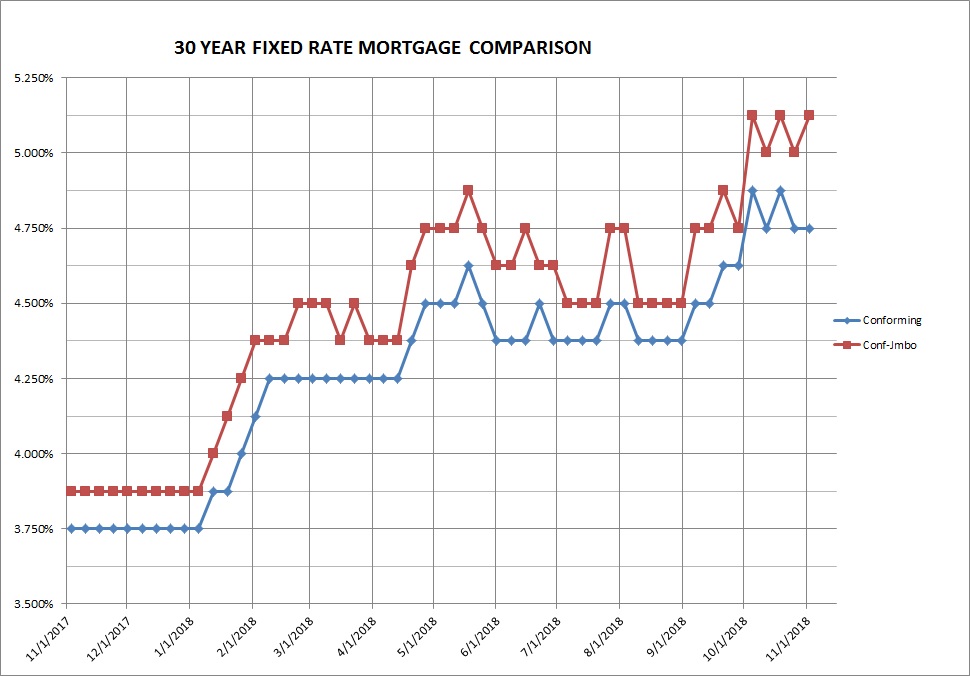
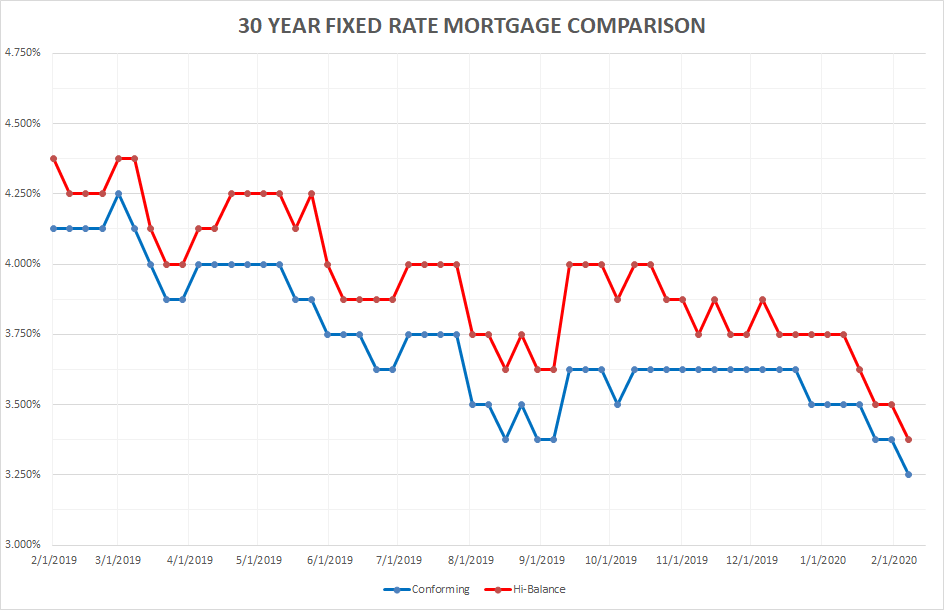
Rates for Friday February 7, 2020:  Despite economic news that should put upward pressure on rates we dip this Friday from last to the lowest Friday rate we have had since October 2016—I had to adjust our rate chart as we were hitting bottom. How long they will stay at this level is not known, take advantage while you can.

FIXED RATE MORTGAGES AT COST OF 1.25 POINTS LOCKED FOR 45 DAYS:

30 year conforming                                            3.25%   Down 0.125%

30 year high-balance conforming                  3.375%  Down 0.125%

Please note that these are base rates and adjustments may be added for condominiums, refinances, credit scores, loan to value, no impound account and period rate is locked. Rates are based on 20% down with 740 FICO score for purchase mortgages.
Now that football is over, and I was right the red-team won!, many of us turn our sights to baseball. Spring training starts this coming week as pitchers and catchers report to major league camps in Arizona and Florida to get ready for the season. Underlying all the preparation and games will be the sign-stealing scandals that have embroiled World Series’ winners in Houston and Boston. My question as this has unfolded is how is it they are the only two teams that have done this? Sports are notorious for a) being copycats and b) trying to find any edge that can be had to get an extra bit of chance to succeed. Is using video to steal signs the steroid-advantage of this era and there are more instances of teams doing so yet to be discovered?

In the meantime, hoping this is the season my Phillies make it back to the playoffs and they are playing in November!

Have a great week,

Dennis

Past Weekly Rate & Market Updates can be found on my blog page at my website www.DennisCSmith.com/my-blog
When can we, should we, refinance

Question of the week:  When can we, should we, refinance?

Answer:  A very popular question recently and it was part of a lunch discussion I had yesterday with two friends.

As for “when” you can refinance, there is no time limit. I say that with some trepidation as many lenders are faced with stiff penalties from the lender being paid off if the payoff is too soon after the close of the loan. Unless you have a pre-payment clause in your contract that has a fee if you payoff before a certain date you can refinance when you are able.

It should be noted that if you are paying off and closing a Home Equity Line of Credit (HELOC—see below for more details on refinancing HELOCs) with your refinance you may face an “early closure fee,” the amount and time limit for such a fee varies from lender to lender.

As to the “should” you refinance, it depends…does it “make sense” for you?

There are two types of refinances, rate and term or cash-out.

A rate and term refinance is one where you are not pulling any money out of the property and are refinancing to reduce your monthly payment, change the terms of the loan from an adjustable to a fixed rate or possibly from a 30 year to a 15 year or vice-versa, or possibly reduce the monthly payment and eliminate mortgage insurance—in some cases lower the monthly payment on mortgage insurance if it cannot be eliminated.

The most common refinance is a rate and term refinance from one 30-year fixed rate mortgage to a new 30-year fixed rate mortgage. For these types of transactions, the “make sense” filter we use is what is your tangible benefit? Will your monthly payment decrease by 5% or more? What will be the total cost of the refinance divided by the monthly savings, is it less than 3 years?

Many reading the last sentence are thinking, aren’t there ‘no cost’ refinances?

Everything has costs, including “no cost refinances,” the question is how are the costs paid in a no cost refi? In the March 29, 2019 Weekly Rate & Market Update we answered the question, “Do we have to pay closing costs?” I do not want to recap the entire answer, but briefly closing costs for a refinance can be paid by adding to the loan amount, your bringing funds to escrow to pay them, or by your taking a higher interest rate and the lender will pay them, or a portion some or all of these options.

What if you want to convert your 30 year mortgage to a 15 year mortgage? This is a refinance some homeowners like to consider prior to retirement so they will have their home paid off when they retire, or shortly thereafter. The decision is usually not as easy to make as it is when refinancing from one mortgage to another that has the same term because a 15 year mortgage will have a much higher monthly payment than a 30 year mortgage. Is it worth the costs to refinance to a mortgage with a higher payment, or does it make more sense just to make larger payments on your existing mortgage—or to put extra money into savings and investments and use those funds to pay down or assist on payments when you do retire?

For a rate and term refinance the answer to “should we refinance” is very easily answered with math and the assistance of my trust HP12C calculator to determine your new payments and comparing them to your current payments.

Cash-out refinances involve a different set of circumstances and therefore the decision is usually a bit more challenging.

Why would someone take cash-out of their property? There are many reasons, payoff debt, gift children money to purchase their own home or for college, buy-out a partner in the property or a business, use for remodeling, or perhaps for down payment on a second home or income property.

One form of cash-out refinance is paying off a HELOC*. The guidelines for conventional mortgages (Fannie Mae/Freddie Mac) are that unless the HELOC, or other 2nd lien, was used to purchase the property a refinance that includes paying off a HELOC is considered “cash-out.” For many jumbo programs, if you have not accessed the line of credit in the past 12 months they will consider the refinance a rate and term transaction. Note that many jumbo lenders will loan down to the conforming loan limit plus one-dollar (total $484,351) so homeowners with a high-balance loan amount can benefit from the more generous jumbo guidelines if paying off a HELOC that has not been accessed for a year or more.

Does it make sense to refinance to consolidate your HELOC into a one mortgage with your current primary mortgage? It depends on the math, your comfort with likely having your payment increase, how risk averse you are to potential/probable higher rates on the HELOC in the future and your ability, willingness and actions in paying down the HELOC.

A typical transaction on a refinance to payoff a HELOC can look like this. A couple have a home worth $650,000 and have a primary mortgage of $350,000 at 3.75% that was $400,000 when they bought the home and has a payment of about $1800 per month. They have a HELOC with a $100,000 balance that was used to remodel their kitchen, the rate is currently Prime (5.25%) plus 1.5% for a rate of 6.75%. The payment on the HELOC is interest only, about $560 per month. Every month they intend to make payments to pay down the balance but never really do. Should they refinance?

If they get a 4.25% rate (a sample rate, not today’s rate which may be higher or lower depending on many factors) for a $450,000 mortgage ($400,000 primary + $100,000 HELOC), the payment would be about $2215 per month. Currently the couple is paying $2360 per month with no reduction in the HELOC balance—this makes sense.

But what if the math was different, they are paying $2500 per month now and a refinance would be $3000 total per month, does that “make sense?” Now we discuss with the client how comfortable they are with the adjustable aspect of the HELOC, when and how they intend to pay off the balance. Eventually the HELOC will no longer be interest only and be amortized over a ten or fifteen year period (much higher payments) or a balloon payment will be due and it will need to be paid with cash or a refinance. Now the decision is not so easy.

Like most Questions of the Week, there is no standard answer of “should we refinance?” The math often provides the clearest answer, but some situations are more complicated than others.

Making the decision easier for many homeowners is the very low interest rates currently available.

If you have been asking yourself, or others, the question as to whether to refinance or not, call me and I’ll do you math and go through your options.

Have a question? Ask me!

Not so fast…That is the message from the first revision to the Gross Domestic Product (GDP—essentially the measure of the U.S. economy) revised economic growth in the 2nd quarter down from 2.1% to 2.0%. The more detailed report than the initial GDP estimate was interesting in that it showed very robust consumer spending in the quarter and GDP growth has dampened by fewer exports and less business investment. Between the lower investments and higher consumer spending U.S. businesses saw profits grow pre-tax by 5.3% in the quarter—the largest increase in five years. Overall the revision has no impact on mortgage rates.

Buy big. That was the sentiment for the American consumer in July as consumer spending increased 0.6% in July from June, such grow can be described as “robust.” Leading the way in spending was a strong increase in new car and truck sales—and RVs! To make their purchases consumers dipped into savings (the savings rate falling from a high of 8% to 7.7%) as personal income rose only 0.1% for the month—giving employers a breather in the steady wage increases seen over the past year or so due to the tight labor markets. Inflation for the month saw prices increase 0.2% with prices up 1.4% from last July; well below the Fed’s 2.0% target giving some support to those in the Fed who want to lower rates in September. The news is mixed for mortgage rates; the consumer spending is negative for rates as spending is 65-70% of GDP, the inflation news is positive for rates as it fuels speculation the Fed will lower rates and investors will act accordingly.

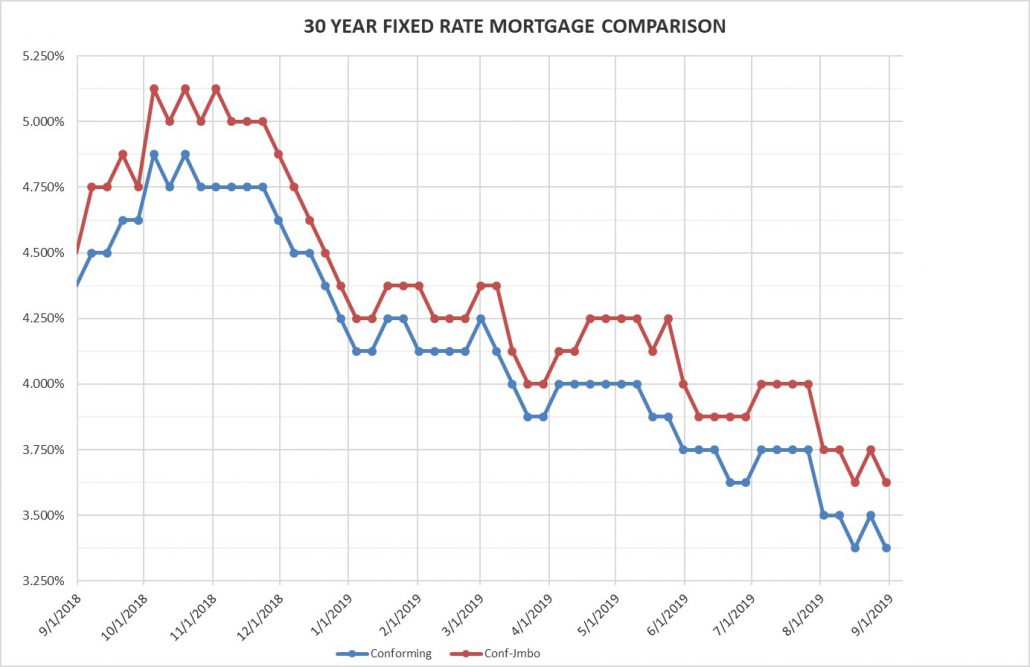
Rates for Friday August 23, 2019: Early in the week rates paired the pop in rate last week and we touch our multi-year low once again this Friday.

FIXED RATE MORTGAGES AT COST OF 1.25 POINTS LOCKED FOR 45 DAYS:

30 year conforming                                            3.375%     Down 0.125%

30 year high-balance conforming                    3.625%     Down 0.125%         

Please note that these are base rates and adjustments may be added for condominiums, refinances, credit scores, loan to value, no impound account and period rate is locked. Rates are based on 20% down with 740 FICO score for purchase mortgages.

Twenty-five years ago on Labor Day weekend I was playing golf with some friends and relatives on Saturday, then a nice family dinner. Monday, I woke up late, which is unusual, and heavy headed but very happy. In between, on Sunday, I spent the morning and midday trying to relax because I had a 4:00 appointment with Leslie in the backyard with about 25-30 others. Somewhere close to 4:00 Leslie’s dad escorted her across the lawn where he dropped off next to me and in front of the minister.

Our anniversary is this coming Wednesday, but Labor Day weekend is always memorable for me for one of the shortest sentences I have ever uttered, and by far the wisest, “I do.”

Have a great week,

Dennis

Past Weekly Rate & Market Updates can be found on my blog page at my website www.DennisCSmith.com/my-blog

Are we headed to another collapse in real estate?

Question of the week:  Are we headed to another collapse in real estate?

Answer:  In last week’s Weekly rate & Market Update I wrote that this week I would compare the real estate market prior to the collapse in the industry that led to the Great Recession with the current market. The impetus for the comparison is the slowdown in real estate sales in number of units sold and in some areas decline in prices, this has many wondering if we are heading to another major market “correction,” i.e. large drop in values for homeowners.

It is a valid question for many who experienced the market collapse that started in 2007 and continued for more than a year. The anxiety and fear of the future and other negative emotions many experienced are easily brought forth when it appears that a similar lead up may be occurring in our current economy and real estate markets.

For those who do not wish to read through my reasoning (which in typical fashion is a bit extensive) I will give you my answer to the question of the week: No.

No, we are not headed to another collapse in real estate.

There are several reasons why I do not see a significant decline in real estate on the horizon, defining “significant” as a decline in prices of more than 10% year over year.

The California Association of Realtors report on December 2018 sales notes that units sold declined for the eighth straight month, while active listings increased statewide for the ninth straight month. Statewide there was drop from December in the median price, but the median price was higher from the prior year. The data statewide and regionally throughout the state certainly shows a slowing real estate market. The question is how long and severe will such a slowing be?

Prior to the market collapse a decade ago the market went from hot and steamy to slowing, similar to what we have experienced over the past several years statewide and in Southern California, with prices increases up to 10% or more year over year in most regional markets and increasing total sales. The difference as to why the next steps will not mirror the collapse a decade ago is the basis of the run up in prices—the expanding of the balloon that eventually popped. No, not popped. Exploded.

Most real estate market slowdowns occur when price increases outpace the ability for consumers to afford to purchase homes in the markets they desire, which led to decreased demand. Eventually demand decreases to the point that sellers must lower their prices if they want to sell their homes. The amount of decline in the overall market depends on how many sellers need to sell and how far they are willing to drop the price of their homes to attract buyers.

Factored into the demand feature is not only the cost of the product, a home, but also the costs to obtain the home in terms of financing. If there were not thirty-year fixed rate mortgages with low down payment requirements available to finance homes our prices would be up to 90% less than they are today. Because of the increase in rates over the past year to cost to finance a new home purchase has exacerbated the increase in home prices putting a bigger damper on ability to purchase, which decreases demand. So not only are rising prices dampening demand, but increasing rates also kept buyers out of the market.

Having to pay more to finance an asset that also costs more reduces the amount of qualified buyers. Fewer buyers leads to less demand leads to softening prices. Simple economics.

If this is similar to what occurred starting in 2007, why should the result not be the same?

Three major reasons: Ability to finance, purpose of purchase and refinances.

The first reason, ability to finance, is by far the primary factor in the market collapse and the biggest reason our current market slowdown is in no way similar to the collapse. Last week in the WR&MU I discussed QM and non-QM mortgages, a distinction created by the Consumer Financial Protection Bureau in reaction to the part the mortgage industry played in the creation of the housing bubble and ultimate explosion.

Starting around 2000 Fannie Mae and Freddie Mac developed and continually refined Automated Underwriting Systems for loan approvals. As more and more data was available to Fannie and Freddie their AUS became looser and looser—meaning it became easier and easier to obtain loan approval for residential mortgages. By around 2003 lenders were guaranteed to have their conventional mortgages purchased by Fannie or Freddie is there was an AUS approval in the mortgage application file as long as the required documentation as listed by the AUS approval was in the file. After around 2003 the required documentation became less and less. Eventually, Fannie Mae and Freddie Mac were enabling mortgage fundings on the vast majority of loans funded in the country that today would be labelled as “Alternative,” or non-QM mortgages.

Example of less and less. In 2001 Susan and James purchase a $350,000 home with 10% down and a 90% conventional fixed rate mortgage. We run their information, credit report, monthly income, employment history, liquid assets and the sales price through the AUS for Fannie Mae. We receive a result of “approve-eligible,” meaning the loan is approved and eligible for purchase from Fannie Mae provided the conditions listed in the approval are met. The conditions in 2001 would call for proof of income as exhibited by most recent two years’ W2s and recent paystubs covering 30 days showing year to date income. Proof of down payment showing at least two months bank statements with any deposits that are significant and not from employers sourced and explained. Debt obligations and history as shown on a tri-merge credit report (Equifax, TransUnion and Experian). Value of property supported by a licensed appraiser providing a complete report including inspection of the property.

In 2006 Susan and James what to purchase a $550,000 home with no money down, obtaining a loan covering 80% of the price with a Fannie Mae loan and 20% with a Home Equity Line of Credit from the same lender. The lender guidelines for the HELOC are that they will accept whatever documentation is required by Fannie Mae’s AUS system. We interview the clients and obtain their income and assets, pull a credit report and have the purchase price. We upload the information to the AUS and receive and “approve-eligible.” The approval conditions require we perform a verbal verification of employment to ensure the borrowers are employed. Require that the funds required for closing are brought to escrow. Since the purchase price of the property is consistent with the values in Fannie Mae’s property valuation software for the zip code no appraisal is required.

In 2001 Susan and James with 10% down had to prove their income, funds for closing and their source and the value of the property is market value with an appraisal.

In 2006 Susan and James with no money down did not have to verify their income, funds for closing or that the purchase price was market value.

By 2006, Susan and James were a declining part of the market, they wanted a 30-year fixed rate mortgage. By 2006 a large portion of the market consisted of borrowers looking for adjustable rate mortgages so they could buy very expensive homes with very low mortgage payments—in the first year(s) of ownership. In the years of the bubble expansion more and more borrowers were purchasing and refinancing using adjustable rate mortgages.

In the run-up to the housing bubble explosion most borrowers did not go through any type of even quasi-rigorous approval process. Fannie and Freddie, and therefore lenders, were funding stated income, stated asset, stated value loans. Anyone with decent credit could buy a home. Many purchased homes with adjustable rate mortgages ignoring that in the future their payments would be higher.

The CFPB’s Quality Residential Mortgage (or QM) guidelines created the primary reason a future major real estate collapse is less likely because in the past ten years borrowers have had to prove income, verify assets and have the value confirmed by a licensed appraiser.* As well, many adjustable rate products are no longer available, and those that are available are very rarely used by home buyers. When you have a real estate market where the buyers are fully qualified to show they have the ability to make their mortgage payments your incidence of foreclosure will decline astronomically compared to a market where a significant portion of buyers were not adequately qualified to show they could make monthly mortgage payments.

*In recent years “property valuation waivers” have once again been issued by Fannie and Freddie through their AUS approvals. As well, as discussed last week, alternative mortgages are a growing sector of the market which depend more on assets than verifiable income for approvals. While growing, this segment of the market is a very small percentage of the total market.

Reason number one the current market is not mirroring the exploded market: Almost everyone who has purchased a home in the last ten years has the ability to make the mortgage payments as long as they are employed.

A not insignificant portion of the market were not buying “homes,” they were buying investments and doing so with very little or no down payments.

Because financing was easy the market became crowded with home buyers. More demand leads to higher prices. As prices climbed and qualifying became easier, and cost to enter the market dropped, more buyers entered the market and many began chasing home purchases so they could cash in, buying a home then reselling in a short period of time and purchasing a more expensive home, and repeating the process.

Then the perfect storm hit. With prices rising demand began to slow. On Wall Street, investors discovered that the mortgages they were buying were not as high a quality as they were told; the mortgages were not underwritten to high standards to show borrowers’ ability to repay, but rather were very risky. Investors stopped buying mortgages. Lenders started going out of business. Inventory climbed. As inventory climbed prices started to decline and homeowners found themselves with property in which they owed more than the property was worth. They could barely make their mortgage payments. Why struggle to pay a loan for a property that is worth less than you owe? Homeowners walked away from their properties, creating a flood of foreclosures and banks putting homes on the market at lower and lower prices.

Boom.

Reason number two our current market will not continue to mirror the collapsed market, there is a strong emotional connection to the property, it is a home not an investment. If there is a decline in value, while concerning, it will not create a reason to sell because the homeowner has a long term plan and still have equity in their property.

The third reason, refinances, were no small contributor to the market collapse. As prices rose many homeowners took advantage of their increased equity by refinancing, under the same easy qualifying guidelines, to pull out their equity either with cash-out refinances with fixed or adjustable rate mortgages, and/or with Home Equity Lines of Credit. Some homeowners engaged in multiple cash-out transactions from the early 2000’s into 2007, pulling hundreds of thousands of dollars in cash from their properties. What happened when prices dropped and they owed a lot more than the value of their property? Yet more inventory on the market pushing prices down more and more.

The real estate market that has grown over the past decade has done so due to very solid fundamentals. Buyers have had down payments, a stake in the property. They have financed their purchases with mainly 30-year fixed rate mortgages that they have shown are within their ability to pay based on their income, debt obligations and history of making credit payments. They have purchased homes for their families for the long term, not short term investments intended to create profit.

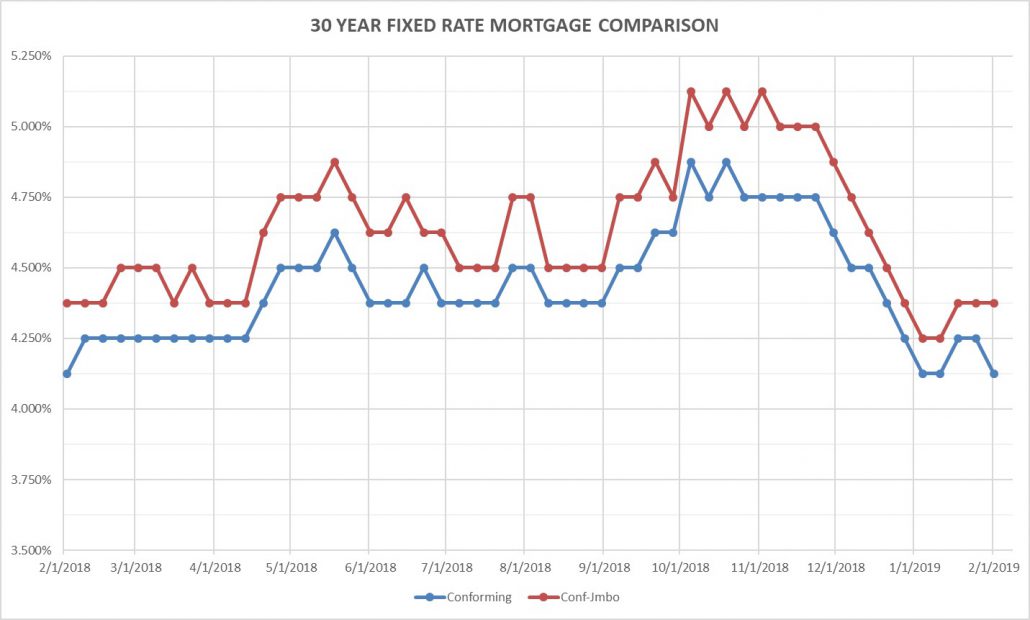
As well, the underlying interest rates for most homeowners are very low. From 2005 to 2006 conventional fixed rates climbed as high as 6.5%. Since 2010 the highest the conforming fixed rate has been is 5.125% in the first week of January 2010, dropping to 3.125% in the last quarter of 2012 and reaching a high of 4.875% for two weeks in October 2018.

Our housing stock is owned by homeowners who can qualify for their mortgage payments, have mortgages with very low fixed rates, have equity in their property—in most cases significant equity, and are staying in their homes for the most part until a life changing event like having children, kids graduating from high school, change in jobs or retirement.

After price run-ups all markets will have periods of no to negative growth, i.e. prices flatten or drop. We are experiencing this in the current market. Will it lead to another collapse? Because of the very strong fundamentals of homeowners the answer is “No.”

The greatest risk to the real estate market is the overall economy and job and income loss. Should we experience very high amount of unemployment in the region, state and country that can, and will, impact the real estate markets. But even then I cannot foresee any type of collapse in prices near what we experienced a decade ago.

Have a question? Ask me!

No bump now or maybe later. This week the Federal Reserve Open Market Committee had a meeting, this is the group that raises and lowers the Fed’s rate charged to member banks to borrow money. It was not a big surprise that the FOMC did not raise rates. What did catch everyone off guard were statements by Fed Chair Jerome Powell at a press conference. Powell’s comments indicated that the Fed may not increase rates two or three times in 2019 as previously intimated. This alone would be enough have investors believe low/er rates are in store for 2019, add in his comments about the Fed’s balance sheets and belief becomes reality.

Looking to help stimulate economic growth after the Great Recession, the Fed purchased over three trillion dollars of fixed rate assets comprised of U.S. Treasury bonds and conventional mortgages from Fannie Mae and Freddie Mac. In 2018 the Fed announced that it would be selling these assets from its balance sheet in systematic, “automatic” as described by the Fed, way. This news, and subsequent going to market with billions of dollars of fixed rate assets to sell put upward pressure on rates. The news from the Fed that it would be looking to curtail sales in the future was welcomed by investors and resulted in stocks climbing and rates decreasing.

The direction was reversed on labor news released today. As reported by the Department of Labor payrolls increased by 304,000 workers in January and job growth continues to be very strong. The headline unemployment rate edged up to 4.0%, mainly due to filings by some federal workers during the shutdown, aided by more individuals entering the market looking for work. Wages and salaries continue to increase as well, not surprising as employers seek more employees—supply and demand works for wages as it does for home prices. Overall the news is mortgage rate unfriendly as higher labor costs should lead to higher inflation, which should lead to higher rates. For the time being inflation is within the range of 2%, the Fed’s target.

Rates for Friday February 1, 2019: Even with a bit of an uptick today following the jobs data the conforming rate is down slightly from last Friday with high balance rates remaining flat for the week.

FIXED RATE MORTGAGES AT COST OF 1.25 POINTS LOCKED FOR 45 DAYS:

30 year conforming                                            4.125%     Down 0.125%

30 year high-balance conforming                     4.375%      Flat    

Please note that these are base rates and adjustments may be added for condominiums, refinances, credit scores, loan to value, no impound account and period rate is locked. Rates are based on 20% down with 740 FICO score for purchase mortgages.

Anyone send any selfies playing golf, strolling on the beach or enjoying a beautiful sunset earlier this week to friends and family in the Midwest or East Coast? It is weeks like this that make the “weather tax” to live in Southern California worth the cost.

Once again, the New England Patriots are in the Super Bowl, entrenching themselves in the most reviled professional team in the country for those not living north of Connecticut. Love them or hate them an objective view must be that they are perhaps the greatest spots dynasty in American history during the Belichick-Brady era. Unlike the Yankees or Celtics of yore who controlled their players throughout their careers and contracts, the Patriots like other teams in the NFL must create a new team every year due to players leaving through free agency and looking for replacements through free agency and the draft. Despite all the roster change over, like many teams face, owner Robert Kraft has provided outstanding leadership to enable the team to be by far the most successful over the past seventeen plus years.

Perhaps the Rams can duplicate what my favorite team, the Eagles, did last year and beat the Patriots. I am of the opinion that they will not but that is why they play the game. Brady is 5-3 in Super Bowls, his only three losses coming to NFC East teams, the Giants twice and the Eagles last year. One thing about Patriot Super Bowl games, they are always close. Of their nine games with Brady at QB the largest point spread is eight points, last year and three games have been decided by only three.

Enjoy the game and have a great week,

Dennis

Past Weekly Rate & Market Updates can be found on my blog page at my website www.DennisCSmith.com/my-blog

1-18-19: Will the federal government shutdown impact the timing of my loan approval?

Question of the week:  Will the federal government shutdown impact the timing of my loan approval?

Answer:  No, well very, extremely likely no.

Unless you are in a rural area and obtaining a USDA or perhaps waiting for FHA to approve a condominium complex in which you are purchasing or refinancing one of the units.

At the start of the shutdown there was some delay for borrowers with properties in areas that required flood insurance, which is available only through the National Flood Insurance Program, however Congress passed legislation and the President signed into law a bill authorizing the program to May 2019 so the policies could be written.

For the vast majority of mortgages for residential mortgages there is minimal interaction with the federal government during the loan process.

One requirement for many mortgages is verification of your income by a review of your tax transcripts as filed with the IRS (to see why we need this form here is the WR&MU from April 2018 on the subject. For this process, we use IRS Form 4506-T, during a government shutdown the requests for a copy of your returns are not processed. Having experienced such delays in the past, in recent years lenders have eased the burden by allowing some work arounds to the Form 4506-T requirement, typically a copy of the cancelled check or other proof you paid taxes owed on the tax returns provided, or a copy of a bank statement showing the deposit of your refund that matches the refund on your tax returns provided.

Government insured loans, such as VA or FHA, are not impacted by the shutdown as the processing and underwriting is performed by private companies and not government agencies. While Fannie Mae and Freddie Mac are quasi-government agencies they are operated as private companies and are unaffected by the shutdown.

The primary area of impact during government shutdowns, once flood insurance is authorized, are inquiries for loan issues in which a response is required from either VA or FHA. It is very rare that a situation arises in which a lender will require a response from either of the agencies in order to approve a loan, but they do arise from time to time and any such cases arising during the shutdown will likely face delays until someone is available to reply.

In a broader view, the impact of the shutdown on mortgages is the impact it may have on the economy and subsequent impact on interest rates. Fundamentally, if there is an impact on rates it would be for rates to decline. A very prolonged shutdown could result in negative economic impact and regular readers of the WR&MU know that poor economic performance usually leads to lower interest rates.

If you are concerned that the government shutdown will impact your current loan in process, or a home mortgage you are contemplate, do not be concerned.

Have a question? Ask me!

With the government shutdown some key economic data that could impact mortgage rates is not being release. This week we would have had retail sales data for December, a key piece of information for gauging economic activity since consumer spending comprises 65-70% of the nation’s economy. With no data on how the Christmas shopping season went for retailers investors are left to speculate whether the 4th quarter GDP data will show 2018 ended strong and total growth over 3% or slowed down with growth being under 3%. The lack of information had no impact on rates as investors looked to other bits of news to guide their decisions.

Rates for Friday January 18, 2019: Stocks and bonds are in their traditional relationship, if stocks go up so do rates, if stocks go down so do rates. Stocks climbed this week, much of the increase on speculation that the trade dispute with China is cooling down and on rumors the United States may lower some tariffs. Investors fled their prior “flight to safety” of bonds and invested their sales proceeds in stocks. After thirteen weeks of rates being flat or down from the previous Friday we see mortgage rates tick up this week—the first Friday to Friday increase in rates since October 19th.

FIXED RATE MORTGAGES AT COST OF 1.25 POINTS LOCKED FOR 45 DAYS:

30 year conforming                                            4.25%      Up 0.125%

30 year high-balance conforming                    4.375%     Up 0.125%      

Please note that these are base rates and adjustments may be added for condominiums, refinances, credit scores, loan to value, no impound account and period rate is locked. Rates are based on 20% down with 740 FICO score for purchase mortgages.

After four weeks it is time for our daughter to return to Boston to finish her freshman year. Always a bit of a weather nut, looking at the national weather maps in the paper every day, something I got from my dad, I am much more so concerning weather in the Northeast these past five months. My weather-nerdness has us on somewhat of a concerned profile as a very big winter storm is on track to hit the Boston area late Saturday and into Sunday—include her 2:30 landing time at Logan Airport. Part of going to school back east, or anywhere that winter weather is not 50 degrees and some rain, is dealing with weather delays at the airport.

Not all lessons are learned in the classroom. Our plan tomorrow is to spend a bit of time at the bookstore to get some “old fashioned” books in case her Kindle runs out of juice.

Have a great week,

Dennis

Past Weekly Rate & Market Updates can be found on my blog page at my website www.DennisCSmith.com/my-blog

1-11-19: What are our mortgage options for remodeling our home?

Question of the week:  What are our mortgage options for remodeling our home?

Answer:  There are several options for paying for major home improvements or remodeling. Most commonly used for paying for major home projects are cash, a home equity line of credit or fixed rate second trust deed, new primary loan with cash out, new renovation loan, or possibly tap other resources. Here are some basic guidelines for the various financing options.

Cash: Depending on the scope of your project you may have enough money saved to pay for your construction project. The obvious advantage is lack of any interest costs and monthly payments. Keep in mind that many remodel/renovation projects can end up costing more in time and money so make sure you have enough to cover cost over-runs as well as whatever post-project expenses you may have—such as new furniture, floor coverings, etc. If you are using cash for your remodel you may want to obtain a home equity line of credit for a small amount to cover over runs to ensure you do not run out of funds during the project and then may be unable to obtain financing because part of your house is torn apart and not yet put back together. If you do not need to access the available funds that is great, but if you do you will be prepared and seamlessly be able to continue and finish your project.

Home Equity Line of Credit (HELOC): A HELOC is like a credit card, you are approved for a maximum amount of credit and then you can access as much of the funds as you need up to the credit limit, you make payments based on the amount of the outstanding balance. A big advantage of HELOCs and remodeling is you only pay for the amount of money you need when you need it. For instance, your project is estimated to be $50,000 with 20% paid upfront to get started and then other funds paid to the contractor at certain points of completion with the final amount due when all is complete. You sign the contract and access $10,000 and pay the contractor, you bill comes the next month and you owe the payment due based on $10,000. The next month you pay another $15,000 to the contractor and not having paid any principal on the first payment, you made an interest only payment, your next bill will be based on the $25,000 balance. This gives you flexibility based on how you use the funds available.

Another advantage of HELOCs is many lenders will provide lines of credit at a higher loan-to-value (LTV) than you may be able to obtain with a fixed rate loan or traditional mortgage. This enables you access to more funds than you would otherwise be able to obtain.

The disadvantages to HELOCs are the rates are variable, tied to the prime rate so over time it is hard to budget total costs; for example, since December 2016 the rate has increased 2%, while during this period the 30 year fixed conventional rate is only up 0.25% (after being higher by 0.75% a few months ago). The other disadvantage is self-imposed by the borrower—interest only. The minimum payment due on most HELOCs is an interest only payment, many borrowers fall into the habit of paying interest only which results in a large balance remaining on the loan which has to be paid at some point in the future either through a refinance or sale of the home.

Fixed rate Second Trust Deed: This financing instrument operates like a traditional fixed rate mortgage, however because it is in second position the rate is higher than available primary mortgages at the time of the transaction. The advantages of the fixed rate second are the ability to budget exactly what the payment will be for the period of the loan (generally available in fifteen or twenty year options) and if your current mortgage has a rate that is significantly lower than your current rate you can retain that rate and payment.

The disadvantages of the fixed rate second are many lenders restrict the LTV to 80% (same as most primary mortgages) and the higher interest rate.

Cash-out Refinance: This option is pretty straightforward, you refinance your existing mortgage and increase the amount borrowed to cover the funds you need up to the LTV allowed by the loan program. Most cash-out programs limit the loan balance to 80% of the appraised value of the home so if you are going with this option it is a good idea to have a good estimate of the value of the property.

The advantages of the cash-out refinance option are that you have a 30 year fixed rate mortgage. This provides you the lowest possible payment due to the long amortization, a fixed rate throughout the term of the mortgage which enables you to budget your monthly housing payment with certainty. Another benefit for many homeowners is depending on how long you have had your current mortgage and the increase in monthly payment may not be as high as you would expect; for instance we are closing a loan with a borrower accessing $75,000 and their payment is going up only about $275 per month, whereas their option on a fixed second increased their payment by almost $700.

Disadvantages of the fixed rate option are you are provided all the funds at closing and begin making payments on funds that may be sitting in the bank waiting for your project to begin and through the finish. Another is your interest rate may increase from your current mortgage rate.

It needs to be noted that when pricing mortgages a cash-out refinance are costlier than a rate and term refinance and a purchase transaction. The higher the LTV the more expensive the loan, conversely if you have a lot of equity in the property your costs would be lower if you LTV falls below certain price points based on the appraised value and how much your are borrowing.

Renovation Loan: This option is a combination of a traditional fixed rate mortgage and a HELOC and can be used to purchase a home you wish to remodel or as a refinance of your existing home for major renovations. We will use as an example a refinance.

Your current home is worth $550,000 and you owe $325,000. You wish to add a bedroom, a full bathroom and remodel the kitchen. The total costs are $125,000 and after the work is completed the value of the property will be $645,000. We complete the loan application for a mortgage of $450,000, $325,000 to pay-off your existing mortgage and $125,000 for costs to remodel. With our loan package besides the standard information we would need to show you qualify we will also need plans and estimates of costs from your contractor. During the loan processing we will make sure your contractor is approved by the lender and have an appraisal completed that includes the current value and the value of the home after the project is complete.

All goes well and the loan is approved and we fund the mortgage, your existing mortgage is paid off and the excess funds are placed in an escrow account controlled by the lender. After certain parts of the project are completed you request a draw from the account, the completion of that part of the project is verified and funds are transferred and you can pay the contractor. At the end of the project you have used all the money on the mortgage and your contractor is paid.

Advantages of this option are that you have a 30-year fixed rate mortgage upon completion of the project and the rate is competitive with a traditional mortgage or cash-out transaction. Another advantage is your contractor is vetted by the lender—which in our experience has resulted in some borrowers needing to change contractors after issues arose regarding insurance, licensing or past issues with the contractor that the lender discovered the borrowers were unaware of when they selected the contractor. This may sound like a negative, however should something occur with the contractor during the project it is a nightmare; knowing a contractor had issues in the past decreases the opportunity for such nightmares to occur.

 A disadvantage for many borrowers is the process to get to loan approval, which is longer and significantly more thorough than the traditional approval process—it is a bit more time and effort but understandable due to the nature of the project. Another disadvantage for some is the draw process where the contractor is not paid until certain completion points in the construction. Many contractors want funds before they start the process, using the renovation process they may not get the funds until after the process; some borrowers mitigate this issue by fronting the funds to the contractor and then getting reimbursed through the draw process.

Piggy-back: Some homeowners do their own version of the renovation loan by maximizing their funds available with a traditional 30 year fixed rate mortgage and then add a HELOC onto the property for additional funds. For instance you need $80,000 for your project and a cash-out refinance will enable you to obtain $65,000, you obtain the additional $15,000 needed on a HELOC—what we call a piggy-back transaction as your HELOC piggy-backs on your first mortgage. The advantage of the fixed rate 30 year loan for the bulk of the funds needed combined with the higher LTV of the HELOC lets you complete your project with the best of both options.

Reverse mortgage: Yes, reverse mortgages can be used for home improvements if the borrower qualifies and enough equity is in the property.

Other options can include borrowing from the bank of mom and dad, possibly borrowing against your 401(k) or a margin account on an investment account.

One of my favorite books we used to read to the kids was If You Give A Pig A Pancake. I usually encourage any family looking to do an extensive remodel to read the book as it is a good metaphor for many such projects. A major pitfall for most homeowners is underestimating the amount of work and costs that will need to be done to accomplish their goal of another bedroom and bath and a remodeled kitchen. Once walls are open what will the contractor find? Out of date and code electrical? Inadequate framing? Foundation issues? A rotted out floor under the shower? The original choices for cabinets or fixtures are not available adding time, and/or costs, to the process? You forgot that with the newly remodeled home that you now need furnishing?

A high percentage of the time when I have clients undergoing a remodel they let me know that even though they thought they were being somewhat liberal in the costs they still were short of what was needed. Read the book and imaging instead of a pig going through your home in search of a pancake it is your remodeling project needing more and more done to ensure completion.

Be very thorough in your plans, go deep into your interviews with contractors as to typical issues that come up, and possible issues given the age of your home, location (for instance we are on expansive clay soil which causes foundation issues—not all contractors are aware of this) and scope of your project.

All that said, I usually counsel clients that are considering extensive home improvements that before they commit to explore the options of what homes are on the market that would achieve the same objective. If you are looking to add a bedroom, bathroom, modernize your kitchen or other work that entails a lot of time and money, evaluate the current value of your home, what your net proceeds would be if you were to sell, what loan amount and sales price you will be able to qualify for and feel comfortable paying and then look at the local market to see if it makes sense for you to purchase what you want.

You may find that you prefer to remain in your current home and endure the remodel process, or you may find that you would benefit by purchasing a home that meets your needs.

Whichever route you choose to take please contact me to go through all your options and the advantages and disadvantages of each.

Have a question? Ask me!

Words matter, especially when they are the words of the Federal Reserve Open Market Committee (FOMC)—the group that sets the Federal Reserve borrowing rates which impact other rates such as the prime rate. The minutes from the last FOMC meeting were released this week and they showed that while all the voting members say “yes” to increasing rates at the last meeting there was some discussion by some to not raise rates. As well the minutes showed that future rate increases are not guaranteed. This is positive news for mortgage rates.

More positive rate news today as the Consumer Price Index dropped in December for the first time in nine months, primarily due to lower gasoline prices. Also declining was the year over year cost of living, dropping to 1.9% growth from the annualized growth of 2.2% in November. The 1.9% price increase was the first time since August 2017 the important data point was below 2%. The news is very mortgage rate friendly as the Fed uses the data for their gauge of inflation and the desired price increase for the Fed is 2% per year. If the price decrease remains below 2% moving forward it puts pressure on the Fed to not increase rates.

Rates for Friday January 11, 2019: For the first time in six weeks rates have not declined, and prior to today’s CPI data we might have seen them bump up a little bit. Upward pressure on rates this week was caused by gains in stock markets as investors felt confident about the on-going trade talks with China. At this point the government shutdown is not have much, if any, impact on financial markets.

FIXED RATE MORTGAGES AT COST OF 1.25 POINTS LOCKED FOR 45 DAYS:

30 year conforming                                            4.125%      Flat

30 year high-balance conforming                    4.25%        Flat    

Please note that these are base rates and adjustments may be added for condominiums, refinances, credit scores, loan to value, no impound account and period rate is locked. Rates are based on 20% down with 740 FICO score for purchase mortgages.

Since the end of the last football season my ring tone has been the Philadelphia Eagles fight song, “Fly Eagles Fly.” Starting in March of last year our youngest has asked me, “how long are you going to have that as your ring tone?”

“As long as they are the reigning champions.”

On Sunday I thought I would have to change my ringtone, thankfully the left-hand of the Eagles defensive tackle deflected the Bears’ kicker’s field goal attempt just enough to cause it to hit the upright and the cross bar so I retain the ringtone at least for one more week.

Not overly positive with this week’s game against Drew Brees and the Saints, but hopeful that next week at this time when you call I will still hear, “Fly Eagles fly, on the road to victory….”

Have a great week,

Dennis

Past Weekly Rate & Market Updates can be found on my blog page at my website www.DennisCSmith.com/my-blog

11-7-18 Should I refinance and payoff my HELOC?

Question of the week:  Should I refinance and payoff my HELOC?


 Answer:  My most frequent response to questions of the week definitely applies to this question: It depends.


There are several factors to consider when deciding if now is the time for you to refinance and fix the rate on you Home Equity Line of Credit (HELOC).


Before we get into various factors to discuss, let’s take a quick look at why the question is being asked. Your HELOC has three components that determine your current payment, the balance, the prime rate and the amount added to the prime rate (called the margin) that results in the rate you are being charged.


Of the three factors the only one you somewhat control is the balance; you can impact your payment by paying down the balance on the HELOC. Obviously, the more you pay towards the balance the lower your payment will be on a monthly basis. Most HELOCs have two periods of repayment. The initial payment period usually has a minimum payment requirement that is the interest accrued on the loan since the last payment. The next stage of payments is usually a fully amortized period for the remaining life of the loan; if you may have a HELOC that is a twenty year loan, in this case typically the first ten years of the loan have an interest only payment, at the start of the eleventh year the loan will be fully amortized based on the remain ten years of the loan.


Example: You have a $150,000 balance on your HELOC that you obtained in December 2008 and the current rate is the prime rate, currently 5.25% plus one-half of one percent (0.500%) for a payment rate of 5.75%. Your minimum payment for November is the interest on the balance, $718.75 (balance times rate divided by twelve months). Next month you begin your eleventh year and the loan payment is now fully amortized using the rate that month plus the remaining term of 120 months. The rate for the December payment is the same as November, since the prime rate has not moved, at 5.75%, since you paid the interest only payment in November balance is still $150,000 but now instead of interest only the payment is amortized to include principal reduction and the payment will be $1646.54. Since the Federal Reserve is expected to increase its funds rate by 0.25% in December that means the prime rate will increase by 0.25% as well so the January payment will be calculated at 6.00%** and your payment will be $1655.00 for the month.  **Since the Fed will increase rates into the month the rate will only be for part of the month with the earlier part of the month being calculated at the 5.75% rate, but for demonstration purposes easier to show as one complete month.


The lower your balance when you enter the fully amortized payment portion of the repayment of your HELOC the lower your required payment will be.


If you have a HELOC for three years or more you have seen your rate increase by two percent since 2015 and one percent since last November. The chances are you will see at least another one percent increase in the next year, with a 0.25% in December when the Fed is expected to increase rates again.  (To see why the Fed increasing rates impacts your HELOC rate here is link to WR&MU from a few weeks ago addressing the issue.)


With rates having climbed one percent or more in the past twelve months the decision to refinance is a lot harder than it was one year ago, or even two to three months ago and moving forward the decision might not get easier.


The first consideration is if you are risk averse or not. The risk averse individual would be more inclined to want to refinance to avoid future increases in rates on their HELOC as well as for long term fixed rate mortgages that would be used to refinance. The person more comfortable with risk might be less inclined to refinance. Why?


The person who is willing to accept more risk may take the stance that their underlying primary mortgage has an interest rate that is lower than the rate available to refinance their primary loan plus their HELOC and will accept the higher rates on their HELOC in the future and if need be make interest only payments with the hope that rates decline in the future so refinancing makes more sense, or to enable easier paying down of the mortgage.


The risk averse person does not want the uncertainty of not knowing how high their rate and payment will go on their HELOC and is more willing to trade off what would probably be a higher payment in the short term for what may be a lower payment in the long run. The risk averse person knows if rates do drop in the future they can likely refinance and lower their payment.


What are the factors in terms of payment that need to be considered? First and foremost is the payment differential between doing nothing and refinancing. There are four primary factors that will determine the payment at which the interest rate for your refinance will be calculated: balances, credit score, loan-to-value and whether the transaction would be considered cashout or not.


The first three factors are pretty elementary; the combined balances of your existing primary mortgage and your HELOC will determine the refinance loan amount, your credit score is determined when we pull a credit report, the loan-to-value is determined by the estimated value of your home and the refinance loan balance.


The fourth factor, whether the refinance transaction is considered a cashout transaction or a rate and term transaction. For conventional mortgages unless the HELOC can be proven to be part of the purchase price of the property the transaction is considered to be a cashout transaction, if your HELOC was used to purchase your property the transaction is considered to be a rate and term refinance, and will have lower costs than the cashout. If the loan is a jumbo loan we have several programs that will consider the refinance a rate and term transaction is you can prove you have not accessed any funds from the HELOC in the past twelve months.


Once we know the four factors we go to our rate sheets and determine the rate, and also your what your new payment would be after refinancing. With this information you can determine if you want to refinance and payoff your HELOC into a fixed rate mortgage, or continue as you are with your current primary mortgage and HELOC.


Since the minimum payment for most HELOCs is interest only even if you were able to refinance near what your current mortgage rate is the chances are you will see some increase in total payment as you move from interest only to paying down principal on your HELOC. With rates higher and most homeowners with rates closer to 4.00% than today’s rates the chances are that your payment will likely increase a few hundred dollars per month, or more, when refinancing to pay off your HELOC. And this is the basis for the hard decision, is the extra monthly payment worth it to remove future risk based on rising interest rates, or is the cost too much for you to want to remove the risk?


This is a question I am very willing to help you answer by running the numbers and options for you and your particular situation. For several years we have been encouraging homeowners with HELOCs to refinance to fix their rate and payment on their mortgage debt, while I still feel it is a good idea for most homeowners, it may not be your choice, however I encourage you to run the numbers and know the options. If your HELOC is converting from an interest only payment to fully amortized in the next few years you may want to give refinancing even more consideration due to the sharp increase in your monthly payment when that occurs.


If you, or someone you know, has a Home Equity Line of Credit please contact me to go through your information so you have the information needed for making a decision on whether to refinance.


Have a question? Ask me!


Better economy, higher rates. That correlation is something long time readers of the WR&MU have learned over the years. This week we have positive economic news released every day, some data a lot more positive than others. Here are the data releases that have the greatest impact on rates.


Households made more and spent more in September. Income growth for the month was slower than August but still positive at 0.2% matching the core inflation rate for the month. Holding back income growth was a slow down for self-employed businesses. Savings rates dropped as consumer spending increased in September by 0.4%, the seventh month in a row with spending increasing by 0.4% or more. The disparity in spending and income growth may have been impacted by Hurricane Florence. The very good news for the economy inside the data is that there was a sharp increase in the purchase of new cars and recreational goods—the sort of spending that occurs when the economy is strong and consumers are optimistic. The news is not good for interest rates, though tempered a bit as the year over year inflation index of 2.0% is in line with the Federal Reserve’s target.


My oldest was one the last time the American consumer was has confident as s/he was in September, as the consumer confidence rose to its highest level since 2000. The cutoff date for the survey was mid-October, before the stock market slump so the expectation is that the index will drop in November. This news also puts upward pressure on interest rates.


Continuing the short term historic gains was the Employment Cost Index which showed wage gains in the private sector reached their highest level in ten years in the third quarter, with wages, salaries and benefits increasing 0.8% for the period. The gains reflect the lowest unemployment rate since 1969. A very big concern for economists is wage inflation, higher prices driven not by demand but by the cost of production of goods and services being driven higher by employment costs. The ECI report puts that concern very much in the center of the inflation and rate conversation. While this news is good for workers it is bad for those wanting lower interest rates.


Today’s data just piles on. The jobs report was released by the Labor Department today showing the labor situation in September. The news shows a very strong labor market, stronger than expected. Nonfarm payrolls increased by 250,000 in September, well above the forecast of 208,000 jobs. Included in the report was year over year growth in wages of 3.1%, the highest gain in one year since 2009 when the recession ended, the average hourly pay is now $27.30. This report fully supports future rate hikes from the Federal Reserve and continued upward pressure on mortgage and other long term rates.


Rates for Friday November 2, 2018: Despite the quantity and quality of positive economic news conforming rates hold on from last Friday, high-balance loans ($453,101 to $679,650) increased from last week back to seven year high first reached in early October. The only reason I can see for rates to undergo a migration down would be a catastrophic event causing investors to flee to the safety of long term fixed rate returns available in U.S. Treasury bonds and mortgages.


FIXED RATE MORTGAGES AT COST OF 1.25 POINTS LOCKED FOR 45 DAYS:

30 year conforming                                                4.75%       Flat

30 year high-balance conforming                       5.125%     Up 0.125%


Please note that these are base rates and adjustments may be added for condominiums, refinances, credit scores, loan to value, no impound account and period rate is locked. Rates are based on 20% down with 740 FICO score for purchase mortgages.


As many of you know I love baseball. During the season most afternoons I have the Phillies radio broadcast, or some other game back east playing on my computer and on weekends I listen to games from Philly or around the country while driving around or doing chores. Last Friday night’s game between the Dodgers and Red Sox that went 18 innings was pure heaven for me and I was thrilled the way it ended, not necessarily because the Dodgers won but that it was won on a great home run and not an error. Every inning was thrilling and had fans on the edge of their seats. While mildly upset the Red Sox won another championship and the Dodgers drought is now thirty seasons, I admire the Sox for the way they played this season and through the playoffs; the best team hoisted the trophy to end the season.


Now we wait until the end of February when Spring Training starts!


Have a great week,

Dennis


Past Weekly Rate & Market Updates can be found on my blog page at my website www.DennisCSmith.com

9-21-18: Should we refinance and use proceeds to payoff debt?

Question of the week:  Should we refinance and use proceeds to payoff debt?


 Answer:  Not if you can payoff your debt without tapping into your equity.


With rates still low many families are looking at their accumulated consumer debt and wondering if they should refinance, or get a home equity loan, to payoff their debt and lower their monthly credit payments. Being able to get a rate for a cash-out refinance possibly somewhere around 5% for a 30 year fixed rate mortgage seems better than paying high, possibly as high as 20%, on credit cards. But is it a good idea?


On paper, the math seems really good, but a deeper look shows it probably is not for most families.


Take a scenario where you have a home worth $550,000 and you have a balance of $365,000 on your current mortgage with a rate of 3.75% and your payment is $1850 with about 25 years left on the loan. You do not intend to move anytime in the future as your kids are in, or just about in, middle school.


For various reasons, some emergency, some just consumer spending, you have accumulated about $35,000 in revolving debt (credit cards) with minimum payments totaling about $700 per month, have a few collections from past medical expenses for another $2000, a car payment of $560 with a balance of $20,000 and you need to replace your roof which will cost about $20,000. You have about $10,000 in savings and are making maximum contributions to your retirement accounts. You have been trying to pay down your credit cards but have not seem to be able to make a dent in the total balances and are at the stage where you make minimum payments and pay off most of what you charge each month.


Recapping, you have about $57,000 in debt costing you $1260 per month in minimum payments, this includes collection accounts with no payments being made, and you need about $20,000 for a roof. Should you either refinance and add $77,000 to your mortgage or get a home equity line for close to that amount, to payoff all your debt, fix the roof and start over with only a mortgage payment? To do so would require about $442,000 for a mortgage balance, or your current mortgage with a home equity line.


We would want to keep your new loan amount at or below 80% loan to value, which would be a new mortgage for $440,000, a bit short of what you require but you would be able to pay that off quickly with your new financial obligation shift.


Taking a look at a new mortgage of $440,000 for a cash-out refinance at 80% loan to value you would be looking at a rate of about 5% depending on credit score and other factors. This would make your new mortgage payment about $2350 per month, or $500 more per month than what you are spending now on your credit obligations plus replacing your roof. With the new loan and $500 per month higher payment you are getting rid of $1260 in monthly payments for a net savings of $760 per month.


Sounds pretty good, payoff debt, get a new roof and save $1260 per month. But is this something you should do?


Scenarios I run by clients before initiating the application for such a debt-relief refinance are as follows:


Reconsider including your vehicle loan in any debt consolidation scenario. Auto loans are generally lower rates than credit cards, and in the past several years with decent credit rates below mortgage rates. They are also fully amortized, meaning with every payment you are paying down the loan balance until it reaches zero. In the above scenario, you have about three years left on the loan and you are paid off. If you include it in a mortgage refinance you will be paying for the car as part of a thirty year mortgage. Taking the loan out the new mortgage balance would be $420,000, your payment on the mortgage would drop to about $2245. You would now have a mortgage payment that is just over $400 per month higher than your current mortgage, you are paying off debt with payments of about $700 month for net savings of $200 plus have funds to replace your roof.


Consider a home equity line of credit (HELOC) instead of refinancing your mortgage. The rate will be higher, and adjustable with it going up the next few years, however you will have the opportunity to save on monthly payments, or not depending on how you handle the repayment of the HELOC. If you go this route, you obtain a HELOC for $50,000 (following advice above and leaving vehicle loan out of the consolidation plan) at a rate of Prime plus one-half of one percent. Prime is at 5.00% today giving you a rate of 5.5% on the HELOC. The minimum payment for most equity lines is interest only, in this case that would be about $230 per month which looks like a big savings over what you are paying now—and that is the debt trap. If you pay interest only you are in worse position than you are now. Yes, your monthly cash flow is better but you are making no reduction in the balance. If you get a HELOC my very strong recommendation is you continue making the same total of payments you were making before, except instead of paying minimum payments on credit cards you are paying down your HELOC balance. Currently you are paying $700 on the cards, so pay $700 on the HELOC, this will decrease the balance $470 per month at the current rate. If the rate never changes and you make $700 per month payments you will have the HELOC paid off in about seven years. However, the rate will very likely be going up at least one percent in the next year, and perhaps more in the future. When calculating long term HELOC rates I usually use an average Prime rate of about 8% to be safe, at this average rate and a payment of $700 per month your time frame to payoff the loan for your credit card debt and roof repair is about eight years.


Equity lines often have balloons. One factor to consider with the equity line is the repayment terms. Many are “open” for ten years, meaning you can reuse them as the balance is paid down/off, and during this period they require only interest only. After ten years HELOCs are either fully amortized for the remaining term, or are due with a balloon payment. Because of the change in terms later in the loan it is important to have a payoff plan on the HELOC when you obtain it so you are not in a position in the future where you need to potentially refinance again in the future.


Create a realistic plan to payoff you consumer debt yourself and just borrow to pay for the new roof. Make a very realistic budget of your net income and expenses, including debt payments. See what adjustments you can make to your lifestyle and how much those adjustments will save you per month. Take the savings and dedicate them to paying off your credit cards. Many years ago, before Dave Ramsey became a multi-millionaire by counseling families on paying off debt I would help clients with debt payoff plans that pretty much matches Ramsey’s plan. I called my plan Stop, Drop and Roll. Stop using credit. Drop your credit card balances one at a time, starting with the lowest balance. Roll the payments into the next lowest card when one is paid off. It takes commitment to the payments and whatever austerity measures you put in place but if followed will enable you to payoff your consumer debt without refinancing your mortgage and adding tens of thousands of dollars and years to your existing mortgage.

I am in the debt business, a mortgage after all is a debt—the largest debt for almost every homeowner. If you are feeling overwhelmed with your debt please contact me and I can help you, at no obligation or cost, work through options for paying down/off your credit obligations.


Have a question? Ask me!


August home sales are a bit of a mixed bag. While the total number of sales are down in the state from last year prices continue to rise and days on the market are stretching out in most areas as inventory on the market has grown for the past five months. Looking at the data it looks like the market is trending towards equilibrium between buyers and sellers after we have experienced several years of a sellers’ market. Statewide total sales in August were down 1.8% from July and off 6.6% from August 2018. The statewide median price, $596,410, is up 0.8% for the month and 5.5% from last year. Sales and prices locally are in line with the statewide direction on prices and units sold. In LA County, the median price in August was $607,490, up 1.7% from July and 6.4% from last August, the total number of sales were up 5.5% for the month but down 8.9% from last year. Orange County’s median price in August of $838,500 was 1.1% jump from July and 6.3% increase from 2018 with total sales showing 2.9% drop month to month from July and a 9.7% fall from 2018.


Rates for Friday September 21, 2018: Rates are up from last Friday as investors put money into the equity markets (i.e. stocks) and hedge against next week’s Federal Reserve Open Market Committee meeting—these are the folks that set the Fed rates that impact consumer rates, such as the prime rate that determines equity line rates. The Fed will bump their funds rate by 0.25%, that is expected and priced into the markets. Hedging is occurring because of what the FOMC members say about the future of short term rates, how many future increases, how soon, how high? While they will not directly answer these questions those who can read the Fed tea leaves will discern much from the minutes of their meeting. The consensus appears to be that the Fed will raise rates faster and higher than previously thought. Lock your rate when you can!


FIXED RATE MORTGAGES AT COST OF 1.25 POINTS LOCKED FOR 45 DAYS:

30 year conforming                                            4.625%    Up 0.125%

30 year high-balance conforming                      4.875%     Up 0.125%


Please note that these are base rates and adjustments may be added for condominiums, refinances, credit scores, loan to value, no impound account and period rate is locked. Rates are based on 20% down with 740 FICO score for purchase mortgages.


Long time readers of the WR&MU know I can be a bit of a data geek…well more than a bit. So I found it interesting that the link to the Waffle House index last week had one of the highest click rates I can recall from readers. For those in Southern California the nearest Waffle House is in Goodyear, Arizona, 337 miles away from the Smith abode in Long Beach. There have been plenty of trips home in the family van from Scottsdale that have begun with breakfast at Waffle House, but have not been to the one in Goodyear as I recall. I do love me some waffles!


Looks like a perfect fall weekend, which commences tomorrow (fall and the weekend) in Southern California with great weather, playoff implication baseball plus college and pros going at it on the gridirons. Enjoy your weekend and the first days of fall!


Have a great week,


Dennis

9-7-18: Should we pay extra on our mortgage?

Question of the week:  Should we pay extra on our mortgage?


 Answer:  This is a question we answer every few years and it has come up a few times over the past few weeks with different clients as they consider paying extra on their mortgage every month or year to pay it off faster. It is natural to want to pay off debt, get rid of the monthly payment and quit paying a lender interest are the main two reasons.


But is paying off your mortgage early the best financial move for you? Here are several items to consider before you commit to paying off your mortgage ahead of schedule.


Are you maxing out your contributions to your retirement account? Most Americans are underfunded for their retirement, many of whom own homes. Instead of paying additional principal down on your mortgage I suggest putting it into your retirement account instead for several reasons. First, the money you put into retirement is usually deducted from your taxes (an exception can be if you contribute to a Roth IRA account), whereas the money you pay down on your mortgage is not. Most homeowners in California will have combined state and federal tax rates around 33% of adjusted gross income. If you contribute the $18,500 maximum to a 401(k) ($24,500 if over 50) that is a tax savings of about $6000, pay the same amount down on your mortgage and there is zero tax savings—in fact you will have negative tax savings because…


The government pays for part of your mortgage due to the mortgage deduction allowed on state and federal income taxes. You can deduct the amount you pay on your mortgage interest directly from your income for both federal and California state income taxes (there are limits, for married couple $1 million if mortgage used to purchase home was put in place prior to 12/16/17 or you were in contract to purchase home prior to that day; if your current mortgage was a refinance or put in place after 12/16/17 the new limit is interest up to a $850,000 balance). So if you have a $500,000 mortgage with an interest rate of 4% you can deduct $20,000 from your income, saving approximately $6500 in taxes. If you pay down $18,500 on your mortgage you lose approximately $250 in tax savings since your interest payments are lower. Paying down $18,500 on your mortgage instead of putting it into your 401(k) can cost you over $6000 in tax savings.


If you are maxing out your retirement contributions, how are you on saving for your children’s college education? As the parent of college freshman and a future college freshman, and someone who has looked at thousands of clients financial statements, I can attest that college expenses have far outpaced most families abilities to save for those expenses. Having gone on several college tours the last few years one common theme from the financial aid offices was that the general threshold for receiving direct aid (i.e. tuition reduction in form of grant from school) is income around $70-80,000, which is great if you live in some parts of the country but not too far above the median income in most parts of California. So unless your children have exceptional talents in some endeavor plan on needing quite a bit of money if you wish to contribute to your children’s college finances. Putting additional money into a 529 College Savings account or other savings instead of paying down your mortgage might be a better allocation of funds. By doing this you are essentially “borrowing” at whatever your mortgage rate is today for use in the future instead of potentially borrowing in the future at what may/probably will be a higher rate.


Speaking of your mortgage’s interest rate, is it lower than other debt you have? Credit card debt, auto loans, your own student loans? If you are maxing out your retirement contributions, you do not have to worry about future college expenses but have consumer debt it makes more sense to pay off that higher interest, non-tax deductible debt before paying off your mortgage. It not only makes more sense but it is very good math.


Are you planning on selling your home in the future, before the current term of your mortgage is completed and before your over-payment plan would pay off the mortgage? If so you should consider putting the additional funds into savings, investments, even cash. Your home is not worth more, or less, depending on your mortgage balance. Your home’s value is determined by location, size, condition, etc, not by the amount of debt secured by the home. Paying $40,000 down on your mortgage over say five years and then selling it with a $400,000 mortgage balance was a loss of opportunity for those funds to work for you with compound interest and/or dividend reinvestment. There is no compound equity or equity reinvestment in your personal residence, it will be worth what the market dictates when it comes time to sell. Yes, your net proceeds from the sale will be $40,000 more than if you have not paid down the mortgage. At a 4% return on the extra $666 per month you pay on the mortgage over five years would result in over $44,000, 10% more than your net proceeds gain from paying that money into the mortgage.


One final consideration, it costs money to get money back out of your home. If you have $100,000 equity and want to access some of it you will either need to refinance, obtain 2nd loan or HELOC, or sell the property, each of which has costs. What if you pay down your mortgage and need money in the future for home improvements, medical emergency or other unexpected life event?


All these are factors, and there are more, that you should consider before paying extra down on your mortgage. There are some factors that more strongly support paying off your mortgage early than other, primarily looking at your current income, your projected retirement date and your projected income during retirement. Or you have a property that is a rental with a low enough balance that you can use rental income to accelerate the payoff of the mortgage, again looking at some of the factors above, to have a free and clear investment that gives you more options in the future, such as selling and carrying a large mortgage to defer capital gains and continue to receive income.


As with most/all of our questions of the week, before we can answer the question we need answers to more questions—and this particularly the case this week. If you are considering accelerating the principal reduction on your mortgage, please do not hesitate to contact me to discuss your options.


Have a question? Ask me!


With the center of the news universe seemingly being in the Senate Judiciary Committee hearing room this week, you may need to look a few pages into your daily paper tomorrow to find the employment data released today, or any other news for that matter. The Labor Department announced today that 201,000 jobs were created in August, 204,000 in the private sector. The front-line unemployment rate remained at 3.9%. These pieces of data are positive, but not a big impact on rates as the news was in-line with expectations. What did have a strong impact on rates was the average hourly earnings data which showed an increase of 0.4% in August following the 0.3% gain in July. This puts the annual rate of pay increases at 2.9%, up from 2.7%, the highest rate of increase since June 2009, the month the recession ended. With the consumer price index measuring inflation at 2.9% the average American worker’s income is keeping pace with inflation. The wage data puts upward pressure on rates and more than reinforces future rate hikes from the Fed.


Rates for Friday September 7, 2018: After holding on last week following the strong GDP data, rates could not continue to hold following today’s labor market news. More workers getting more pay leads to more spending leads to higher prices which leads to higher interest rates. Today rates popped up on the labor news after remaining flat from Friday to Friday for the past three weeks. Not surprising, the surprise to me is they had not increased sooner. Lock your rate when you can as higher rates are lot more likely in the future.


FIXED RATE MORTGAGES AT COST OF 1.25 POINTS LOCKED FOR 45 DAYS:

30 year conforming                                            4.50%             Up 0.125%

30 year high-balance conforming                      4.75%      Up 0.125%


Please note that these are base rates and adjustments may be added for condominiums, refinances, credit scores, loan to value, no impound account and period rate is locked. Rates are based on 20% down with 740 FICO score for purchase mortgages.


With age comes experience and practicality. When our fifteen year old refrigerator decided to quit last Wednesday, Leslie and I looked at each other and said, “happy anniversary,” knowing a new fridge was going to be our 24th wedding anniversary present to each other. And sure enough this Tuesday, our anniversary date, a new one was delivered. Not to be completely unromantic I placed a bottle of nice vodka inside the present for her to enjoy. Somehow I don’t think I get away with a kitchen appliance and bottle of vodka for number twenty-five next year….


Have a great week,


Dennis

8-24-18: Do you have a will and trust? If yes, please read on. If no, please read on.

Question of the week:  Do you have a will and trust? If yes, please read on. If no, please read on.


 Answer:  What did Prince and Aretha Franklin have in common besides prolific performers and writers? Both of these musical icons passed away without a will or trust. There could be many reasons why. Prince, who passed away suddenly, perhaps he thought he had more time to live and prepare an estate plan. Aretha could not have had such thoughts as she had been diagnosed with pancreatic cancer several years ago, a disease which median survival rate of one year or less. Now the attorneys in Minnesota and Michigan have a tremendous amount of work as they represent various potential heirs to large estates. Who gets the real estate, the rights to their royalties, family heirlooms and memorabilia?


Why they had no plans for their estates baffles the mind of anyone in the legal and financial industries who spend their careers encouraging their clients to have plans for their families and estates for when the inevitable happens.


There are many objections that many individuals and families raise for not preparing a will and or trust, some of the most common are, “I am still young,” “I do not own enough to worry about having a will,” “my family will know what to do.” Instead of “objections,” I should have said “excuses” as none of these are valid reasons not to have an estate plan that includes at minimum a will and ideally a will and trust.


If you have children you must, not “should” but must, have a legal written directive as to who will take care of your children should both parents become incapacitated, i.e. hit by a bus while on vacation in Mazatlan. A family consists of mom, dad and three children ages 12, 9 and 6. Mom and dad are on a long ski weekend in Utah and tragically killed in an avalanche. They each have two siblings. Where will the children live? Can they be kept together? What will happen with the home the family owned, who receives the proceeds? They had life insurance with only each other named as beneficiaries, how are those proceeds divided and ensure the children benefit? Eventually all these questions will be answered, but it will be expensive and the state, i.e. the courts, will be making the decisions for the family. It will take a lot of time and money at a time when everyone, especially the children will be deep in grief.


Will your family know what to do? What if your sister and your spouse’s sister do not get along and both feel they should be the guardians of your children should something tragic happen? How does that play out?  “Bob told me we would get the children and raise them.” “Well Susie told me we would get the children and raise them.” The children have lost both parents and now will be in the middle of a legal fight between their aunts.


Even if you do not have a home or significant assets, you should have a will and ideally a trust. The will determines how your assets are divided upon your passing, the trust determines whether the bulk of your assets are transferred as you wish or if the bulk, or majority, of your assets will go through probate and potentially be subject to higher taxes, leaving less for your intended heirs.


Age is not a consideration. While statistics indicate that you should live into your late seventies as that is the life expectancy in the United States, one must consider the key word in the phrase “life expectancy.” Accidents and diseases happen to people of all ages. Whether you are 28 or 78 it is strongly advised you have a plan in place that protects your assets for your heirs and dictates what happens to those assets.


Once you have a plan make sure you keep it current. Did you prepare your will and trust when your children were in elementary school and now one or more are over the age of 18? Did you prepare your plan more than five, ten, fifteen years ago? Laws have changed, especially in California regarding inheritance and trusts, is yours compatible with current laws?


I have too many clients who when I ask if they have a trust say, “We keep planning on doing this…” Well, no you haven’t been planning on doing it, you have avoided doing it. Planning is sitting down with an attorney and discussing all the issues and matters that need to be addressed, saying you need to do it is not planning.


Every family needs to have an estate plan, and most single adults as well. A proper comprehensive plan will cost a bit of money. For those who want to save money, or get a “deal” or “bargain,” keep in mind that you will never know if your trust and estate plan was properly prepared or was able to fulfill your intentions. But your family will know and the legacy you do not want to leave is them having to spend significant time and resources with attorneys and the courts because you wanted to save money when creating your estate plan.


Being an adult, a responsible adult, comes with responsibilities. Many of those responsibilities cost money. There are many areas where it is advised you do not scrimp, save or look for deals. Some that come to mind for you and your family are brain surgery, an unlicensed electrician re-wiring your home, or a car seat for your baby. Add to this list estate planning. Scrimp, save money or look for deals when it comes to the $5 daily Starbucks purchase, the eating lunch out every day, buying a new car every two years, flying business class, don’t try to get by on the cheap when planning your estate when the results will have tremendous impact on your heirs, and ultimately your legacy with your family.


Don’t be Prince or Aretha.


Need someone to talk to? Call  or email me.


Off my soapbox.


Have a question? Ask me!


Home sales softened in July. Data from the California Association of Realtors and the National Association of Realtors show existing home sales have softened in the number of sales and/or prices.  Nationally existing home sales dipped 0.7% in July from June and the annual rate dipped to the lowest level since February 2016. More locally, sales of existing single family homes in California dropped 0.9% from June to July and 3.4% from July 2017 to July 2018, the statewide single family median price was down 1.9% month over month and up 7.6% from last July. Even more locally…sales in Los Angeles County were down 20.3% for the month and down 0.9% for the year, the median priced home in July was $597,520, up 2% for the month and 5.5% for the year. Moving south to Orange County 5.8% fewer homes sold in July from June and 1.4% fewer than July 2017. The median Orange County home sold for $829,000, down 0.8% from June and up 5.6% from a year ago. Inventory is still very low which has the impact of restricting the number of sales and putting upward pressure on prices as long as there is demand—which there appears to be as the median homeowners in Los Angeles and Orange Counties “made” $31,280 and $44,000 respectively with the price increases from last year.  Between the higher prices and rates up around one-half of one percent (0.50%) from last July those who have been waiting to purchase a home have cost themselves quite a bit of money.


Rates for Friday August 24, 2018: Not a lot of economic news to move rates this week and all the domestic political talk did not impact markets. Looking ahead to next week there is potential for some rate impacting news, primarily the first revision of second quarter GDP and personal income and spending report which includes the inflation data the Fed uses for rates. If GDP is adjusted significantly higher and/or the inflation number comes in higher than June’s 0.4% price increase rates could bump up. Neither of these is expected to be reported, keyword “expected.”


FIXED RATE MORTGAGES AT COST OF 1.25 POINTS LOCKED FOR 45 DAYS:

30 year conforming                                            4.375%            Flat

30 year high-balance conforming                      4.50%               Flat


Please note that these are base rates and adjustments may be added for condominiums, refinances, credit scores, loan to value, no impound account and period rate is locked. Rates are based on 20% down with 740 FICO score for purchase mortgages.


Long time readers of the Weekly Rate & Market Update, actually original readers received the first year or so of the update monthly, have tangentially watched our daughters grow up. When I started the WR&MU our oldest was probably in kindergarten and youngest in pre-school. Tomorrow Leslie and our oldest board a JetBlue aircraft early in the morning and head to Boston where our daughter will be moving into her dorm room at Boston University to start her freshman year. Seems like a long time ago I was writing in this space about tooth fairies and braces, while also seeming like yesterday. Go Terriers!


Have a great weekend,


Dennis

7-20-18: What is the process for our mortgage application when we purchase a home?

Question of the week:  What is the process for our mortgage application when we purchase a home?


Answer:  Mortgage application packages are very deadline oriented. For a purchase this is because we have a closing date that is agreed upon by the buyer and seller, for a refinance the deadline is when the rate lock expires.


Here is a not so detailed look at the timeline on a purchase, much of it is the same as with a refinance.


Ideally the first step in your mortgage process when purchasing a home is we have detailed conversations and review your records to determine your ability to qualify for a mortgage to purchase at a certain price with a certain amount down. This is the pre-qualification, or pre-approval, stage. We review your income by looking at paystubs and tax documents. We obtain a credit report to see you credit score and confirm your balances and payments on outstanding credit. We look at your asset statements so we know how much we have in funds for down payment, closing costs and reserves if necessary. And we discuss your objective, long term plans and other factors that may influence the amount and type of mortgage that would be ideal for you and your family. This step can take an hour or several days depending on the complexity of your finances or issues we need to address. Next step: Look at houses and write offers.


You have your offer accepted and we begin the formal application process. At this stage we complete any information for the loan application so you can sign the application and disclosures. We collect necessary documents supporting income, credit, obligations, funds being used for closing and other items we discuss as necessary. Once we have the signed application and necessary items we lock in your loan rate for a specified period of time that matches your escrow time frame but in 15 day increments (i.e. lock for 30 or 45 days). As well, we communicate with both your agent and the seller’s agent to establish clear lines of communication, confirm who will be the person for the appraiser to contact to set up inspection of the property. We also initiate contact with the escrow officer to make sure s/he and our staff have each other’s contact information as they will be sending a lot of information and documents back and forth. Finally in this stage, we order the appraisal. This stage is generally one to two days depending on how quickly you get the required items to us. Next step: Processing.


During the processing period our staff is collecting the necessary information to ensure underwriting will approve your loan as applied for. All your information will be reviewed and verified. During the review our staff will ask questions that may need additional information to support answers: what is this large deposit, there are some statements in the tax return that indicate another business or sources of income to verify. At this time they are also collecting necessary documents for the approval. The appraisal report will be completed and reviewed. We will obtain a copy of the preliminary title report on the property. Escrow will send us the escrow instructions which detail the agreement between you and the seller. We will communicate with your insurance company to ensure there will be sufficient coverage of the property to protect the lender should there be fire or other major damage. Any loose ends or issues that may arise as all this information is collected and reviewed are addressed and the necessary parties are contacted and additional information requested to cover the issue so underwriting will approve the file. The timing for this stage depends on the how quickly others respond to our request for items. If the listing agent puts off the appraisal inspection for a week or ten days that slows us down. If we request additional statements on an account, tax returns on a business entity, source of funds, this can slow us down if the information is not forthcoming. If everything is into us in a very timely manner this step should be about 10 business days. Next step: Underwriting.


The mortgage application package, at this point several inches thick (our record is over 1 foot high with clients who had multiple companies and properties resulting in about ten tax returns for various entities). All the documentation, disclosures, reports are then sent to the underwriting department. Once received it is assigned to an underwriter who reviews the file and issues an approval, usually “conditional” approval as the underwriter generally asks for items to complete the file, an updated paystub, a letter of explanation for some issue, clarification on the appraisal, support for continuing income from commissions, overtime or bonus, a myriad of items may come up. The underwriting period is generally two to three business days. Depending on the additional conditions requested the time frame from initial approval to final approval can be as short as 3 to 4 days or considerably longer depending on conditions requested and ability to provide them. Next step: Loan Docs.


Once we get the approval and are moving into the final stages of the transaction we will issue to you the Closing Disclosure (or CD). We usually like to issue this via DocuSign as when you acknowledge the CD will start a timer on when you can sign loan documents, which is three days not counting Sundays and holidays. So if we issue the CD on Friday and you open the link and “sign” on Sunday you cannot sign loan documents until Wednesday, if you had signed on Friday you could sign docs on Tuesday. Does one day make a difference? Next step: Funding.


The loan documents will be sent to escrow and available for you to sign the day you are eligible to sign after the CD rescission period is up. Escrow will contact you to set up a time to sign in their office, or if more convenient set up a mobile notary. At this time we will know the amount of funds needed to complete the closing of the transaction. Escrow does not take personal checks, the funds for closing need to be either via a cashier’s check or a wire (see important note below). After you sign loan docs and your funds are in escrow we fund the loan. If we have the loan docs in our office in the morning and all is in order we can fund the day we get the loan docs, the time from doc signing to funding can be as short as one day. Next step: Closing.


Closing occurs when the deeds are recorded by the title company at the county recorder where the property is located. The grant deed conveying title from the seller to you is recorded first, then the trust deed securing the property as collateral for the mortgage is recorded. Depending on what county you live in recording happens either the same day (Orange County is a same day recording county), or it occurs the next day (Los Angeles County will not allow funding and recording on the same day). This is where that one day difference on the CD can impact closing. Since we cannot fund and record on the same day in some counties we very rarely fund a loan in those counties on a Friday for many reasons, for one you are paying interest for two additional days on a property you do not own. Second, if something happens to the property, or the current owner, we have two loans on the property and two insurance policies (your policy must be in effect before we can fund). As you can imagine this creates several issues that need to be unwound. While something could happen to the property between funding on Wednesday and recording on Thursday, it is less likely than something happening between funding Friday and recording Monday. So the closing step is either same day or next day. Next step: Move In!


NOTE, VERY IMPORTANT! There has been a wire fraud scheme occurring with real estate closings. The scam works like this. You are in escrow to purchase a property and you receive an email from what looks like your escrow officer. It is instructing you to wire your funds for closing and provides the necessary information. The email has the escrow company’s email address, signature on the email looks the same and by all accounts is from the escrow company. This email will come near closing but before funds are usually asked for from escrow. What has occurred is that at some point your email was hacked, it could have been last month or last year or even longer ago. The hackers run your emails through their filters which are set to look for keywords in your emails, such as “escrow,” “mortgage,” “purchase home,” etc. When any keyword occurs the account is monitored to determine is you are engaging in a real estate transaction. The next step is to determine who is who in the communications and then spoof the email account for the closing agent, i.e. escrow, and send you the email requesting you wire the funds into the scammers account. Do not reply to the email, do not send the funds to the account listed in the email and do not call the number listed in the email as chances are it is not the escrow company you are using. Before sending funds call the escrow officer from the number printed on the escrow instructions you have, or by getting the number from us or your agent, and verify the amount of funds required and ask them to send you an email with the wire instructions, then call back to verify the information is correct.


As you can see the time frame for closing an escrow on a purchase can be 30 days or a little less, or longer depending on everyone having the information needed and requested and providing it in a very timely fashion. Closing times are dependent on many actors all performing together and when needed.


Have a question? Ask me!


Consumers appear to be happy. Retail sales for June were reported on Monday and showed a 0.5% increase from the prior month. This is good news, what was pretty incredible news was that May retail sales were revised upward 0.5% for a total increase of 1.3% from April, that is a very rare number to reach. Auto sales had strong months in May and June, up almost 1% each month, and restaurants also showed strong increases, up 1.5% in May and 2.6% in June. This news indicates consumers willing to increase their discretionary spending, what’s more discretionary than eating out instead of at home? The news is somewhat negative for rates as higher consumer spending supports stronger economic growth, which leads to higher interest rates.


Historic is the word to describe yesterday’s jobless claims report. Last week 207,000 initial jobless claims were filed, the lowest weekly amount since December 1969. Continuing jobless claims, as sign of length of unemployment, are at 1.738 million which is at a level last seen in the early 1970s. The news is interest rate unfriendly as a tight labor market can, should, lead to some wage inflation which will lead to higher interest rates.


Rates for Friday July 20, 2018:  The economic data suggests rates should be higher than they are, especially with the Fed selling off billions of dollars of mortgages and bonds every month. However investors, who ultimately control interest rates, do not look at just American economic data when making their decisions on what to buy and sell for long range profits, the also look at foreign economies, and as importantly domestic and international politics. It is the latter that has investors holding onto their fixed return investments (i.e. mortgages and bonds) as a hedge against some major event that could trigger a run on bonds and therefore lower rates. It is a strange set of market circumstances we have been experiencing. Thankfully we have benefited from flat rates for the past two months.


FIXED RATE MORTGAGES AT COST OF 1.25 POINTS LOCKED FOR 45 DAYS:

30 year conforming                                            4.375%            Flat

30 year high-balance conforming                      4.500%             Flat


Please note that these are base rates and adjustments may be added for condominiums, refinances, credit scores, loan to value, no impound account and period rate is locked. Rates are based on 20% down with 740 FICO score for purchase mortgages.


We have been down to one kid in the house since early in the month as the younger one is spending her annual month in Minnesota at camp, unfortunately for the older one she is basically termed out this year and must spend the summer at home. It has been nice to have her home with us since she leaves in 4-5 weeks to Boston for college and then we will be a one kid home for a few years before the younger ones decides to leave as well. We are in that period when our oldest is still our daughter and little girl but our relationship is slowly transitioning to daughter and adult. Certainly a unique summer for our family, and one that we will fondly remember for years to come. I hope you and your family are having a great, and unique, summer as well!


Have a great week,


Dennis